What will Norfolk and Suffolk NHS merger mean?

 PA Media
Two integrated care boards (ICB) have merged, as part of government plans for the health service.
The NHS Suffolk & North East Essex ICB and the NHS Norfolk & Waveney ICB, will now be known as the NHS Norfolk & Suffolk Integrated Care Board (N&S ICB).
The change came in to force on Wednesday.
What does the merger actually mean?
What does an ICB do?
ICBs are part of the NHS and their main role is to plan and buy healthcare services on behalf of people across geographic areas.
The new N&S ICB will have a budget of about £5bn and oversee up to 700 healthcare contracts for providers locally.
It has oversight of a range of healthcare including hospitals, GPs, dentistry, the ambulance trust and mental health.
Why is this happening?
These changes are part of a round of government reforms which include the abolition of NHS England and scrapping of Healthwatch - the network of independent patient voice watchdogs.
As part of the reforms, the number of ICBs is expected to reduce nationally from 42 to 26.
The government has told integrated care boards across the country to reduce their running costs by 50% to save the NHS money overall.
The hope is that merging the two organisations into one will make it easier to share resources and prevent duplicating work.
If this works, then the expectation is that money will be spent more efficiently and patient care improves.
 John Fairhall/BBC
What will change?
The main difference will be the geographic area overseen by the new NHS organisation.
The parts of Essex that the NHS Suffolk and North East Essex ICB, used to run will now be the responsibility of a new NHS Essex ICB.
Previously north Suffolk was part of the NHS Norfolk and Waveney ICB, health bosses say it will now be simpler with the new organisation overseeing everything in Norfolk and Suffolk.
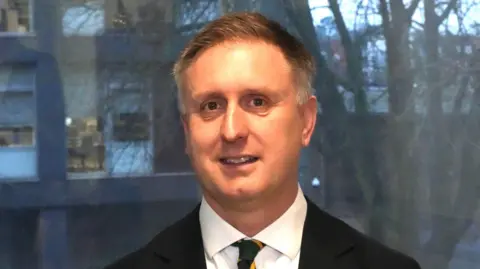
Dr Ed Garrett, the new chief executive of the N&S ICB, said it would be "getting to grips with the new geography" in the coming days.
He was previously in charge of the NHS Suffolk & North East Essex ICB.
About 500 jobs were expected to be cut as part of the merger and, at a meeting in January, a report said 289 staff had voluntary redundancy approved.
How will patients be affected?
Dr Garret said he believed patients would "notice a difference".
He said a big focus would be on rebuilding three hospitals in the area - projects at the West Suffolk Hospital in Bury St Edmunds, James Paget Hospital in Gorleston and the Queen Elizabeth Hospital in King's Lynn, have previously been announced.
Having a single ICB across Norfolk and Suffolk will help improve the Norfolk and Suffolk Foundation Trust, according to Dr Garret.
The mental health provider has been criticised by patient groups and health inspectors for failings over several years.
A report last year from the Care Quality Commission rated it as "requires improvement", although inspectors noted improvements had been made.
Dr Garret said access to GPs, dentists and pharmacists was a "big priority" for the new ICB and that would be where the biggest difference would be noticed by patients.
Emergency departments at hospitals and response times for ambulances are other areas the new boss highlighted as services to focus on.
He said assessments on the quality of services would be made public.
Follow Norfolk news on BBC Sounds, Facebook, Instagram and X.
Follow Suffolk news on BBC Sounds, Facebook, Instagram and X.
