Tributes to historian Peter Stead, who has died aged 82

 Swansea University
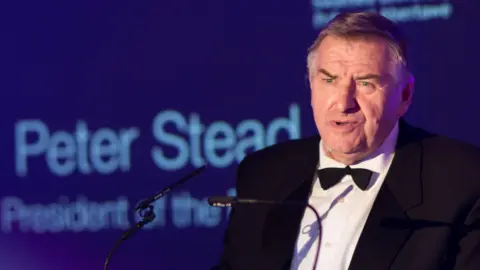
Warm tributes have been paid to the Welsh writer, broadcaster and historian Peter Stead, who has died at the age of 82.
Professor Stead was a prominent political and cultural broadcaster, and founder of Swansea University's world renowned literary award, the Dylan Thomas Prize.
The university praised the "strength of his commitment and passion to the arts in our university, our region, and our nation".
BBC executive Rhuanedd Richards said "Peter brought curiosity, generosity and insight to everything he did", whilst journalist and author Aled Eirug said he "represented everything that was good about calm, reasoned civilised discourse".
Professor Stead was born in 1943 in Barry, in what is now called the Vale of Glamorgan.
He went on to study history at Swansea University, spent his career in its history department, becoming an Honorary Fellow on retirement.
A regular broadcaster on political and cultural issues on both TV and radio in Wales, along with the late Patrick Hannan, he reached a wider audience as a member of the Welsh team on the BBC Radio 4 series The Round Britain Quiz.
He was the author of several books, with topics including the actor Richard Burton.
A passionate football fan, he also published a book about the great players who represented the Welsh national team.
Peter Stead is credited with being the founder of Swansea University's world-renown literary award, the Dylan Thomas Prize, named after the Swansea-born poet.
A spokesperson for the university's Cultural Institute said he "will be greatly missed by many of us, both within our university community and across the cultural sector in Wales".
"Peter's achievements span his career as an historian, author, and editor and reflect the strength of his commitment and passion to the arts in our university, our region, and our nation.
"Here at Swansea University we were extremely fortunate to have received the benefit of Peter's outstanding support for our institution; first as an undergraduate, then as a longstanding member of staff, and latterly as an honorary fellow."
"We extend our sincere condolences to Peter's wife, Elizabeth, and to his family and friends at this difficult time."
'Warmth and clarity'
Rhuanedd Richards, BBC interim nations director, said his "lifelong mission was to make the history, literature and culture of Wales accessible to the widest possible audience, while passionately championing voices and stories too often overlooked".
"His contribution to BBC services was rich, wide‑ranging and consistently engaging," she said.
"From his much‑loved appearances on Radio 4's Round Britain Quiz, which showcased the breadth and depth of his knowledge, to thoughtful documentaries on figures such as Richard Burton and Dennis Potter, and his work exploring the enduring legacy of How Green Was My Valley, Peter brought curiosity, generosity and insight to everything he did.
"During my years as a journalist, I was fortunate to interview Peter on a number of programmes.
"His deep knowledge of Wales, combined with his warmth and clarity, made him a first‑class guest.
"He will be greatly missed."
'Profound understanding'
According to journalist and author Aled Eirug, Peter Stead "represented everything that was good about calm, reasoned civilised discourse".
"He used to joke to me that he was the only person to have a season ticket to both Swansea City and Cardiff City!
"He loved cricket - he and Elizabeth joined the Balconiers in supporting Glamorgan home and away, and enjoyed the All Whites at rugby.
"He was what journalists call a cultural historian and was the go-to figure for radio and TV producers who wanted a bit of substance in their entertainment diet."
"His profound understanding of Labour politics made him not only an outstanding historian of the labour movement, but also led him to stand unsuccessfully for Parliament in his beloved Barry.
"A great supporter of Llafur [Labour] he was also wary of the tendency to romanticise labour history and to celebrate extra-parliamentary activism rather than the plodding commitment of electoral politics."
