How failings were exposed at the Southport Inquiry

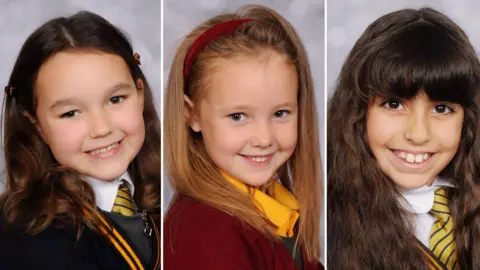 Family photos
When Axel Rudakubana launched an indiscriminate knife attack on a children's Taylor Swift-themed dance workshop in Southport in July 2024 it was the atrocious culmination of years of troubling behaviour.
On that day the teenager killed Alice da Silva Aguiar, nine, Elsie Dot Stancombe, seven, and six-year-old Bebe King as well as seriously wounding eight other children and two adults.
The response of the state ended with the 17-year-old being handed a 52 year minimum prison sentence at Liverpool Crown Court in January this year.
The Southport Inquiry, commissioned by then Home Secretary Yvette Cooper, has pored over the many interactions between the teenager and different agencies ahead of the attack.
It looked at how his parents minimised and sometimes hid his disturbing behaviour, and it looked at how he was able to lay his hands on a cache of dangerous weapons.
The first phase of that inquiry finished in November, while the second phase due to start in 2026 will examine the wider question of how young people become drawn into extreme violence.
Here we look back on what emerged over nine weeks of often harrowing evidence inside Liverpool Town Hall.
Horror and bravery
 PA Media
One of the first tasks of the inquiry, chaired by retired High Court judge Sir Adrian Fulford, was to establish a definitive account of what happened in the Hart Space dance studios on 29 July 2024.
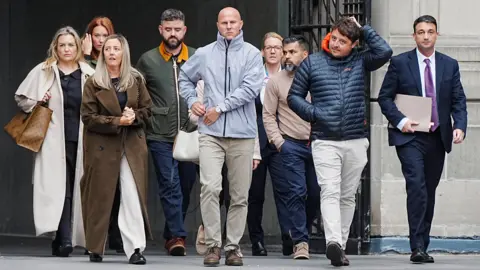
While many of the facts had been aired in court, we heard far more detailed accounts from witnesses, surviving victims and their families and the bereaved parents.
There were also tales of bravery, including from the parents of a surviving victim who was stabbed six times as she shielded her younger sister.
We heard from police officers Sgt Greg Gillespie, PC Luke Holden and PCSO Tim Parry who rushed to tackle Rudakubana without waiting for firearms officers.
Window cleaner Joel Veritie rushed into the building alongside the officers and carried Bebe's body outside.
There were also less commendable stories.
Gary Poland, the taxi driver who took Rudakubana to the scene, simply drove away when he saw screaming children streaming out of the building.
He did not call the police for around 50 minutes, and even took another fare in the mean time.
Mr Poland apologised to the inquiry, and claimed he acted out of sheer panic.
 Elizabeth Cook/PA
'Shame' of parents
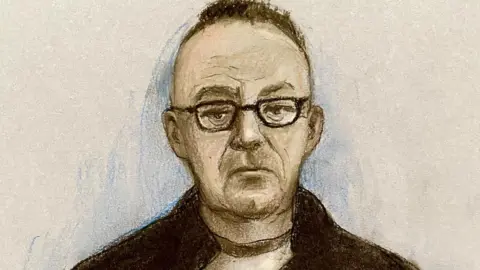
Some of the most shocking evidence heard in the inquiry was from Rudakubana's parents Alphonse Rudakubana and Laetitia Muzayire.
Mr Rudakubana said his son's behaviour had deteriorated rapidly when he was expelled from mainstream education in October 2019, for admitting carrying knives at his school, Range High School in Formby, Merseyside.
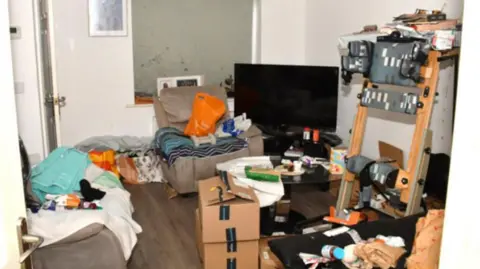
While he claimed he had reached out to various agencies for help, Mr Rudakubana told the inquiry he had withheld certain information about how bad things really were in the home because he "didn't want my son to be taken away".
He also failed to tell any agencies including mental health teams, police or social services that his son had been buying weapons, including a machete, online.
The inquiry heard Rudakubana had threatened to kill his father on more than one occasion.
While the police were called several times, including one occasion where the teenager damaged a hire car and another where he trashed the house, he was not arrested.
Brother's fear
Mr Rudakubana told the inquiry he had also been warned by teachers about his son's internet use and his increasing fixation on gory and violent imagery.
However he said he was too afraid to restrict his son's internet access at home in case it provoked a violent response.
"I had no authority as a father, I had no power at all left to stop him from accessing anything he wanted online," he said.
On the day of the attack, Mr Rudakubana said he had been helping his older son Dion, who is disabled, get a shower when the younger boy left the house.
Rudakubana had barely left the house alone in more than two years, and his parents were concerned, but Mr Rudakubana said he was "clinging on to the hope" his son had simply gone for a walk.
Both parents apologised, with Mr Rudakubana telling the inquiry: "The love I had for him overrode [my] good judgement."
Dion also gave evidence and told the inquiry his parents had "lost control" of their son, who would sometimes attack him as well.
He said he had feared his younger sibling would kill a member of their family and by the time of the attack had stopped speaking to him.
In messages to friends, Dion had said his brother reminded him of the fictional sociopathic killer Anton Chigurh, played by Javier Bardem in the film No Country For Old Men.
 Merseyside Police
Teachers felt 'dread'
The inquiry heard from teachers at the specialist school he was sent to after he was expelled from mainstream education - The Acorns pupil referral unit in Ormskirk, Lancashire.
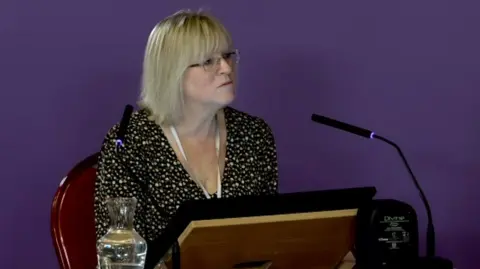
Headteacher Joanne Hodson told the inquiry when she had an introductory meeting with Rudakubana and his parents she asked why he had carried knives into his former school.
She said she was astonished when he looked her in the eye and said "to use it", which prompted no visible response from his parents.
Ms Hodson said she became increasingly concerned by his behaviour and was dismayed by the lack of intervention from other agencies despite her desperate attempts to seek help.
She told the inquiry she felt like school staff were "left holding the baby" as other agencies "peeled away".
It was staff at the Acorns who referred Rudakubana to the government's counter-extremism service Prevent three times due to concerns over his obsession with violence, including school shootings and terrorist attacks.
Ms Hodson described a "visceral sense of dread" like "he was building up to something".
 Southport Inquiry
Hockey stick attack
The fact that Rudakubana had a previous convictions for assault occasioning actual bodily harm and possession of a bladed article was known before the inquiry started.
In December 2019, while enrolled at the Acorns, Rudakubana took a taxi to his former school and attacked a pupil with a hockey stick - while also carrying a knife in his backpack.
However we heard more about the interventions from Lancashire's Youth Offending Team (YOT) after he was sentenced to a 10-month referral order in February 2020 - compelling him to complete activities and sessions as directed by the YOT.
Over the course of that order, Rudakubana frequently refused to engage with social workers but was not held to be in breach of the order.
After only three 30-minute sessions with the teenager, the order was closed in January - two days after a social worker was told his father had slapped him after Rudakubana had kicked him in the groin.
Stephanie Roberts-Bibby, who was not directly involved in the case but is chief executive of the Youth Justice Board (YJB), told the inquiry she was "frustrated" with how the Rudakubana's order was monitored and believed staff should have re-assessed his risk.
'Minimal risk'
Rudakubana's attack came after years of on and off contact with mental health services.
He was officially discharged from the Children and Adolescent Mental Health Service (CAMHS) at Alder Hey Children's Hospital in July 2024, six days before the murders, with a note stating his risk to others was "minimal".
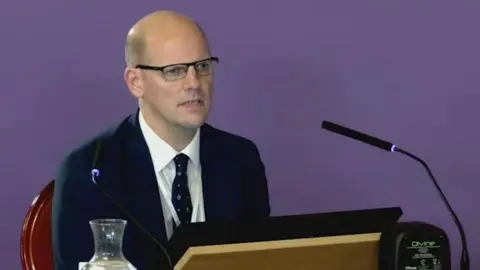
Consultant children's psychiatrist Dr Anthony Molyneux, neurodevelopmental lead at Alder Hey, told the inquiry he had taken on Rudakubana's care in July 2022.
However he accepted he had not read the full set of medical notes and was unaware Rudakubana had previously been caught carrying a knife on a bus in March 2022.
He said he had "no suspicion" that information, plus further disturbing references to the teenager's obsession with violence, was recorded in patient notes and "would not have gone looking" for it.
Dr Molyneux said he was aware that Rudakubana had been referred to Prevent, but said he understood each referral had been closed and believed that meant there was "nothing to see here".
 Southport Inquiry
But the inquiry heard Rudakubana's mental health was raising concerns long before 2022.
He was first referred to Alder Hey's Community Paediatric Service by his GP on 14 August 2019 due to signs of potential autism spectrum disorder, including struggling with social interactions and "hyperfixation on specific interests".
What followed was an eight-month wait for an autism diagnosis.
In that time, Ms Hodson at the Acorns School had emailed the paediatric service asking for help, and referred to his disturbing behaviour.
The inquiry heard there was no evidence that email was responded to in any way and no attempt was made to speed up his diagnosis.
The knock on effect of the delay meant a specialist service aimed at treating children considered a high risk of harm - the Forensic Child and Adolescent Mental Health Service (FCAMHS) - did not assess Rudakubana because "he was awaiting an autism diagnosis".
However the autism assessment team were not made aware of that position and therefore did not inform FCAMHS when he was eventually diagnosed in December 2020.
'He wanted to hurt society'
Lawyers for the children killed in the attack suggested that by 2020, Rudakubana had shown "clear murderous intent" with the hockey stick attack and his admission to carrying knives in school.
But the closest the inquiry came to any potential motive for Rudakuban's violence was the words of his brother Dion.
Based on his assessment of how his brother's mind worked, he speculated that Rudakubana had wanted to find a way to "hurt society" and that "children are very valuable to society".
Inquiry chair Sir Adrian Fulford is expected to report back in spring 2026, before the opening of the second phase, which will look at the issue of young people becoming obsessed with violence and how to manage them.
Listen to the best of BBC Radio Merseyside on BBC Sounds and follow BBC Merseyside on Facebook, X, and Instagram, and watch BBC North West Tonight on BBC iPlayer.
