Creel pot recording devices to listen for whale songs

 Getty Images
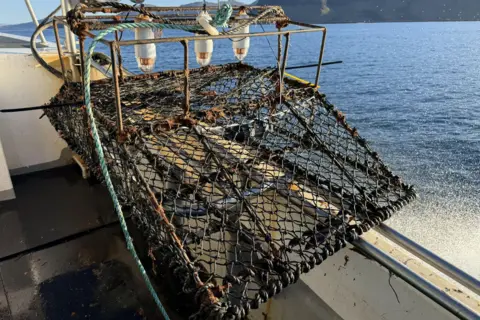
Conservationists are to attach acoustic devices to gear used for catching shellfish in the hope of recording sounds made by whales and other sea life.
Mull-based Hebridean Whale and Dolphin Trust (HWDT) is working with creel fishermen in the trial project.
HDWT said the recordings could provide data on the behaviour and movements of large marine animals on Scotland's west coast.
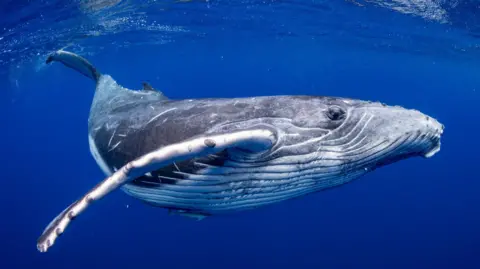
Some whales, such as humpbacks, produce complex songs while dolphins and porpoises make clicking sounds.
The Creel for Sound project will take place in January, February and March and see devices attached to creel pots, which are used for catching crabs, lobsters and prawns.
HWDT said if the trial was successful it could be scaled up to cover other parts of Scotland.
Science officer Hannah Lightley said whales and other marine mammals spent most of their lives underwater and relied heavily on sound to communicate, navigate and find food.
She added: "But winter conditions and limited survey opportunities mean we still have significant gaps in our understanding of how these species use our seas year-round."
 HWDT
HWDTThe project has been supported by a £29,937 grant from the Scottish government's Nature Restoration Fund, which is managed by the Scottish Marine Environmental Enhancement Fund (SMEFF).
SMEFF manager Sarah Brown said HWDT had come up with an innovative project.
"Working with the creel sector they have identified an opportunity to use emerging technologies to increase our understanding of nature in really challenging habitats," she said.
"They say we know more about the surface of the Moon than we do about our seas and this is one small step towards changing that."
HWDT has been carrying out surveys of Scotland's west coast for more than 20 years.
Last year it recorded sightings of more than 100,000 individual whales, dolphins, porpoises and other wildlife.
HWDT said many of the animals would have been recorded more than once, as individuals and groups moved through Scottish waters and were seen by multiple volunteers over the course of the survey.
But the trust added that together, the reports provided a "powerful picture" of how marine species use Scotland's seas.
The sightings included orcas, a beluga whale and sunfish.
