Tube strikes in March called off as RMT negotiates

 BBC/Harry Low
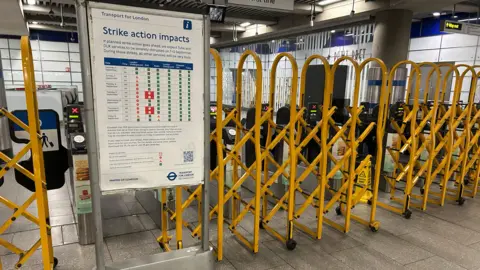
Tube strikes due later this month have been called off following talks with London Underground management.
The dispute - over the imposition of a condensed hours four-day week - is not resolved but negotiations between the Underground management and the RMT union are planned in the near future.
All other strike dates from April onwards remain in place and additional strike action on 16 and 18 June has been put in place.
RMT general secretary Eddie Dempsey said the union had "forced management into a position where they are now willing to seriously engage with the issues our members want addressing. Further talks will take place and the dispute remains live."
BBC London transport and environment correspondent Tom Edwards said: "Reading between the lines, it seems that London Underground (LU) have given enough assurances to the RMT union that it will be possible to negotiate over the issue of the four-day week.
"LU have always said it is a trial and voluntary. But it's not totally over, the strikes in April are still in place and more dates have been announced for June."
Nick Dent from London Underground said he was pleased the RMT had suspended its planned industrial action between Tuesday 24 March and Friday 27 March.
"This is good news for London and we will continue to work constructively with the trade unions to avoid disruption and address concerns."
What is the strike about?
The RMT has rejected an offer for drivers to work a four-day week.
Under the proposal from LU, most drivers would see their working week reduced from 36 hours to 35 hours.
Their contractual hours would remain the same because paid meal breaks would be introduced.
This effectively means drivers would work longer days, but fewer days each week and fewer overall hours.
The arrangement is currently being trialled on the Bakerloo line on a voluntary basis to test its viability.
The RMT said the working day would be too long under the plans, potentially causing driver fatigue and compromising safety.
The union instead wants a 32-hour week over four days, meaning drivers would work a total of three hours less each week for the same salary.
Listen to the best of BBC Radio London on Sounds and follow BBC London on Facebook, X and Instagram. Send your story ideas to hello.bbclondon@bbc.co.uk
