Where did it all go wrong for South East Water?

 PA Media
It has been another chastening week for South East Water (SEW), with major supply problems leading to both parliament and regulators ramping up the pressure on the beleaguered company.
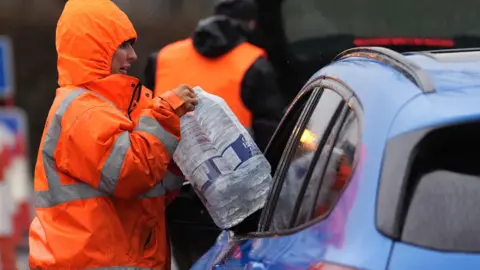
As tens of thousands of people in the region lost their water supply - some for the second time in six weeks - David Hinton, the boss of SEW, was recalled to parliament to face another round of questions from select committee MPs.
Many on the committee had been less than impressed by the CEO's performance last week. This time the company's chair, Chris Train, has also been called upon to give evidence.
There were mounting calls from MPs and councillors across all parties for Hinton to resign and the prime minister and the environment secretary weighed in with their concerns about the crisis facing the water company's customers.
Then, on Thursday, a first-of-its-kind investigation was launched by the regulator Ofwat. That will look at whether SEW breached its licence around customer care.
If things were looking bad for the company at the start of the year, this week served as a salient reminder to them that things can always get worse.
Supply problems
A freeze/thaw event and a winter storm is what water companies dread and the end of last week brought both; a double-whammy of troubles for a water network that struggles to cope at the best of times.
Freezing temperatures led to pipes across the network cracking and high volumes of rain from Storm Goretti meant some treatment works were unable to properly process water.
Neighbouring water company Southern Water faced similar problems and as it looked to maintain water to its customers, it stopped its normal bulk water supply to parts of the SEW network.
Short power outages or 'blips', as the company call them, meant some pumps in the network tripped and did not work for periods of time.
In some sites that did have power, the levels of water in the storage reservoirs became so low that pumps simply could not work.
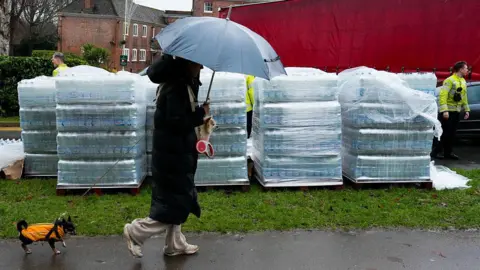
The mounting problems led to days of misery for tens of thousands of people who found no water in their taps.
Troubled water sector
Across the water industry there has been under-investment for more than a decade. Some say that is because over the years too much money has been paid out in dividends and pay. Some say it is because regulators, under pressure from governments, have kept bills too low for too long.
Water bills have not kept pace with inflation and in real terms we are spending less and companies are investing less.
That, however, does not explain why SEW is one of the worst performing water companies in England and Wales for supply interruptions. Neither does it explain why, when neighbouring water companies Southern and Thames Water saw similar weather conditions this week, their customers saw minimal to no disruption to water supply.
SEW recognises its network is not as resilient as its neighbours who both have better connections and more water storage facilities. It is something the CEO wants to change, but that takes money and time.
The company wants to put up bills even higher than the 20% that Ofwat allowed last year. It wants to raise £300m to improve resilience across its network and help prevent further supply crises.
SEW says it is facing greater pressures than other areas. The region's population growth had led to higher water demands on its network. Climate change is also a challenge for the company; the south east is a very water-stressed region. Historically, the water company inherited lots of smaller treatment works which, SEW says, by their very number make it more difficult to manage.
 Getty Images
Regulatory pressure
There are now four investigations being carried out by regulators into SEW. But what could they all mean for people in the region?
The Drinking Water Inspectorate is investigating two separate outages, one in Tunbridge Wells before Christmas and one into the most recent loss of supply in Kent and Sussex. Any decision it comes to may see the water company facing civil or criminal prosecutions.
Two separate Ofwat investigations are looking at whether the water company is failing to comply with the law around supplying water and whether it has breached its licence around customer care.
If Ofwat finds that it has, it can fine SEW up to 10% of its turnover. That could reach into the tens of millions of pounds. Some may argue that fines could make things worse for customers. The company is in more than a billion pounds worth of debt.
Ofwat could enforce SEW to spend money to make specific improvements to parts of its network in lieu of fines. That would keep the money in the local area – and would hope to help improve supply resilience for local people.
But Ofwat still has not come to any conclusions on an investigation it launched into SEW in 2023.
Many customers who have repeatedly lost water supply over the past few weeks and years have now lost confidence in the company's ability to provide an essential amenity. No regulatory investigation or investment plan is going to help them anytime soon.
Follow BBC Kent on Facebook, on X, and on Instagram. Send your story ideas to southeasttoday@bbc.co.uk or WhatsApp us on 08081 002250.
