How ambulance service deals with 'overwhelming' number of 999 calls

 Mark Norman BBC
Ambulance service call handlers have described how they dealt with "unprecedented" numbers of 999 calls.
South East Coast Ambulance Service (Secamb) dealt with 22,500 calls between 5 and 11 January, compared to a call volume of about 3,000 calls a day in December.
Call handlers triage all 999 calls to try and provide the right response for patients, which may include not sending an ambulance.
The trust said it was under "the most severe pressure".
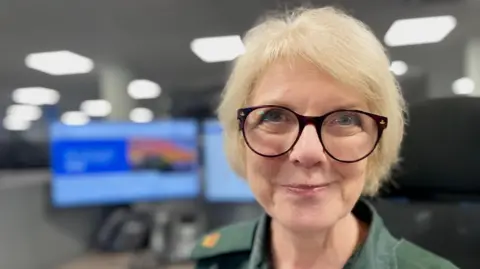
Cathie Burton, an operations manager for Secamb, described the first week of January as overwhelming.
She said that while every call was treated with respect and empathy, not every call required an ambulance.
"It's really important that we do respond quickly, effectively and safely to all those calls that come in," she said.
"But I think 22,500 calls, it's like filling 300 double-decker buses. And if you can imagine that all requiring an emergency ambulance."
She said some interventions were needed to ensure ambulances could get to the "most seriously ill and critically unwell patients".
These interventions might include referrals to local pharmacies, contacting their GP, or attending a walk-in centre or Urgent Treatment Centre.
 Mark Norman/BBC
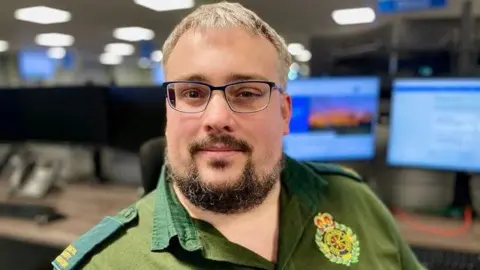
Clinical safety navigator Ian Spencer said his team looked for calls where people might not need an immediate life-threatening intervention from an ambulance crew or an ambulance to transport them to hospital.
He said offering alternatives could get "a very mixed response".
"Some people are very grateful that we're helping them and that we're giving them better advice and we can get them seen quicker," he said.
"Some people obviously see the frustration that they think it's delaying the help. But actually, for us, it's getting the right care to the right patients at the right time."
The trust is urging the public to think before phoning 999, in order to keep lines free for the most urgent calls.
For urgent health concerns that are not life-threatening, the trust said NHS 111 could provide clinical advice, assessment and referral to the most appropriate service.
Follow BBC Surrey on Facebook, on X. Send your story ideas to southeasttoday@bbc.co.uk or WhatsApp us on 08081 002250.
