Musk tells jury 'people read too much' into his posts
Elon Musk has told a jury in California that stock market investors read too much into his social media posts.
The multi-billionaire was defending himself against claims from investors, who have accused him of trying to manipulate markets with a series of misleading messages in the run-up to his 2022 purchase of Twitter, now called X.
Musk said on Wednesday that posts he wrote after he had struck a deal to buy the platform were "extremely literal" and not intended to try to reduce the price he would have to pay.
"I was simply speaking my mind," he said when asked whether he had considered the impact of his posts, including one in which he declared his takeover plans had been put on hold.
"People tend to read too much into things that I do," the technology tycoon said.
At other points in the trial, Musk said repeatedly that his tweets represented what was in his head at any given time.
"What I think privately is what I say publicly, there's no difference."
The dispute marks the first lawsuit over Musk's 2022 Twitter purchase to make it to trial, but his social media habit has landed him in legal trouble before.
In earlier fights, he has successfully beaten back claims that he misled Tesla investors and committed defamation via his social media posts.
The trial, which started on Monday in San Francisco, is expected to last three weeks.

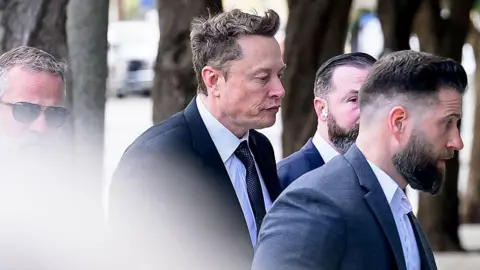 Getty Images
Investors are seeking unspecified monetary damages from Musk, which they say they are owed given they acted on his allegedly misleading statements, including when he claimed he was "terminating" the deal in July.
"If this was a trial on whether I've made stupid tweets, I'd say I'm guilty," Musk said at one point.
When Musk was asked if he at one point told Twitter's board he would "hunt them down for the rest of time", he did not deny doing so.
"I was pretty upset with the Twitter board because I thought they had engaged in fraud," Musk said.
Brian Belgrave, who is leading the class of individual investors suing Musk, told the court on Monday that he sold thousands of Twitter shares in July 2022, believing that Musk was no longer going to buy the platform because of his public posts and comments.
Belgrave's sale price was less than what he'd purchased the shares for a few months earlier, and significantly less than the $54.20 (£39) per share Musk eventually paid, after the company sued him to make him follow through on his original $44bn takeover deal.
"I got screwed," Belgrave said. "I got cheated."
After Musk took over Twitter, he renamed the platform X and embarked on significant changes including slashing staff, introducing a charge to verify accounts and loosening its approach to content moderation.
Aaron Arnzen, the lead attorney for plaintiffs, argued on Wednesday that Musk strategically rushed Twitter into accepting his takeover bid and then demanded more from the company to complete the deal.
He compared it to a boxing strategy in which one fighter forces the other to wear themselves out in order to gain an advantage, asking Musk whether he had likewise deployed a "rope-a-dope" method during takeover talks.
Musk conceded that he "may have".
Arnzen alleged that the approach left individual shareholders with information from Musk in public comments that was not intended for transparency but his own attempted benefit.
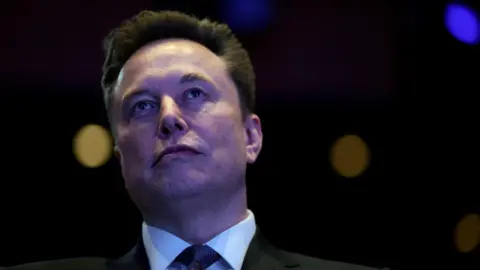 Reuters
For much of the early questioning on Wednesday, Musk generally stuck to answering "yes" or "no" or "I don't recall".
But as the proceedings dragged on, Musk admitted he was trying to avoid giving "yes" or "no" answers, accusing Arnzen of "trying to mislead the jury" with his questions.
Judge Charles Breyer, overseeing the trial, briefly paused the proceedings, looked at Musk directly, and then called for questioning to continue.
Musk's more stoic responses echoed those of one of his highest level employees, Jared Birchall, who testified before the jury on Tuesday. Birchall heads Musk's family office, and personal financial investments and business dealings.
Birchall gave the answer "I don't recall" to Arnzen dozens of times in response to questions about meetings he was in regarding Twitter, conversations with Musk about the acquisition, and emails Birchall wrote and sent regarding the deal.
Birchall also said he did not recall that it was Jack Dorsey who was chief executive of Twitter prior to Musk's attempt to take over the platform.
Dorsey and Musk are known to be friends and Dorsey had only recently left as head of the platform a few months prior to Musk's takeover bid, having led the company for seven years.
