Death of 1930s businessman remains a mystery

 Heidebloemke
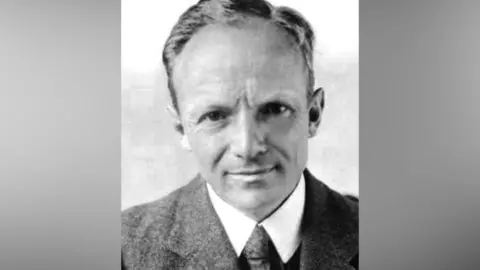
The death of a country landowner who was rumoured to have links with pre-war Nazis continues to be a mystery, nine decades later.
Max Wenner, who lived in Shropshire, was a First World War pilot and a wealthy businessman known for flying all over Europe.
In January 1937 he went missing on a flight from Cologne to Brussels and his body was discovered in a Belgian wood four days later.
Newspapers at the time reported his death as suicide, but some people have their doubts and suspect something more sinister.
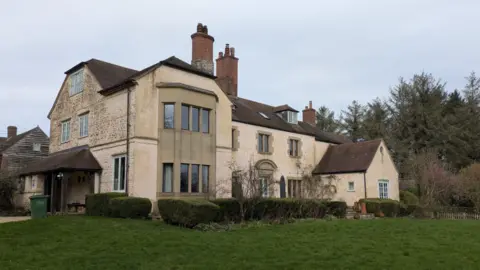
Wenner lived at Batchcott Hall, on the slopes of Long Mynd, and was a nature lover and celebrated wildlife photographer who was described in his obituary as "a fine shot and fisherman".
At his home, he created ornamental pools, stocked a fishing lake, and even built a dam to generate his own hydroelectric power.
He also enjoyed flying and reportedly had two airstrips created on the lower fields below Batchcott.
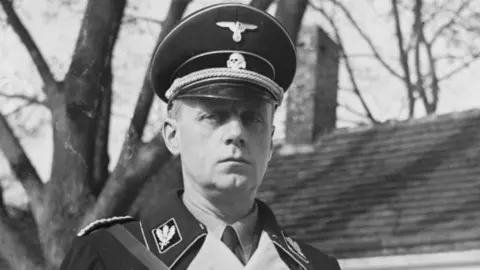
Local accounts suggest that senior Nazi figures, including Joachim von Ribbentrop, who was then the German ambassador to Britain, visited him there.
Campbell Naylor, who is the current the property manager at Batchcott Hall, said there were stories that in the weeks before his death, "his personality had changed a little bit and he was a lot more nervous".
Naylor added: "Apparently there was one room in the house that he kept locked and he was the only person that was allowed to access it, none of his staff, family, was allowed in there."
In March 1937, following his death, a New Zealand paper reported: "In the neighbourhood he had the reputation of a man of mystery."
In January 1937, Wenner boarded a small passenger aircraft, carrying just 10 passengers and travelling from Cologne to Brussels.
Emma Bergman, a journalist who covered the story for Aller Media in Sweden said: "Some passengers later reported feeling nauseous during the flight, something that also appeared to affect Wenner."
She said he "stood up and walked towards the toilet" and that was the last time anyone saw him alive.
Four days later his body was discovered in woodland near Genk.
Investigators concluded he had fallen from the aircraft and the death was reported as suicide.
But people like Fred Breuls, a journalist at VRT NWS in Limburg, have their doubts about the official story.
For instance, he said: "When his body was discovered, the doctor stated that he must have suffocated, because he had only broken an arm.
"Can you imagine falling from 1,400m and ending up with nothing but a broken arm?"
Breuls also asked why it took days before any additional items were found at the spot where Wenner was found.
He said Wenner's funeral was "very strange" too.
For a wealthy man, he had a very small funeral, attended only by his brother, and he was buried in a cemetery in Genk.
 Getty Images
Investigating the death has been difficult.
Records from the time were lost during the war and Breuls said: "All physical evidence has disappeared, like for example the clothes Wenner was wearing."
The aircraft itself was dismantled by the Germans at the start of the Second World War.
The airfields at Batchcott were reportedly destroyed in 1939 as Britain prepared to defend itself against the Nazis, as they were seen as possible landing locations for a Nazi invasion
Peter van Houten from Genk has been fascinated by the mystery and carried out his own enquiries.
He said aviation experts have told him at the altitude and the speed the plane was travelling at, the side door on that plane could not have been opened without help.
"He could not open the door himself, the suicide option is off the table, I think," he said.
One alternative theory was that someone else on the plane threw Wenner out.
Bergman said: "An important detail is that near the door was a small cargo compartment, where someone could have hidden, perhaps someone who, together with another person overpowered Wenner."
Unfortunately for that theory, Van Houten said: "The problem is when they arrived in Brussels they didn't find any suspicious unknown individual there."
The other question is who would have wanted Wenner dead.
One theory, Van Houten said, was that his fiancee's brothers did not like him, because they were "extremely right wing Nazis" and did not approve of the marriage.
Van Houten said there were also theories that Wenner's links to Ribbentrop got him killed.
There were suggestions "that maybe he made a deal with Ribbentrop" during one of his visits.
Another theory, he said, was "that he was so close to Ribbentrop that he made deals to give him a lot of money to get certain jews out of Germany".
Van Houten said he continues to have an open mind, but does not believe the Gestapo killed Wenner, because a German news article from the time reported they had been investigating the death.
"That for me is a clue to me that they were not the ones behind the killing," he said.
Or maybe Wenner was a spy, Breuls said, either for the Germans or the British and that explained the secret room at his home.
Naylor said in some ways a remote Shropshire retreat would have been perfect for the businessman from Manchester.
But on the other hand, he asked: "Would a prominent Nazi spy base himself a backwater like Batchcott, miles from anywhere in what would have been even a lot more remote in those days?"
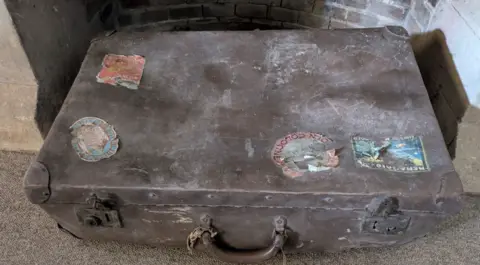
One possible clue turned up when Batchcott Hall was renovated 2006.
A battered suitcase with a number of flight stickers was discovered, along with some German coins from the time.
Naylor said the coins could simply have been collected on Wenner's travels around Europe.
But perhaps they belonged to a German visitor, perhaps Ribbentrop or another high-profile Nazi.
Bergman said what happened on that flight might never be known.
But Bruels said it "continues to capture the public's imagination".
Follow BBC Shropshire on BBC Sounds, Facebook, X and Instagram.
