Beavers back for the 'first time in 400 years'

 Stuart Atkins
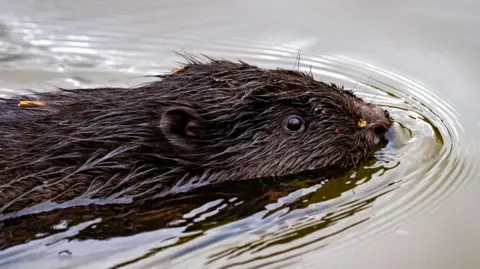
A family of hard-working beavers transformed part of an estate just weeks after arriving from Scotland.
The two adults and three young, known as kits, are thought to be the first beavers reintroduced to Suffolk since hunting drove them to extinction 400 years ago.
Since February, they have been busy felling trees and building dams at Little Haugh Hall at Norton, near Bury St Edmunds.
Suffolk Wildlife Trust said it hoped the family's impressive work schedule would trigger an "explosion of biodiversity".
 Richard Daniel/BBC
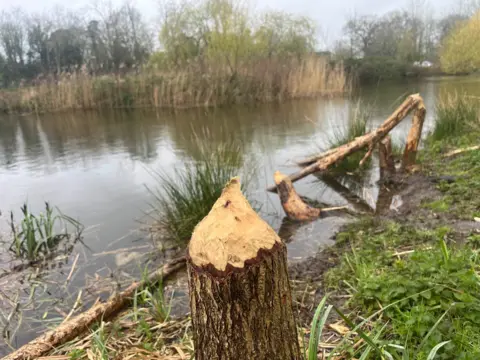
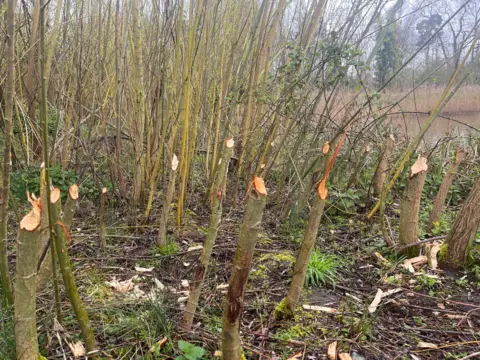
Saplings on the banks of a lake have already been reduced to stumps.
Gnaw marks showed where their large front teeth cut through the wood, leaving chips scattered on the ground.
As well as building dams, the timber has been used to create a lodge, the name given to the shelters beavers build from sticks, mud and rocks.
 Shaun Whitmore/BBC
The estate said the beavers were an important part of plans to "create a healthy and complex area of biodiversity and ecosystem integrity".
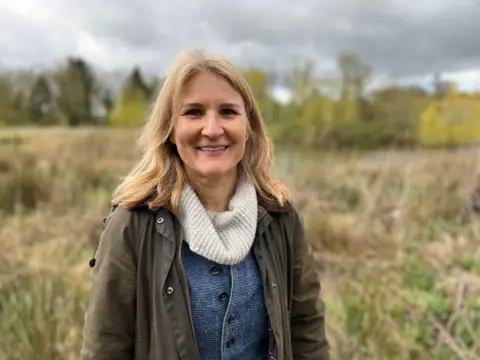
Estate owner Tatjana Greil-Castro said she hoped the dams would help improve water quality.
 Richard Daniel/BBC
'Explosion of biodiversity'
Suffolk Wildlife Trust supported the building of the beavers' new, licensed enclosure.
The trust's wilder landscapes officer, Sam Hanks, said the beavers would make the environment in the man-made lake more dynamic, creating a mosaic of pools and dams with different water levels.
That in turn would create different niches for invertebrates, fish and birds in an "explosion of biodiversity".
Follow East of England news on Facebook, Instagram and X. Got a story? Email eastofenglandnews@bbc.co.uk or WhatsApp us on 0800 169 1830
