Scheme to help salmon numbers shows signs of success

 BBC
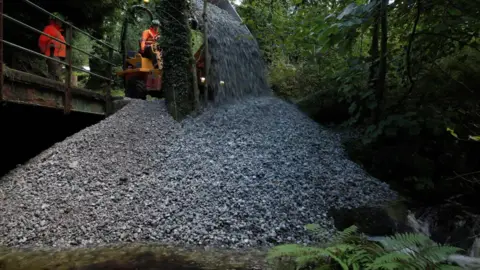
BBCMore than 1,000 tonnes of gravel has been added to a river since 2015 to improve Atlantic salmon populations.
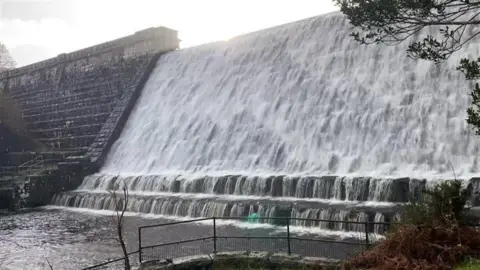
South West Water (SWW) and Westcountry Rivers Trust have worked on the project for 11 years to restore spawning habitats at the River Teign, below Fernworthy Reservoir.
Olivia Cresswell, head of fisheries and ecology at WRT, said: "Dams and reservoirs reduce the natural supply of gravel and stones to downstream spawning grounds. We've brought the habitat back to something very close to pre-reservoir conditions."
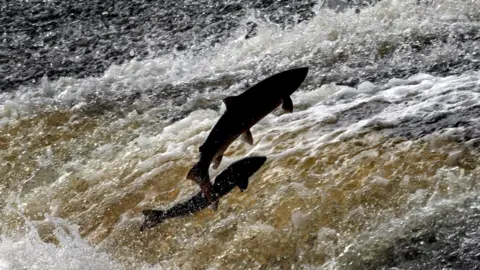
She said salmon and trout species, which used gravel to create nests, were "already utilising these habitats" - heading further up the river than previously recorded.
 David Cheskin/PA Wire
SWW depends largely on surface water sources such as rivers to meet demand in Devon and Cornwall, unlike other regions which draw more heavily on groundwater.
It said reservoirs were "critical for maintaining year-round supply", and added the structure at Fernworthy interrupts water and sediment flow, preventing salmon from reaching former spawning grounds upstream.
Ms Cresswell said the project was "effectively rebuilding the riverbed" through gravel augmentation.
Dr Georgina Samoluk, fisheries and biodiversity advisor at SWW, said the work was "vital".
"None of the 16 principal salmon rivers in Devon and Cornwall currently support support sustainable salmon populations," she said.
"Every step we take is important.
"Managing flows and protecting the fragile ecosystems that salmon rely on are at the heart of our work within the environment team."
Dr Janina Gray, deputy CEO of conservation group Wildfish, said the project was "a sticking plaster".
"Fundamentally, we need to see urgent action to reduce water pollution and that's predominantly from sewage from water companies," she added.
Follow BBC Devon on X, Facebook and Instagram. Send your story ideas to [email protected].
