Big policies but questions for Jersey's government

 BBC
BBCThe approval of its budget for 2026-2029 marked the high point of 2025 for a government which can point to some big successes.
In the last year they have introduced measures that will make a tangible difference to people's lives - 15 hours of free nursery care for two and three year olds, new protections for tenants and putting more money into a health department that has struggled with budget deficits in recent years.
However, some people said the budget highlighted a consistent weakness of this government: producing grand plans that while impressive on paper are undermined by unanswered questions over their longevity and delivery.
One of the longest-serving States politicians, Deputy Sir Philip Bailhache described the government's budget as "throwing a mortar bomb into the lap of the next government" due to the amount of spending it committed the island to.
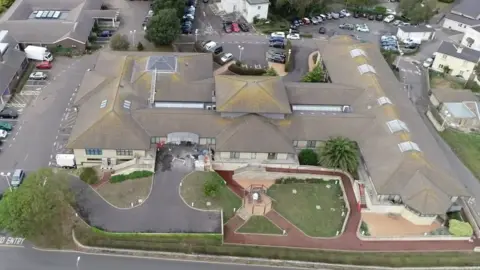
Getting the ball rolling on the building of Jersey's new hospital has been something the government can point to making legitimate progress on, with a contractor appointed in November to build the new acute hospital at Overdale.
However, this will be a multi-site hospital and it is still unclear how much the Kensington Place and St Saviour sites will cost.
In February the Hospital Review Panel said the island may not be able to afford to build and run the new hospital.
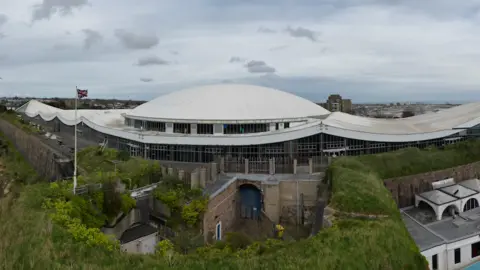
The other big infrastructure project is the redevelopment of Fort Regent but this is an area where government has been criticised again for committing the island to big spending, with the government set to borrow £43m for the first phase of redevelopment.
It is unclear how government plans to repay that £43m of borrowing.
The Treasury Minister Deputy Elaine Millar defended the decision to borrow money for Fort Regent: "If we didn't borrow it would take years to come out of revenue or we would have to cut services elsewhere to find the money for the fort."
The whole project will cost £110m and the infrastructure minister said the remaining £67m could come from the Jersey Capital Investment Fund.
The Jersey Capital Investment Fund was launched by the government in August to protect funding for long-term infrastructure projects.
However, Deputy Hilary Jeune - who scrutinises infrastructure policy - said: "If everything we do on infrastructure goes into this fund then we have to ask how it will be paid for."
With two landmark infrastructure projects plagued by long-term uncertainty over funding, some people say it gives the impression of a government keen to publish popular policies without full focus on details and funding.
 PA Media
Some believe the issues go beyond infrastructure as one of the government's Common Strategic priorities when it came to power in 2024 was to deliver 15 hours a week of free nursery care for two and three year olds.
The government was unable to negotiate an hourly rate to pay nursery providers, meaning parents will have to pay upfront and reclaim the money from the government.
One backbencher, Deputy Inna Garinder described this as "completely unfair" because some of the poorest families may not be able to pay upfront.
The fact the government was unable to agree an hourly rate with nursery providers for the scheme, has raised concerns the policy will fail.
One senior leader in the nursery sector said they did not think the policy would succeed as the sector was not completely behind it.

The Jersey government budget 2026-2029, which underpinned these policies and spending plans, was approved by the assembly earlier this month.
Ten politicians voted against it due to concerns about how much spending it committed the island to.
Deputy Sir Philip Bailhache said the government was "throwing a mortar bomb into the lap of the next government".
This criticism came amidst the backdrop of a Fiscal Policy Panel report that said the government was spending more than it was earning.

While the long-term funding and viability of health, infrastructure and education policies were under sharp scrutiny this year, it was the Economic Development Minister Deputy Kirsten Morel who took as much criticism as any government minister this year.
He oversaw the tender process which selected DFDS as the island's new ferry operator, and their difficult start to operating Jersey's sea links led to a lot of criticism directed his way.
The collapse of the airline Blue Islands, saw both he and the treasury minister cast into the spotlight to explain the government's decision-making in the lead up to the company's collapse.
Last month, Morel told a Jersey Hospitality Association lunch that "no-one is scrutinised more than me".
Follow BBC Jersey on X and Facebook. Send your story ideas to channel.islands@bbc.co.uk.
