Ambulance service has 'no space' for new vehicles

 LDRS
LDRSA regional ambulance service has no space to store new vehicles, a council has heard.
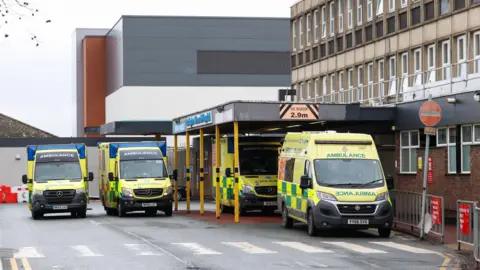
The North East Ambulance Service (NEAS) received just nine new vehicles as part of a government initiative to help strengthen the frontline response to health emergencies this winter.
NEAS assistant director Mark Cotton told a Durham County Council meeting it could not physically take any more, leaving the service reliant on third-party providers.
However, the meeting also heard the service was performing well despite the low number of new vehicles.
Traditionally ambulance crews have prepared their own vehicles but the NHS Make Ready system involves a separate non-clinical team checking, refuelling and restocking them ready for crews to use, increasing availability to respond to calls.
However, some stations are not big enough to accommodate the increased number of vehicles.
The double-crew electric ambulances are fitted with modern navigation technology and safety equipment.
"We have hit a challenge in that our estate can't physically take any more vehicles, which is why we are still reliant, more so than we would like to be, on third-party providers," Cotton said.
"We are currently doing a review of our estate to understand how we can improve that.
"Some of the ambulance stations are in poor disrepair. Staff need better facilities to work from, as well as us needing bigger facilities to get more vehicles."
Remote communities
Despite the service's high-performing response times, figures for County Durham are largely above the NEAS average, according to the Local Democracy Reporting Service.
Asked how response times would be improved, Darren Green, head of operations, said NEAS worked closely with acute trusts in the area.
"We are working with the North East and North Cumbria NHS Integrated Care Board to increase the number of avenues we have to divert away from emergency departments and bring care closer to home," he added.
In Teesdale, NEAS community paramedics are working with local GPs to care for patients in remote areas. They help people stay well at home, reducing the need for hospital visits and building strong links between emergency and primary care.
