Could a work of fiction draw attention to plight of Lough Neagh?

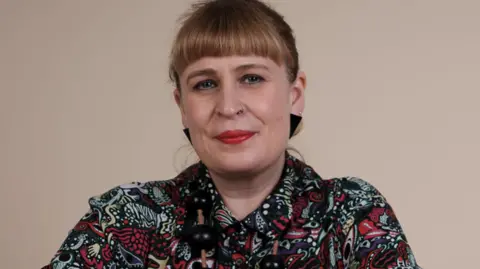 Polly Garnett
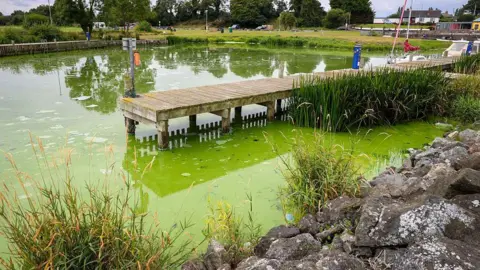
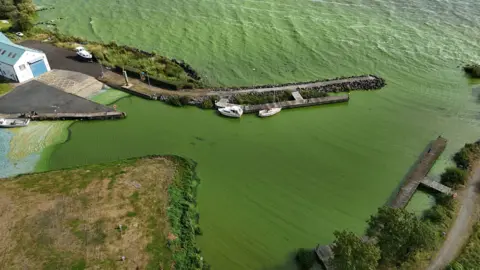
Could you really flood Lough Neagh - the UK's largest inland lake - to try to deal with the ecological crisis being caused by blue-green algae?
It's what author Jan Carson examines in her new novel Few and Far Between, but the idea isn't as far fetched as it sounds, because it was almost attempted before.
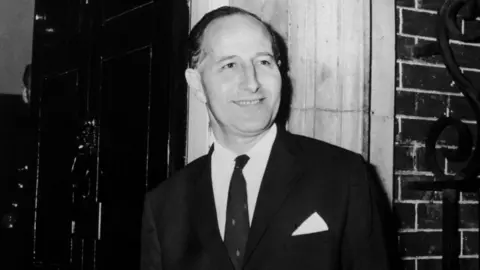
In 1958 Northern Ireland's then finance minister Terence O'Neill proposed a plan to drain Lough Neagh to create a seventh county - County Neagh - to try to boost employment.
When he became Northern Ireland's prime minister in 1963 he pushed ahead with the controversial scheme but ultimately it didn't work.
There had been previous successful attempts to lower the level of Lough Neagh, which had exposed some small islands when the water dropped.
It was the idea of the freeing of these submerged islands that inspired Carson to imagine what life might have been like for those living on the islands and what if the only solution for blue-green algae was to drain the lough, or to flood it?
 PAUL FAITH/AFP via Getty Images
Carson, who grew up in Ballymena, not far from the shores of Lough Neagh, came up with the idea for the book when her friend sent her a clipping about the scheme and she "very quickly went down a rabbit hole of could you drain Lough Neagh?"
She started looking at kind of maps and topography and realised that it would be "impossible because of the way that the water flows as it would fill up again very quickly".
Her research led her to the previous attempts to drain the lough and she spoke to people whose grandparents remembered some small islands being exposed.
"A lot of the book is sitting in that space which I like to call the end of the possible.
"It sounds utterly mad but actually quite a lot of this is based on things that are possible and within the bounds of reason," she said.
 Getty Images
The novel follows RJ Connolly, an anthropologist who moves out the collection of islands, known as the Arc, in the 1960s with his wife and three children.
The Arc has become a place of sanctuary for those who have been displaced during the Troubles in Northern Ireland and needed somewhere to ride out the storm.
There is also some magical realism in some of the islands; one is home to the almost-deads, those hanging onto life after serious accidents; a suicide island, an island that swallows secrets and one for women in deep sleeps who cannot be woken.
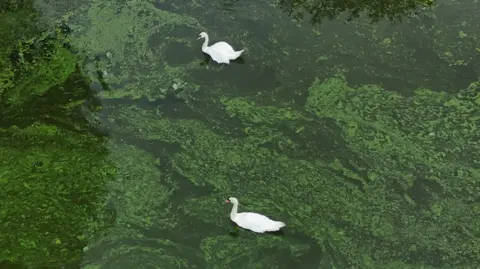
Skip forward to 2016, to the middle of a fictional blue-green algae outbreak that mirrors the modern day crisis.
Most of the islanders have left apart from RJ's now grown up children, Robert John and Marion, and their transgender neighbour Sandra who are about to be forced back out of their quiet island existence and back to the mainland.
 PA Media
Big societal changes
Toxic masculinity is touched on in the book and while Carson said there has been great work done recently in this area, it's often focused on younger men. She prefers to write about curmudgeonly old men.
"I wanted to look at what happens if toxic masculinity goes unchecked through later life and Robert John's not an old man he's in his late 50s, early 60s, but he's never had anybody stop and say, 'hold on what do you actually think being a man is?', and he's really wrestling with that."
While Marion, who works as a caretaker on the island, is also discovering what it means to be her own woman after a lifetime of following the rules.
 Niall Carson/PA
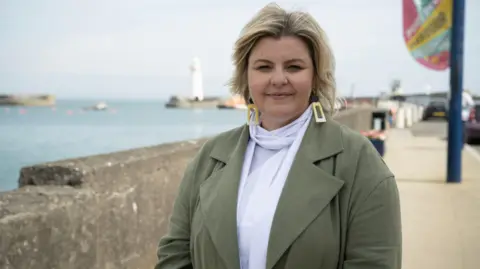
Carson has also created an older transgender character called Sandra, who has isolated herself on the island after not feeling safe in the North Antrim towns surrounding the Lough.
"I've read almost nothing about older trans experience and I want it to do to explore that in a really gentle kind of way, here's a woman who has been removed from all of the furore about gender politics that have been going on in the last 10 years," Carson said.
"She moves to the islands when the word trans isn't really in the vocabulary for her and she's learning who she is and she's about to be thrust back into this maelstrom of some really hateful attitudes and also some big societal changes."
 BBC/Long Story TV/Jack Maguire
While Carson's book is a work of fiction she hopes the novel will draw more attention to the plight of Lough Neagh.
"It isn't given the attention that something like the North Coast or the Mountains of Mourne are," she said.
"It's a desperately inaccessible piece of landscape, there are whole sections of it you can't get to without clambering over muddy fields.
"Some of the inattention that we have to the lough and this particular crisis, I think it's because we have overlooked it as a resource," she said.
Few and Far Between by Jan Carson, published by DoubleDay, books is available now.
It will also feature as BBC Radio 4's book at bedtime from Monday 13 April at 22:45 BST. Narrated by Tara Lynne O'Neill.
