Vet gallery planned to mark 200 years of ZSL

 ZSL
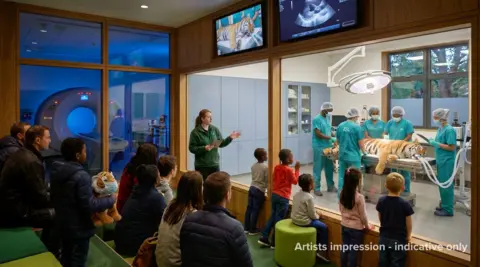
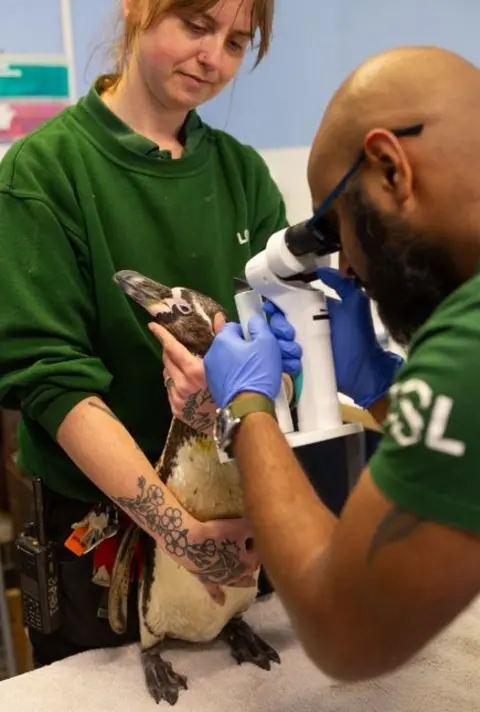
ZSLThe public will be able to watch penguin health checks and frog X-rays in a new £20m wildlife health centre, the Zoological Society of London (ZSL) has said as it marks its 200th anniversary.
The centre at London Zoo in Regent's Park, central London, is being funded by an anonymous donation that is the biggest in conservation charity ZSL's 200-year history.
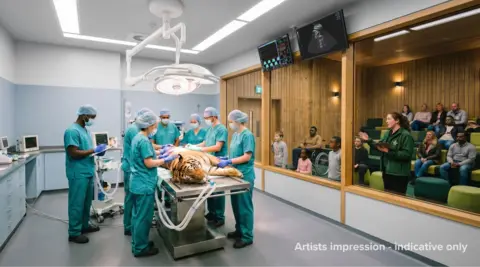
It will bring veterinary science to the public with the UK's first vet hospital viewing gallery for visitors.
The facility will deliver care for zoo animals, monitor emerging diseases in the wild and undertake conservation work such as health-checking wildlife including hazel dormice before releases into the wild.
 ZSL
ZSLVisitors will also be able to see science research such as porpoise and dolphin autopsies following strandings around the coast of England and Wales, and disease surveillance including the pre-release checks done on hazel dormice before they are released in reintroduction projects in woods around the country.
The centre will also expand existing work to teach wildlife vets and conservation scientists with postgraduate training, specialist training and field-based training in biodiversity hotspots, ZSL said.
The organisation was founded on 19 April 1826 and opened London Zoo two years later.
ZSL's head of wildlife health services, Dr Amanda Guthrie, said the centre would be a "state-of-the-art facility" that would provide more space for the veterinary team and equipment, potentially housing new technology such as a CT scanner and new post-mortem areas where viewers would be able to see post-mortem examinations on stranded marine mammals.
"For us, most importantly, we want visitors to get to see the work we do, we want to be transparent, we want people to really see the excellent care we provide, but then also for people to understand how important wildlife health is in the conservation space."
 ZSL
ZSLZSL's chief executive Kathryn England said: "For 200 years, ZSL has been committed to growing our understanding of wildlife and taking people on that journey with us, from opening the world's first scientific zoo, to launching the Institute of Zoology, and establishing global conservation projects.
"In those two centuries we have evolved from studying wildlife, to conserving it, to fighting for it."
Listen to the best of BBC Radio London on Sounds and follow BBC London on Facebook, X and Instagram. Send your story ideas to hello.bbclondon@bbc.co.uk
