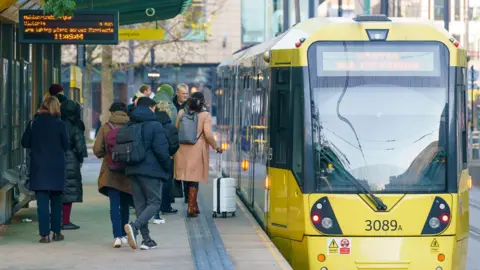
Could trams return to Bristol after 80 years?

 Getty Images
Bristol has had an on-off relationship with mass transit networks over the years.
The West of England Combined Authority (Weca) regional mayor Helen Godwin was joined by local council leaders to announce a new 'vision' for the future of transport across the West of England earlier.
In June 2025, Godwin said trams, light rail, guided buses or other alternative forms of mass transport could be an option in the Bristol area.
Bristol has had a troubled history, particularly in recent years, of trying to get such projects off the ground.
How Bristol lost its trams
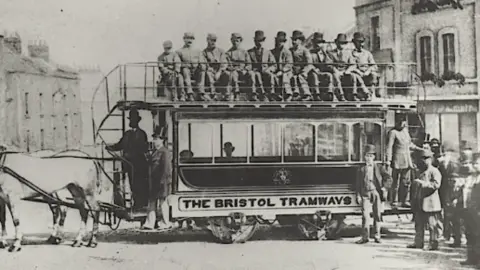
In 1875, Sir George White, from Cotham, founded the Bristol Tramways Company, which was an open-top, horse-drawn service.
By 1895, the company was operating its first electric trams and the early 1900s saw the network's heyday, with more than 200 trams working across 17 routes around Bristol.
However, newer and more comfortable buses began running in the city, and the popularity of the trams waned.
A German bomb landed on the main power supply to Bristol during the Second World War, and trams were scrapped and replaced by the Bristol Omnibus Company.
 Peter Davey Collection
When the trams nearly returned
Plans for a tram network were revived in the late 1990s when the Labour government at the time made what would now equate to roughly £1bn available for a tram network between Bristol and South Gloucestershire.
It was given the name Supertram. But like the city centre arena, it never became reality. There were disagreements about the specifics of where the line would run.
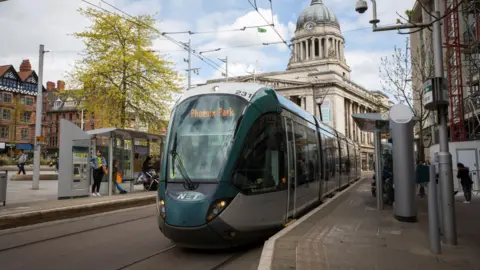
The funding was taken from the West and went to Nottingham instead, and that city's tram network was built in the early 2000s.
 Getty Images
Another city-wide £200m tram scheme for Bristol was scrapped in 2004 because of escalating costs.
It leaves the city standing out among the larger UK cities for its lack of a mass transit network.
Liverpool, Sheffield, Manchester, Birmingham, Nottingham, Edinburgh, Newcastle and Glasgow all have either metros or tram networks, while Bristol has neither.
What has improved in recent years is the city's rail network, with new stations at Portway Park and Ride and Ashley Down now open, and plans to reopen the line to Portishead.
The Metrobus - and resurgence of buses
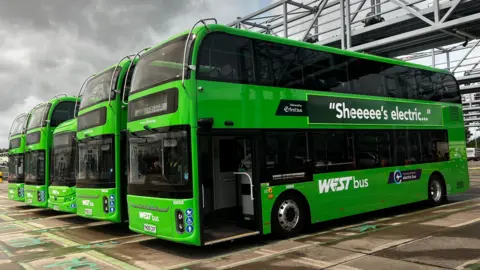
In 2018, a new rapid transit bus system called Metrobus opened to passengers.
It is a segregated bus network which uses dedicated lanes and traffic light priority in a bid to ensure faster, reliable, and more direct journeys across the greater Bristol area.
Costs for the network were Initially estimated at £190m in 2015, but the bill rose by £40m to a total spend of £230m at its launch.
Tens of millions of people have used the services, which have expanded to four routes linking key areas like Cribbs Causeway, Hengrove, Long Ashton Park & Ride, Emersons Green, and the Bristol city centre.
Underground, overground ...
A year after becoming the elected Mayor of Bristol in 2016, Marvin Rees first proposed an underground system as a solution to traffic congestion, suggesting that three metro routes could be delivered within 10 years at a cost of up to £4bn.
His plans were revived after the pandemic, when he was re-elected in 2021.
Up to £15m was spent on initial studies into the feasibility of an underground network.
A report commissioned by the West of England Combined Authority in 2023 suggested the scheme could cost up to £18bn, a figure the mayor "totally rejected."
The airport conundrum
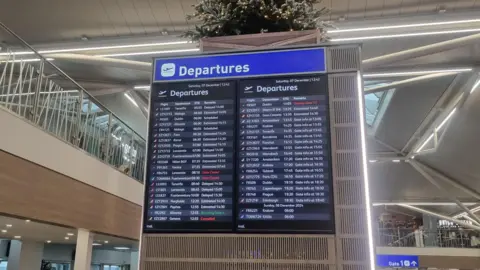
In 2025, Bristol Airport opened a new £60m transport interchange, with thousands of parking spaces, and space for more buses and coaches, aiming to encourage the use of public transport.
However, the latest figures show only 15 per cent of passengers currently arrive by bus - a figure airport bosses want to improve.
Bristol Airport is also one of just a handful across the UK without a direct rail link to it.
It is expected the airport will be part of the mass transit network plans being unveiled later.
Follow BBC Bristol on Facebook, X and Instagram. Send your story ideas to us on email or via WhatsApp on 0800 313 4630.
