Summer grassroots football plan after 21,800 games cancelled

 BBC
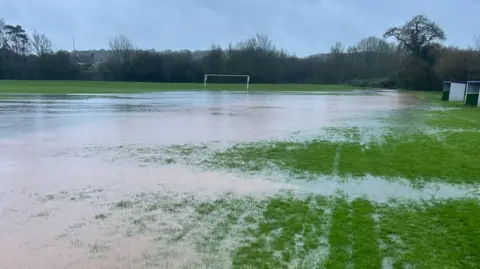
BBCGrassroots football is trialling playing in the summer after wet winter weather postponed 21,800 games over the past four years.
Currently, the season runs from September to May, but the Football Association of Wales (FAW) pilot will run from March to November, with an August break.
Teams taking part in Project Chwarae – Project Play – claim the switch could lead to more children playing football, while others who refused to join the trial are concerned about losing money and clashes with summer sports.
The FAW said the weather had already postponed 30% of matches this season, and some clubs have barely played on grass pitches since November following a wetter-than-average winter across Wales.
The South Wales Women and Girls' League is one of four pilot areas where junior teams will now trial a summer season in 2026, as part of the FAW's scheme.

"I think it's a good idea, because in the summer it's hotter and it won't be raining, so people won't be getting colder," said Harper, 8, who plays for Cogan under-9s in the Vale of Glamorgan.
Her teammates Eadie and Grace agree, and saying they are looking forward to playing in warmer weather, but not all the girls share that view.
"I probably prefer playing in the winter," says eight-year-old Alba. "I like playing in the rain and it's really fun."
Their coach Aidy Blake said waterlogged pitches were not the main factor behind their decision to take part in the trial, since most of their games are played on artificial 3G surfaces.
Instead, they are hoping that playing in more favourable weather conditions will help grow enthusiasm for the women and girls' game in particular.

"You can imagine in the depths of winter when it's freezing cold, lots of rain, and we've got girls standing out there, it's not enjoyable," he explained.
"I can see sometimes that maybe this isn't the right environment in that time of year.
"And I think we're going to get more positive feedback from the girls going forwards, playing in the summer months."
What is Project Chwarae?
Clubs and leagues taking part in the summer football trials this year will see their season run from March to November, with a mid-season break of four weeks expected around August.
The FAW will also be offering clubs another option to trial as part of Project Chwarae, which would add an eight-week winter break as part of their 2026/27 season.
To accommodate that, leagues taking part would see their season begin earlier in August, and finish in June or July.
The pilot schemes are expected to feature non-competitive junior football to begin with, although older junior leagues and adult teams could feature in future trials.

"The statistics on cancellations are really magnified when you talk about November through to February, last year almost 48% of fixtures were cancelled in those months," said Ben Field, head of grassroots football at the FAW.
"We're testing a couple of pilots here because until we try something, we won't know the outcomes.
"It's all been through expressions of interest, so this is not mandatory and we're not enforcing this upon any league across the country."
Though summer football is limited in the UK, the FAW are also hoping to learn lessons from the Republic of Ireland, who are in the process of changing their entire calendar to a summer season.
"All options are on the table for the future," added Field.
"We'll have to review the outcomes of those pilots… before ultimately taking that back to the FAW and its board, to maybe make some decisions longer term."
Cricket, holidays and festivals
But some clubs rejected the chance to take part, including Raglan FC in Monmouthshire.
The club has its own complex of grass pitches, and despite better drainage in place than most, club chair Amie Dembicki said they still lost many games to the "awful weather".
But Raglan and many other clubs also hold lucrative football festivals over the summer months, and the risk of jeopardizing those high-earning events is of greater concern.
"Our main income is our tournaments, and they bring in thousands that would keep us afloat throughout the year," said Dembicki.
"We also do our pitch maintenance during summer, which you wouldn't be able to do in the winter because there's no way you'd get the tractors on here to have it spiked."

Summer football would also bring other logistical problems for parents and players, said club secretary Jamie Finlay.
"We didn't realise how many people played cricket, how many people did different things like netball and other sports that take over the summer and, of course, people thinking about their summer holidays," he explained.
"We were given an opportunity to come back to the FAW and give our suggestions, and for us it was more access to 3G pitches, that would be a better option for us."
Ben Field said the FAW had invested significantly in artificial pitches over the past few years through the Cymru Football Foundation, but admitted there was still a "significant shortfall" between the finances available and the "current demand".
"What we're doing is trying to cater for the demand of the game as it currently stands," he said.
"The game is growing, so the investment into new 3G facilities helps us to deliver against that, but it's not going to be sufficient to help throughout the entirety of the winter season."
