Why have Christmas trees been buried on beach?

 BBC
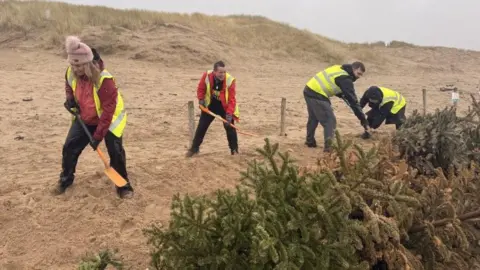
BBCOn a cold and rainy day in February on the Fylde Coast in Lancashire, rows and rows of old Christmas trees are being lined up to be given a second lease of life.
Volunteers from the Fylde Sand Dunes Project have gathered along the sand dunes to bury the evergreens donated by residents, charities and businesses following the festive season.
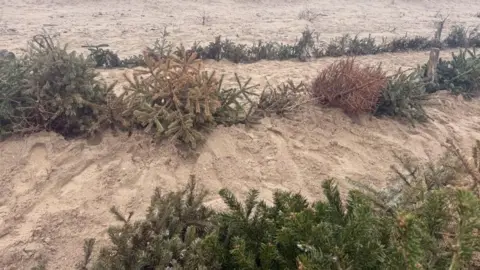
The trees are placed in front of the existing dunes in the hope they will act as a natural sea defence to protect nearby homes and roads as well as the wildlife.
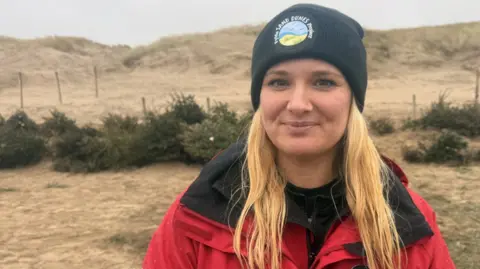
Amy Pennington, the project's senior engagement officer, said the scheme was "really important" as 80% of the sand dunes had been lost "over the past 150 to 200 years".
"It's important for the people that live here in the houses behind," she said.
"But it's also really important for wildlife because the work that we're doing helps to build the sand dunes up, which creates lots of habitats for lots of biodiversity and endemic animals that wouldn't be able to live anywhere else like the sand lizards."
Thousands of discarded Christmas trees have been buried along the coast in hope they will create new sand dunes.
As the wind blows, the branches of the trees trap sand, gradually creating new dunes.
Since 2013, hundreds of volunteers have picked up a spade to help make a difference.
Among this year's group of volunteers is Wilson Clark, who was keen to take part due to the positive benefits to the environment.
"I think it's a really good cause," he said.
"It's obviously doing a lot for the environment by protecting the sand dunes [and] helping to build them up."
Fellow volunteer Lisa Kneadle said it had not crossed her mind that old Christmas trees could be put to good use.
"It was just the last thing you'd think of but it's fantastic," she said.
The sand dunes along the Fylde Coast are home to a variety of unique plants and animals.
The dunes have been designated as a site of special scientific interest and play a crucial role in providing habitat for flora and fauna of international and national importance.
Listen to the best of BBC Radio Lancashire on Sounds and follow BBC Lancashire on Facebook, X and Instagram. You can also send story ideas via Whatsapp to 0808 100 2230.
