Prime suspect named in unsolved woman's murder

 Sussex Police
A man suspected of murdering a homeless woman more than two decades ago has been identified by police.
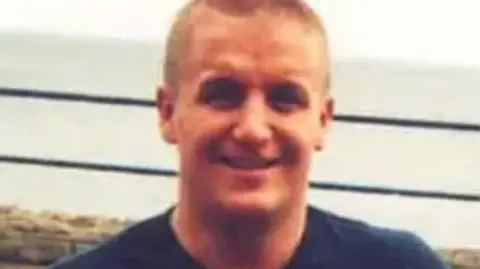
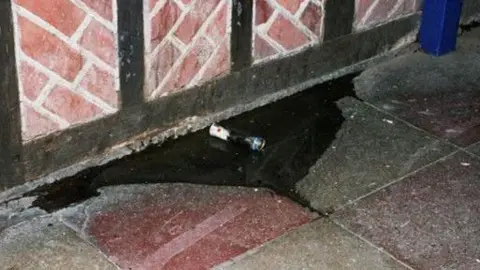
Jennifer Kiely, 35, was stabbed 16 times and set alight in a seafront shelter in Eastbourne, East Sussex, in the early hours of 22 January, 2005.
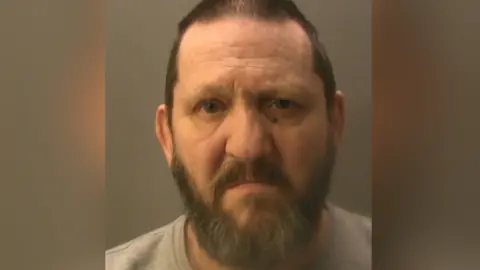
Sussex Police said DNA breakthroughs have identified Keith Dowbekin as the prime suspect and they would have sought to charge him had he not died in 2014, aged 60.
Ms Kiely's family paid tribute to her as a "gentle, funny and creative soul", saying an end to the investigation "brings a sense of closure" but "does not erase the loss of a kind, loving, and vibrant woman".
 Sussex Police
Ms Kiely's children added: "Our mum was more than her struggles. She was a mum, a daughter, sister, niece and a friend. Her life mattered.
"I hope her story encourages compassion for those experiencing homelessness and the stigma surrounding mental health. These are issues that affect countless individuals and families, often in silence."
Ms Kiely had become estranged from her family following a mental health breakdown.
She had been living in hostels and homeless shelters across the South of England and was known to have a pushchair in which she kept her belongings, Sussex Police said.
Who was Keith Dowbekin?
Keith Dowbekin, also known as Keith Black or Broadbent, stayed in Eastbourne and associated with members of the homeless community such as Ms Kiely, Sussex Police said.
Originally from the North West, a man going by the name Keith Black was stopped at the Port of Dover a week after Ms Kiely's body was found.
 Sussex Police
He was stopped as he was sleeping rough and released as there was no trace to him on the Sussex Police crime database and he was not considered a suspect at the time.
But, Dowbekin had been arrested in connection to two separate rape incidents in 2003 and 2004 in Great Yarmouth, Norfolk.
The fatal attack on Ms Kiely was believed to have been sexually motivated and she may have been sexually assaulted, police previously said.
The rape allegations against Dowbekin were only discovered by Sussex Police in 2024, when he was officially named a suspect.
DNA from a separate murder investigation in Norfolk in 2003, to which Dowbekin was a witness, was later linked to evidence found in Holywell in 2005.
Sussex Police Det Ch Insp Simon Dunn said that if rape allegations against Dowbekin had been identified when he was stopped in Dover, he "may have been treated differently".
 Sussex Police
Two people were arrested in 2005 over Ms Kiely's murder but later released without charge due to insufficient evidence.
Sussex Police initially dropped the enquiry into the death of Ms Kiely, a mother of three from South London, in 2007 but re-opened the case in 2011.
In 2017, detectives began pursuing a new line of inquiry related to unidentified DNA evidence found at the scene.
DNA was collected from Ms Kiely's body, blood and items including discarded cigarette butts found at the scene, which was eventually used to link Dowbekin to the murder.
A £20,000 reward was offered for information that could help solve the case in January 2024.
Mr Dunn said: "I'm extremely confident that Keith Dowbekin was responsible for Jennifer's murder.
"When I met with the family they were very emotional. It has been a long time where they have had to endure the killer of their loved one not being caught."
Follow BBC Sussex on Facebook, on X, and on Instagram. Send your story ideas to [email protected] or WhatsApp us on 08081 002250.