The most spotted birds in your local area - and how to help them

 Getty Images
More than 650,000 people across the UK took part in this year's Big Garden Birdwatch, spending an hour counting birds in their garden or local park. What do the results tell us about the picture in your area?
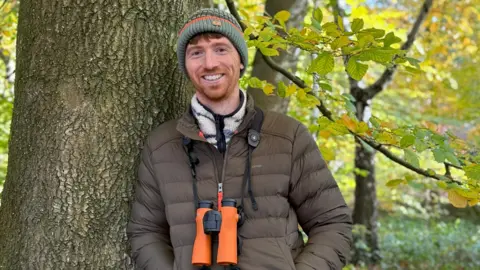
Ornithologist and bird content creator Jack Baddams believes birdwatching is benefitting from a "real push to get in touch with things that are little bit simpler".
Those following in his footsteps and looking out for birds visiting their gardens are more likely to see certain species depending on where they live in the UK.
According to the overall results of the RSPB's Big Garden Birdwatch, blackbirds saw the largest fall in the average count when compared with last year.
Sightings of starlings, woodpigeons and robins have also fallen since 2025.
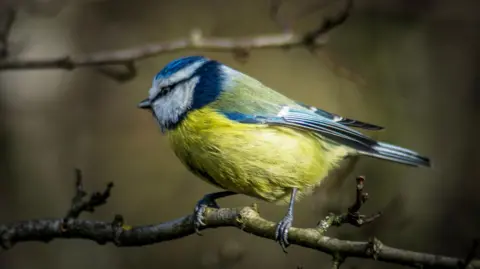
In more positive news, Baddams says 2026 was an "excellent" year for the tit family after the previous sunny and bright summer.
The good weather led to a strong breeding year for the small garden birds.
Blue, great, coal and long-tailed tits all saw a rise in the counts across UK gardens since last year.
They have also generally improved in numbers since the first Big Garden Birdwatch.
Among the top 10 most sighted birds, blue tits saw the biggest percentage increase in the average UK count from 2025.
One species attracting particular concern is the greenfinch, which was added to a red list by conservationists in 2021.
It has dropped down the Birdwatch rankings to 18th, compared with seventh when the survey began in 1979.
The bird has suffered severe decline for the past two decades, largely due to a disease known as trichomonosis.
To stop the spread, the RSPB is urging people not to fill their bird feeders in warmer months.
The charity advises people to:
- pause the use of seed and peanuts from May to October to prevent too many birds gathering in one place
- clean bird feeders on a weekly basis
- offer water only if it can be cleaned daily
- avoid flat-surfaced feeders as they carry a higher risk of spreading disease
RSPB chief executive Beccy Speight says: "We're not asking people to stop feeding, just to feed in a way that protects birds' long-term health.
"By making small changes together, we can ensure garden feeding continues to be a positive force for nature."
 Jack Baddams
Baddams shares the RSPB's concerns and says we are "sleepwalking into a biodiversity collapse".
"We're seeing that nature across the board is going down, it's going the wrong way," he says.
Rather than using bird feeders, he encourages people to create "habitable places" in their gardens through native trees, shrubs and flowers to support birds.
Even window planter boxes can be more helpful.
He says: "There is no two ways about it. Bird feeders are the reason that we have lost huge numbers of greenfinches.
"We have to build ecosystems in our gardens and not fast food restaurants."
Bird-friendly plants include lavender, sunflowers, hawthorn and ivy, which provide safer food sources and encourage insects, according to the Royal Horticultural Society.
Its senior wildlife expert, Helen Bostock, says: "Even small changes can make a meaningful difference to local bird populations and with spring now well under way, it's the perfect time to get sowing and planting with birds in mind."
Across the UK, starlings were seen in fewer than a third of gardens. It continued a decline seen last year and starlings reached a new low since the survey began in 1979.
However, a bigger decline for woodpigeons meant starlings reclaimed the third place in the UK-wide garden bird league table.
More locally, blue tits did make it to number one in 13 counties – all of which were in England. In nearly four fifths of local areas, the house sparrow was number one.
Starlings came top in 10 local areas. The rarest number ones were the chaffinch and jackdaw, which both reached number one in Scottish local authorities.
Meanwhile, in the Welsh area of Conwy, where people hailing from within the town itself are nicknamed jackdaws, the bird fell in ranking to fifth.
 Getty Images
Blackbirds had the biggest fall in ranks in Northern Ireland, from third in 2025 to sixth place this year. Across the nation's counties, they remained in the top five in County Down only.
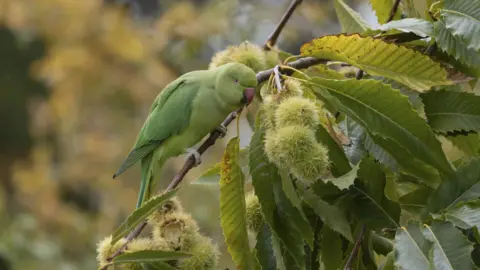
Elsewhere, an invasive species from Argentina has been making its mark.
The ring-necked parakeet appeared in almost a third of gardens or green spaces in the Greater London area, making it the ninth most frequently spotted bird there.
It also appeared in the top 20 birds in Greater Manchester, Hertfordshire, Surrey and the West Midlands.
