Faisal Islam: Is the UK economy really turning a corner?

 PA Media
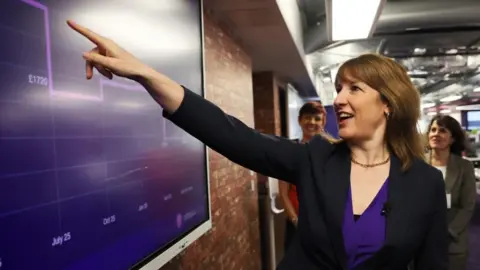
On the day households found out their energy bills would fall in April, the chancellor chose to go to the headquarters of the company that has quietly become the UK's biggest domestic energy supplier, Octopus.
Rachel Reeves was shown the screens displaying the real-time management of energy demand for electric vehicles, as well as the cheaper prices for the communities that had volunteered to host clean energy infrastructure such as wind farms.
This was an attempt to not just illuminate the notable cut to energy bills announced under the Ofgem price cap, but also to start to float a broader story about the UK economy, after some rosier numbers in recent days.
I asked a couple of times if she was seeing "green shoots" in the economy. Eventually she said that we were "beginning to see the economy turning a corner".
"I think this will be the year that people start to feel the change in their pockets," Reeves said.
Is that right, or could that prove a hostage to fortune?
The 7% cut to electricity bills is real and substantial (though it's worth noting that energy bills remain stuck in a higher band than before the Russia Ukraine energy crisis four years ago).
This has been a very conscious strategy from the Chancellor. She spent Autumn actively looking for ways to use policy and the tax system to lower inflation.
"I know that the last few years have been tough for people, but the measures that I took, all fully costed and fully funded in the budget, should start to ease those cost of living pressures that people have been living with for too long," she told me.
Digital advertising hoards currently plastered with adverts for the "Big Rail Fare Freeze" are part of the same strategy. Reeves told me that energy companies should all pass on the £150 cut to every customer, even those who had fixed their bills.
The cut is unusual as it does predominantly come from the Government's decision at the Budget to shift the burden of green levies from bills into general taxation.
That is important. But it is also true that at that Budget, Reeves also announced she would extend the freeze on income tax thresholds which effectively means more of peoples' income will be taxed at higher rates as their pay increases.
We've also seen some sluggish economic growth numbers at the end of last year, and increases in unemployment especially for younger workers.
But more generally we have seen better figures for high street spending, economic surveys of the service sector, consumer confidence, and lower borrowing numbers and costs.
Inflation had already begun to fall even before today's energy bill cuts. In turn, interest rates set by the Bank of England are also set to continue to fall.
It may be a little too early to call "green shoots", but it is also the case that the doom mongering about the UK economy has been overdone too.
So the Chancellor is trying to use this moment of a tangible cut to every household's energy bill as a launching pad for a wider attempt to gee up consumer and business confidence.
The official independent forecast numbers for the economy, prices, borrowing and jobs come next week at the Treasury Spring Statement, which should give us a clearer picture of just how green the economic shoots are expected to be.

Sign up for our Politics Essential newsletter to keep up with the inner workings of Westminster and beyond.
