How a schoolgirl became the UK's youngest female double murderer

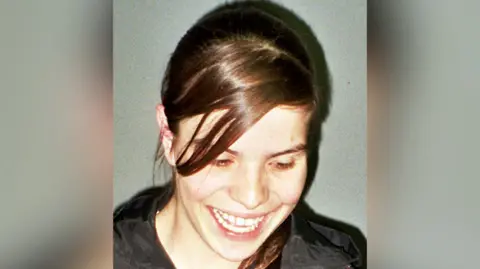 Suffolk Police
Lorraine Thorpe was 15 when she tortured and murdered a mother-of-two in Ipswich before killing her disabled dad when he threatened to report what his daughter had done.
Thorpe carried out the crimes alongside her street drinking associate Paul Clarke in August 2009, and the pair were given life sentences a year later.
The then-teenager was told she would serve at least 14 years in jail and she still remains in prison, having been denied parole twice after the Parole Board deemed her too great a risk to be released.
On 24 February, however, Thorpe was told she could be moved to an open prison. But how did a schoolgirl become the UK's youngest female double murderer at the time of her conviction?
Who were Lorraine Thorpe and Paul Clarke?
Thorpe was known to the local authorities from an early age as she was raised in poverty in Ipswich, living with her dad Desmond Thorpe in grubby flats and occasionally in tents.
During her trial at Ipswich Crown Court in August 2010, defence barrister Graham Parkins KC said she had become associated with street drinkers in the town and had "led a chaotic lifestyle since she was 12".
Colin Adwent, who covered the case during his 20-year career as a crime reporter in Suffolk, said: "[Thorpe] was quite cunning and quite manipulative - but that's hardly surprising given her background and how she grew up.
"That goes nowhere near excusing what she ended up doing, but she probably didn't have that much of a chance."
One of the drinkers Thorpe befriended was Clarke, who was 41 at the time of the murders and who had a "reputation as being quite aggressive, bullying, overbearing and violent", the court heard.
Clarke, who was a drug addict, had previously been in a relationship with Rosalyn Hunt - the woman who the pair would go on to torture and murder.
Why did the pair kill Rosalyn Hunt?
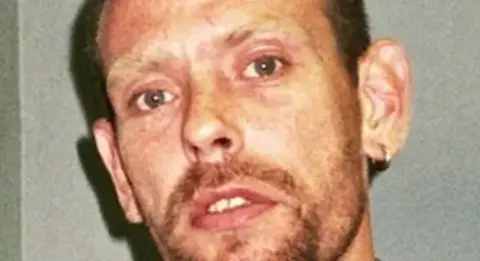 Suffolk Police
Hunt, who was also known to Thorpe through being part of the same drinking community, was killed between 1 and 10 August 2009.
During the seven-week trial, the court was told how the teenager and Clarke had held Hunt captive in her flat in Victoria Street, Ipswich.
They tortured her for days using a cheese grater, a fan and dog lead chains, and rubbed salt into her wounds before beating her to death.
Officers found Hunt dead inside her home after a member of the public who was concerned about her whereabouts raised the alarm on 9 August.
The sustained abuse Hunt endured was said to have been motivated by Clarke's anger over how she had reportedly allowed his dog to attack a child.
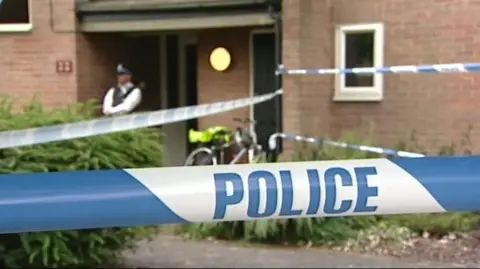
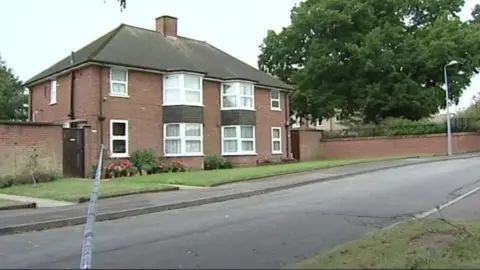
After a few days, Thorpe's dad confronted her and Clarke over what they had done to Hunt and threatened to report them to the authorities.
As a result, the pair attacked and smothered him - with the footprint of his daughter's trainer reportedly being found on his head.
"Desmond was apparently quite a sweet man, but he was a street drinker and in extremely poor health," added Adwent, who worked as a reporter for the Evening Star, which later became the Ipswich Star, from 1998 until 2017.
"Thorpe was described to me by someone who knew her as a daddy's girl, and she tried to look after him and do the best she could for him – but there were two sides to her.
"What she did was absolutely horrendous and terrible and there is no amount of mitigation that minimises what she did."
What happened at the pair's trial?
 George King/BBC
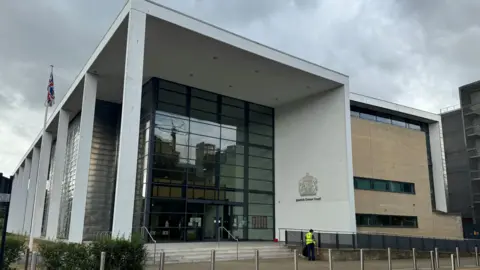
Thorpe and Clarke were arrested and charged with the two murders in 2009 and faced trial at Ipswich Crown Court in 2010.
Neither gave any evidence during the proceedings and following more than 17 hours of deliberation, the jury unanimously found the pair guilty.
Clarke was sentenced to a minimum of 27 years in prison in August 2010, while Thorpe was jailed a month later at the Old Bailey, London, to a minimum of 14 years.
Suffolk Police described the killings as being brutal and tragic.
What turned Thorpe into a double murderer?
Thorpe was described as being a "product of social care" whose "values were very, very low", but also "quite a bright and talented girl".
During her sentencing at the Old Bailey Mr Justice Saunders, detailed the teenager's troubled childhood.
He said that the former Piper's Vale Primary School student had become involved in "her father's world of street drinking" after her parents separated.
By this point, Desmond had turned into a "hopeless alcoholic" who was unable to do anything for himself, which left Thorpe forced to do "more and more for him".
"She did the most intimate things for him that no child should ever have to do, and all evidence shows they loved each other very much," the judge said.
During this period, she was moved from "one squalid flat to another" and "violence had become the norm", leaving her with "no real understanding of what was right and wrong", the judge added.
"She was capable of being highly manipulative, wilful and stubborn and she found violence funny and entertaining," he added.
What happened to Clarke?
 HM Inspectorate of Prisons
In April 2011, less than a year after being jailed, Clarke and Thorpe challenged their convictions for the murder of Desmond Thorpe – but their appeals were thrown out.
In 2014 Clarke was found dead at HM Prison Whitemoor, Cambridgeshire.
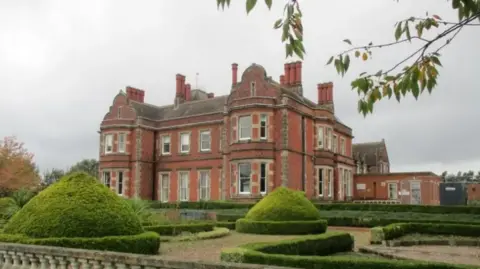
Thorpe finished her minimum prison term in August 2023, having been imprisoned at Derbyshire's HMP Foston Hall - a women's closed category prison - since 2019.
This made her eligible for parole, but in October 2023 she was denied release following a Parole Board review that she declined to engage with.
She was refused release again earlier this month, but the board said she could be moved to an open prison to test her in a less restrictive environment.
"After considering the circumstances of her offending, the progress made while in custody and the evidence presented at the hearing, the panel agreed that Ms Thorpe should not be released," the Parole Board said.
The panel noted Thorpe's "general maturation" and "the fact that she had not evidenced violence or aggression for many years", adding that her "risk of violence towards others had reduced by her own actions in custody".
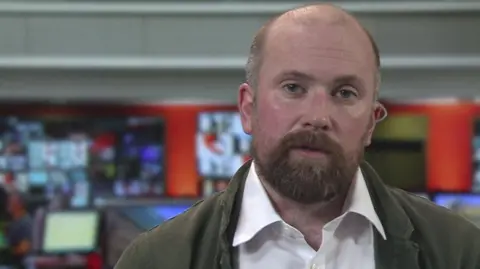
David Shipley, a prison reform campaigner who was jailed for fraud in 2020, told BBC Suffolk's Sarah Lilley that open prisons could help people to prepare for the real world and have a "successful" return to society.
"The most important thing about an open prison is it allows the authorities to test how prisoners respond to having more freedom," he added.
"If someone is locked in a normal, closed prison with walls and bars and gates, exactly how sure can we be that they have changed and are trustworthy and safe?
"Mostly when people on life sentences get to open sentences, they are reliable because they've had to prove their progress over many years to get to that point.
"But sometimes people will arrive and behave very strangely and that's them saying, in a sub-conscious way, they don't feel ready to be released," he said.
At the time, Thorpe was the youngest double murderer in the country.
Mary Bell, detained at the age of 11 in 1968 for the manslaughter of two boys aged three and four, remains the youngest female killer in the UK.
In April 2016 Kim Edwards and her boyfriend Lucas Markham murdered Edwards' mother Elizabeth, 49, and her younger sister Katie, 13, at their home in Spalding, Lincolnshire.
The killers were 14 at the time and were both sentenced to life in prison, with a minimum of 20 years - later reduced to 17-and-a-half following a later ruling.
Follow Suffolk news on BBC Sounds, Facebook, Instagram and X.
