Special sight for supermoon hunters

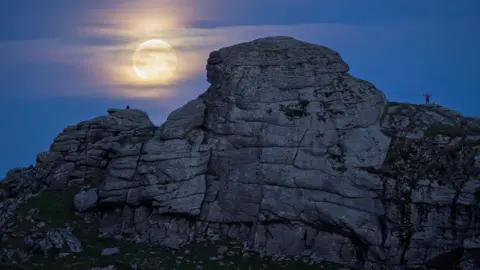 Jason Way Photography
Sky-watcher Jason Way captured this amazing shot of a supermoon above Dartmoor's Haytor Rocks on Tuesday night, among many other images of the phenonomen taken in Cornwall.
A supermoon appears brighter and larger than other full moons in the evening sky and occurs when the moon is at its closest point to the Earth.
The term was first coined in 1979 by astrologer Richard Nolle and this occurrence was the first since November 2024.
This supermoon is known by different names - both as the Hunter's Moon and as the Harvest Moon.
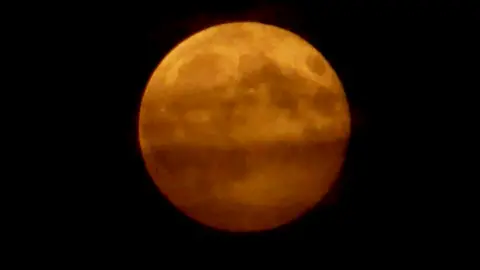 Tanktop/BBC Weather Watchers
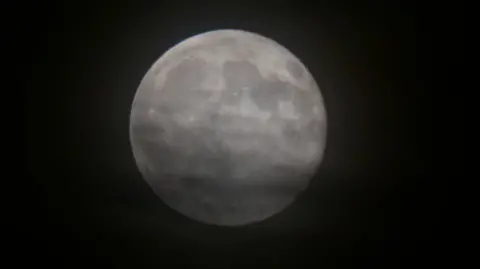 Jane Lewarne/BBC Weather Watchers
It is referred to as the Hunter's Moon because as the first full moon in October, it was a time when historically preparations were made for winter in the northern hemisphere, with people hunting and preserving meats.
It is also referred to the Harvest Moon, as it rises closest to the autumn equinox (22 September), and reflects a time when farmers would use the moon's brightness to collect crops in the evening.
Follow BBC Devon on X, Facebook and Instagram. Send your story ideas to spotlight@bbc.co.uk.
