Pub exhibition shows industry's resilience

 Katy Lewis/BBC
An exhibition in a cathedral city shows it still has about the same number of pubs as it did 200 years ago.
The Inns & Alehouses in Victorian St Albans display at the city's museum and gallery uncovers the stories behind the city's pub culture.
It takes visitors from 1830, when there were about 40 commercial drinking establishments to the late 19th Century, when the city was home to nearly 100. Today, there are still 34 within a mile of the city centre.
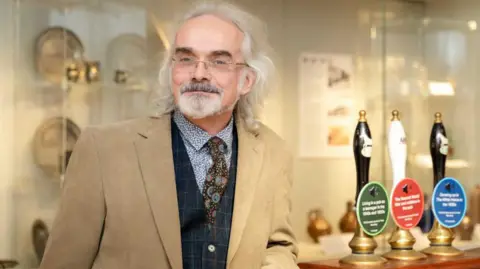
Curator David Thorold said now numbers have "stabilised to a more realistic level… it's a testament to how well [the city's] pubs have adapted and stood the test of time".
 St Albans Museums/KL Creative Photograph
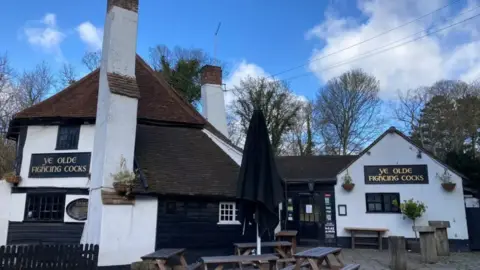
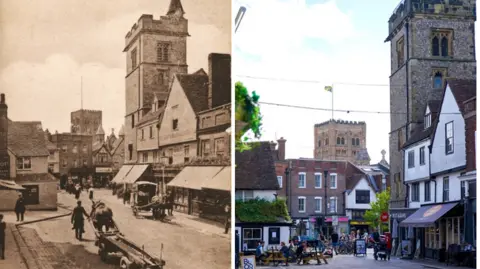
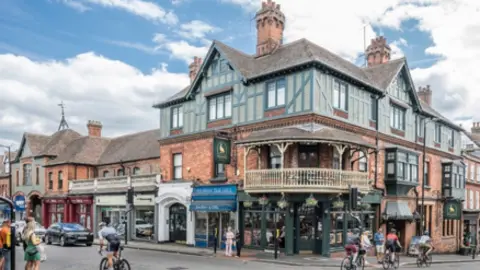
Public houses still in the city include Ye Olde Fighting Cocks, which is the oldest pub in England, according to Guinness World Records, although others dispute the claim, and old coaching inns such as The Peahen, operational by at least the 15th Century.
The Farriers Arms in Lower Dagnall Street was where the longest surviving branch of the Campaign for Real Ale was formed in the 1970s.
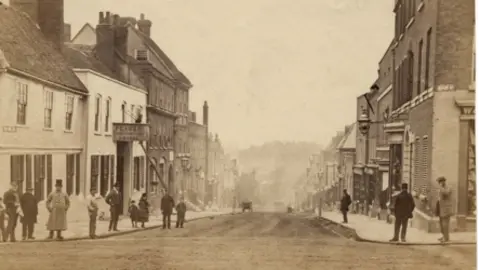
The new exhibition was inspired by the 1884 verse The City Pubs, composed by 'Baron' Martin, which lists 92 drinking locations within a one-kilometre radius of the museum.
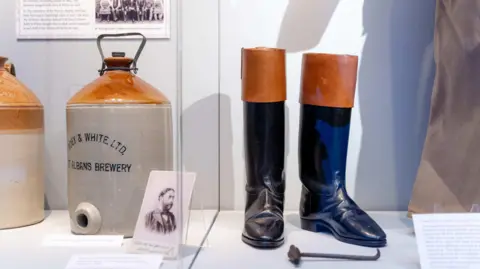
It features stories, objects and Victorian memorabilia and the team behind it have located photographs of all but two of the establishments.
 Stephanie Belton
Mr Thorold said: "Of the 92 establishments mentioned in the verse, 30 are still open today - and remarkably, St Albans has about the same number of pubs now as it did 200 years ago."
The exhibition also explores the rise and fall of pub numbers as pressures from rapid social, cultural, and economic change took their toll.
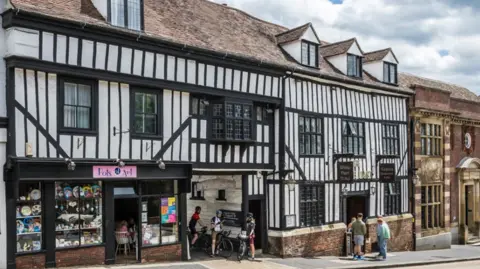
New licensing laws saw an explosion of smaller establishments. To divert people from drinking gin and spirits, the Beer Act removed the duty from beer and allowed anybody to open up an establishment and serve it exclusively for two guineas a year.
"It allowed a huge profusion of new places," Mr Thorold said.
 Ricky Barnett
But improved road links brought fewer overnight stays as journeys became faster and railways saw the demise of the coaching business.
Better water supplies offered safer alternatives to alcohol and by the century's end, the rise of the Temperance Movement sought to reduce or even end alcohol consumption.
 Ricky Barnett
 St Albans Museums
At its height there were "too many [establishments] to maintain", Mr Thorold said, and it was publicans who diversified that survived.
"The Peahen seems to have been letting space inside the building for shops," he said, "but also moved into getting a lot of the clubs and social organisations in such as the football club and the cricket club."
He adds that the White Hart on Holywell Hill became a huge venue for cyclists and the Lower Red Lion in Fishpool Street seemed to have started off as a pub in a house but ended up like a coaching inn.
"They seem to have bought a neighbouring house and punched a hole through the living room and widened it out," he said. "[It's like it had] owners who thought 'there's money in this business we could get some of that as well'."
 Stephanie Belton
He continued: "[Pubs] ability to reinvent themselves while remaining at the heart of social life is what makes them such enduring fixtures in communities across the UK."
Sean Hughes from Save St Albans Pubs said: "We've still got the most incredible selection of pubs and they are part of the cultural heritage of being a resident of St Albans.
"For over 1,000 years we've had pubs in the heart of St Albans that have been a meeting point for millions of people, it's quite staggering.
"Still today we have this vibrant pub scene that's alive and busy which is incredible in this day and age."
Inns & Alehouses in Victorian St Albans is a free exhibition running until 15 March 2026.
Follow Beds, Herts and Bucks news on BBC Sounds, Facebook, Instagram and X.
