Early 'voice mails' of disability rights pioneers discovered

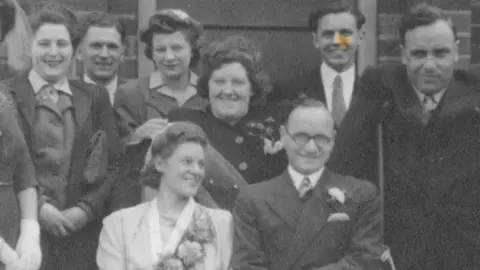 Pauline Tasker
"Hello Mum and Dad, greetings from Llandudno.
"We've just taken Alan up The Great Orme, it's been a grand day but it's been raining all afternoon.
"The hotel is fine, and you can expect us back on Saturday."
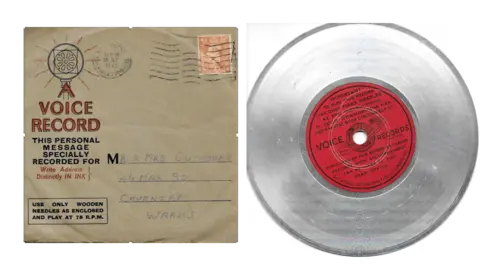
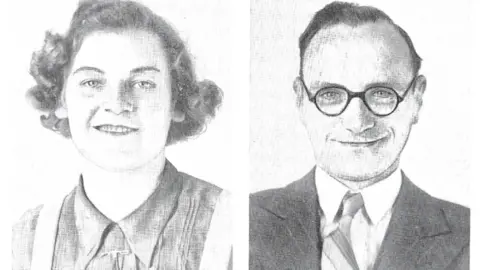
In a crackly voice recording, from 1945, newly-weds Len and Peggy Tasker can be heard on a recorded message during a trip to Wales, sent back to their family at home in Coventry.
It would have cost them sixpence to make the recording onto an aluminium disc, which was then sent through the post in an early example of "voice mail".
The disc was discovered "stashed away" by the couple's daughter Pauline Tasker, as she went through her mother's things after her death in 2011.
It was "bizarre" listening to the voice of her parents recorded 80 years ago, she said.
"I could hear my dad, but my mum sounded like a 15-year-old girl."
She sent the recordings to an expert to be digitised and, in doing so, has shed a spotlight on a forgotten form of communication, the amazing life her parents led and the legacy they left behind.
 Pauline Tasker
Pauline was helped by independent researcher Stephen Baird after reading about his work with Prof Thomas Levin, of Princeton University in New Jersey, in a local newsletter.
The disc states it should only be played with a wooden needle, but can be played on a standard record player at 78 RPM.
Levine has collected thousands of similar voice recordings - including others from Coventry - which, he says, "open up an entire landscape of cultural stories and details".
"It is also a ghost archive," he added.
The voice recording machines were popular in the 1930s and 40s in department stores, railway stations, and amusement arcades, across Britain, explained the academic.
"You walked up to it and stood in front of the microphone, put a coin in the slot and could record one to two minutes, and then you could get an envelope with which you could send it to your loved one," he explained.
A trailblazing couple and incredible legacy
Behind the voice recordings though, is the Taskers' own story, of a couple who went on to help change the lives and rights of disabled people across Britain.
Len was "heavily involved" in campaigning, said former Coventry Labour MP Bob Ainsworth.
"Trying to bring to the attention, both of local government and of central government, the needs of disabled people. It was a big part of what Len did."
The group in Llandudno that July were all part of the Coventry Cripples' Club, which Len had co-founded in 1938.
Of course the term "cripple" has long since been deemed offensive, and the club was later renamed the Enterprise Club for Disabled People.
Nearly 90 years on, it is still a thriving facility in the city.
"Disabled people at the time were just stuck at home with nothing to do," explained Pauline.
"No work, no socialising, not getting out and about, and [the club] was desperately what was needed."
 Pauline Tasker
In another part of the recording, Peggy can be heard telling her family she had travelled to Wales "with Alan in the guard's van".
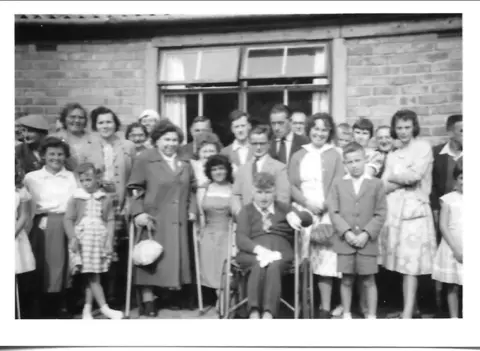
Club members would go on numerous trips by train, explained Pauline, "they were always scampering about doing something".
"Alan in the recording is Alan Norbury, a club member who was paralysed," she said.
"[His wheelchair] was very large and so Alan would have to ride in the guard's van, which everyone just took for granted.
"After all, at the time it was the only way he was going to get there."
 Pauline Tasker
Ainsworth said that like Len and Peggy, his father Stan was "profoundly disabled".
Len had fallen from a tree when he was nine years old, and the injury led to years of hospitalisation, many operations and a severe disability.
His father had been treasurer of the club, "but Len was always the leading light," he said.
What started as "a bunch of friends getting together for their own entertainment" eventually "grew and grew," he said.
Three members of the club, including his father, died on the city's roads, prompting the Taskers to start calling for better mobility rights, and forming the Coventry branch of the Disabled Drivers' Association.
They would both go on to lobby politicians, including then Prime Minister Edward Heath, to highlight the issues.
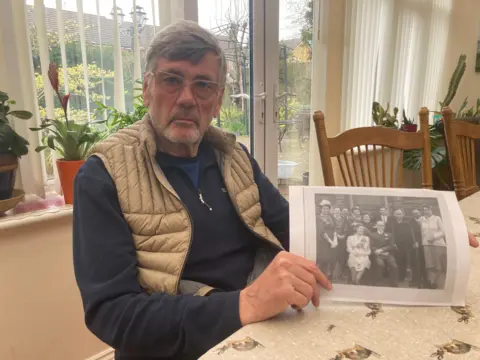
"My dad was one of those people who liked to set things up and move on," explained Pauline.
The couple also helped establish a holiday chalet for disabled people at a time when "hotels didn't really cater for them," she added.
Both passionate about sport, they went on to found the Phoenix (Coventry) Swimming Club for Disabled, the Coventry Sports Association for the Disabled, and the Midlands Sports Centre for the Disabled, which produced four Paralympic medal winners, said Ainsworth.
Len, who was made an MBE for his services to disabled people, was a flat-green bowling champion and was voted Disabled Sportsman of the Year in 1983.
Peggy, whose leg had been amputated because of a deformity she was born with, won medals for archery, rifle-shooting, bowling and table tennis.
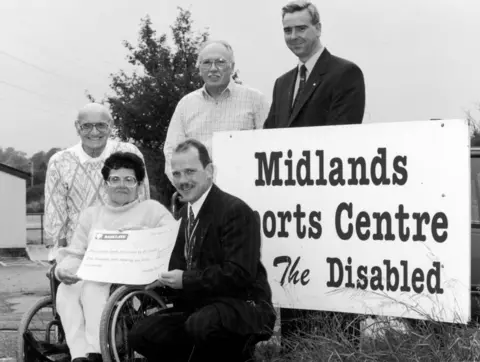 Getty Images
Len also worked on the National Cripples' Journal, renaming it The Voice of the Disabled when he took over as editor.
Speaking to the BBC in 2002, he said: "In those days we were regarded as cripples and this is a word we hated.
"It labels you, you see, and we don't want that label. We want to be ordinary citizens, accepted as ordinary citizens doing a useful job in the community."
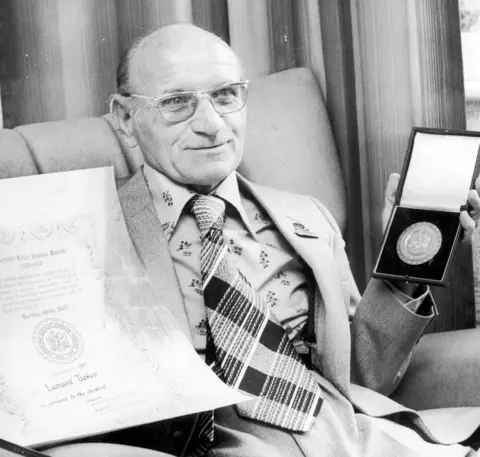 Getty Images
Following the death of his father in 1952, the Taskers "remained very supportive over the years," said Ainsworth.
His mother went through "very hard times," he explained, but Len and Peggy would take his family on outings.
"How on earth they ever found the time," he added.
"With the disability that they had and all of the campaigning for disabled rights and the running of the Enterprise Club, and yet they still had time to look after his old mate's widowed family."
"I would put Len and Peggy head and shoulders above anyone else, they really were the leading lights. They were "extraordinary", he added.
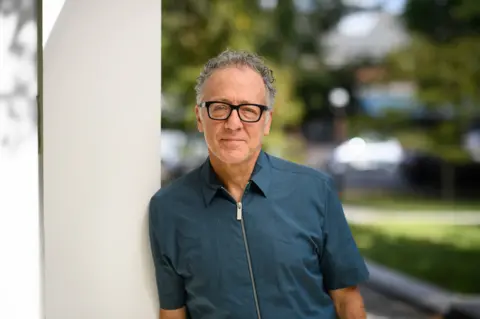 Professor Thomas Levin
The voice recording will form part of the Princeton University archive, which has been a 15-year project for Levin.
"It's an uncanny archive of the dead speaking, which is magical, and spooky, and fascinating, and deeply strange," he said.
He had first come across an example of the recorded letters at a flea market, he said.
There was little research and no archive of them, "so I had to create my own", he explained.
"They are an invaluable record of a form of speaking that is, in many cases, lost."
It was "astonishing," he added, "how one finds one disc and it opens up an entire chapter of local cultural history".
Follow BBC Coventry & Warwickshire on BBC Sounds, Facebook, X and Instagram.
