Pottery linked to slave trade found in dock works

 Gareth Jones/National Museums Liverpool
Pottery linked to the transatlantic slave trade has been discovered during building works at a Liverpool dock.
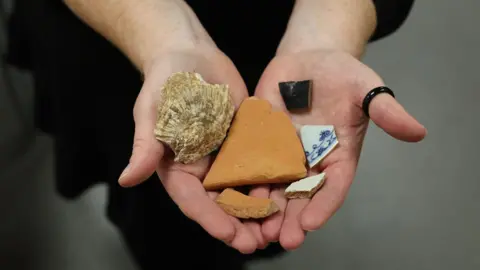
Fragments of sugar moulds - used in the processing of raw sugar into sugar loaves - have been found in the quaysides of Canning Dock.
In the 18th Century, Liverpool was the dominant British port in the development of the transatlantic slavery economy.
Liz Stewart, head of the Museum of Liverpool, said the redevelopment of the dock area was "not only about protecting the heritage of the site but also better understanding the layers of its history".
 Gareth Jones/National Museums Liverpool
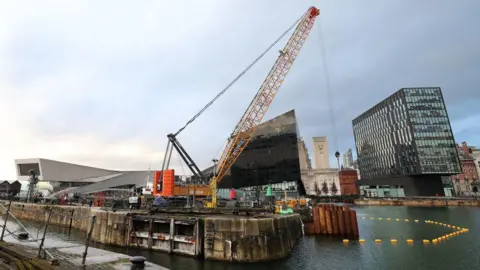
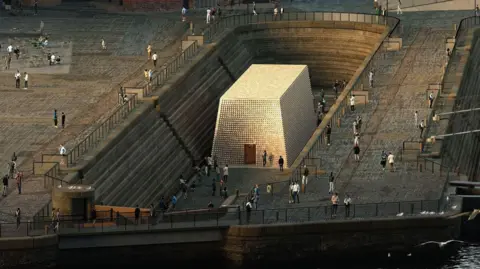
Canning Quaysides and Dry Docks are undergoing a £15m transformation as part of the Waterfront Transformation Project by National Museums Liverpool.
The south dry dock, built more than 250 years ago, is set to become accessible to the public for the first time.
From the 1750s onwards Liverpool's large infrastructure of docks developed out into the river.
Liverpool's waterfront is largely reclaimed land, with The Strand marking the original shoreline of the River Mersey.
 Gareth Jones/National Museums Liverpool
During works to transform the site, National Museums Liverpool archaeologists have been collecting fragments of pottery discovered by workers digging small test pits around Canning Dock.
Items found include pieces of porcelain, potentially brought to Liverpool from Staffordshire for export, and locally made tiles and pottery, which represent the history of the site and its global connections.
The sugar mould pottery was locally made and can be linked to a sugar baker on The Strand.
It was used in the processing of the raw sugar into sugar loaves.
The slave-produced sugar was processed in Liverpool after being imported from plantations in the Americas and the Caribbean.
 Asif Khan Studio
Other material dating back more 200 years has also been found.
"It is very exciting to see what has been hidden in the ground for all these years and consider what stories they tell us," Stewart added.
"Construction work around the historic waterfront always piques the interest of archaeologists because we know there's a chance it will uncover interesting material."
Listen to the best of BBC Radio Merseyside on Sounds and follow BBC Merseyside on Facebook, X, and Instagram. You can also send story ideas via Whatsapp to 0808 100 2230.
