Mixed council verdicts on new 'fair funding' plan

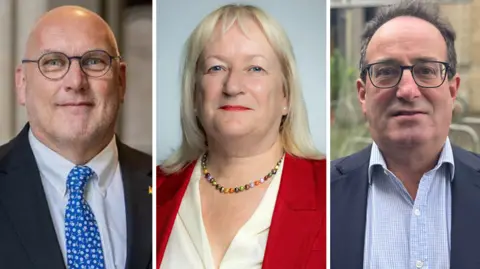 Hampshire County Council/ Reading Borough Council/ BBC
Councils in the south of England have given mixed verdicts on a new government funding formula which starts in April.
Provisional council finance settlements were announced in December following the government's Fair Funding 2.0 Review, which aims to benefit deprived areas.
Hampshire and Oxfordshire County Councils said they would receive less from central government, while Reading Borough Council said it was being given extra resources.
The Liberal Democrat leader of Bournemouth, Christchurch and Poole Council, Millie Earl, said there was a "north-south" divide and areas with devolved power and mayor were benefitting more.
 Isle of Wight Council
Less than half of councils will see funding fall over the three years of the funding settlement, the Institute for Fiscal Studies has previously said.
Rural councils fare worse than urban ones, according to the Rural Services Network.
The Independent leader of Isle of Wight Council, Phil Jordan, said the island had been "condemned to financial distress".
He said: "The fair funding for the Isle of Wight is actually flawed funding.
"Exceptional financial support [an application to the government for extra help] is now our only hope and we are undertaking that procedure."
The Conservative leader of Hampshire County Council, Nick Adams-King, said the funding formula was partly "political".
He said: "This government wants to focus its help on communities in the North and in the Midlands - let's be honest, they're areas which have much greater support for Labour - and that's where the money's being sent."
The authority is forecasting a "reduction in government grant funding of £48m per annum after a three-year transition period".
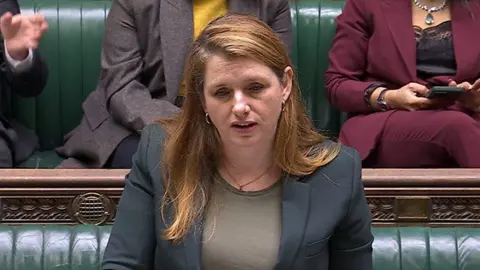 House of Commons TV
Oxfordshire County Council said "by 2028/9 the reduction in grant funding is £27.2m".
Dan Levy, Lib Dem cabinet member for finance, said: "It certainly doesn't feel very fair that Oxfordshire's getting less money than it did.
"I think the spirit of making sure that money goes to the places that need it most is absolutely great but that won't fairly be achieved by making places like Oxfordshire worse off."
Berkshire is a mixture of winners - including Reading and Slough Borough Councils - and losers such as West Berkshire Council and the Royal Borough of Windsor and Maidenhead.
Reading's Labour leader Liz Terry said: "We certainly welcome the extra resources that we've got - something like £8m over the four years.
"But, because of the pressure on services like children's services, adult social care, even temporary housing, the costs are much more than... [the] money from the government and council tax."
Previously, the government said the targeted funding was "reversing years of unfairness and unlocking opportunity in every part of the country".
It is expected to publish final funding settlements within the next few weeks.
