'Bradford fashion in the 1970s and 80s changed the city'

 Bradford District Museums and Galleries
From flared trousers to bold prints, fashion in the 1970s and 80s was a memorable era. For Bradford's growing South Asian community of the time, the styles from their homelands fused with British trends were about identity and belonging.
A new exhibition at the city's Loading Bay venue tells the stories of the tailors and family boutiques that sprang up to import and sell fabrics from India, Pakistan and Bangladesh.
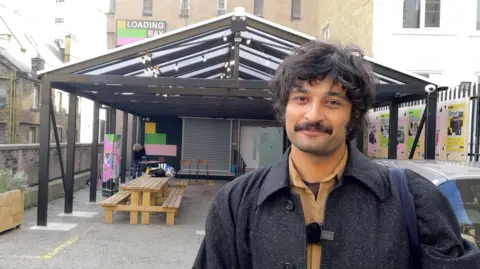
The installation by fashion designer Zain Ali is called Nisbet Road Tailor Shop, and charts the experiences of post-war migrants, many of whom had moved to Bradford to work in the textile mills.
It was a time of reinvention, and Zain describes it as "a change in tide".
"I think the 70s and 80s was particularly a time when a lot of new things were happening and things were changing."
 Arzu Dutta/BBC
The gallery will be transformed into an authentic Asian tailor's shop as part of the event.
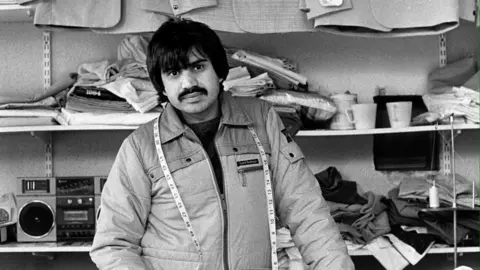
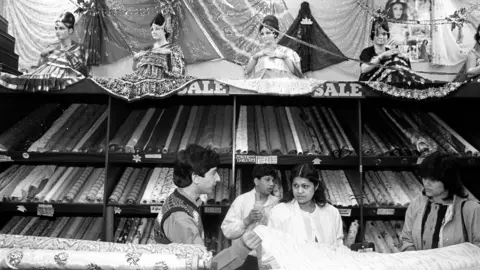
Zain was inspired by a 1980s image of Barket Ali behind the counter of his store, Nayyir Garments, as a young man.
He spotted the photo, taken in 1986, a year after Barket had opened the business, in a Bradford Museums and Galleries collection.
 Bradford District Museums and Galleries
"It was just a very young, innocent-looking man in his tailor shop," says Zain.
"There wasn't a lot of information about him, except the shop address - which is still the same today."
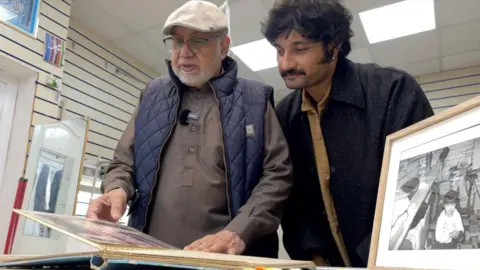
Barket's daughter, Simmi, spotted the photo on a social media post to promote the exhibition, and got in touch with Zain, enabling the two men to meet.
 Arzu Dutta/BBC
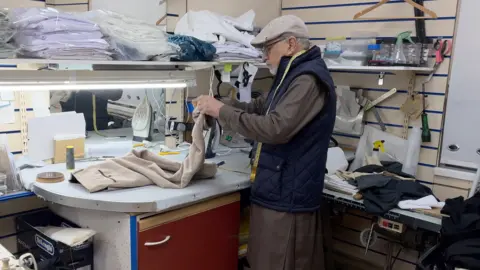
Now 67, Barket moved to Bradford from Pakistan in 1978, but did not at first plan to continue his tailoring work.
"I reconsidered my decision when I realised the value of the skillset I already had," he says.
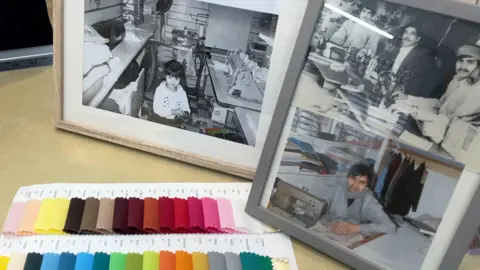
"I was around 24 years old when this photo was taken.
"I had no idea. I was just working. They came, took the picture and left."
 Arzu Dutta/BBC
Recalling the Asian fashions at the time, he says: "The trend then was to wear long kameez and have these weirdly long collars.
"Trends change all the time, and now I even see British fashion influenced by Asian styles, like kurtas in the summer."
A kurta, or kameez, is a loose, collarless shirt, often made of linen and worn widely across South Asia.
 Arzu Dutta/BBC
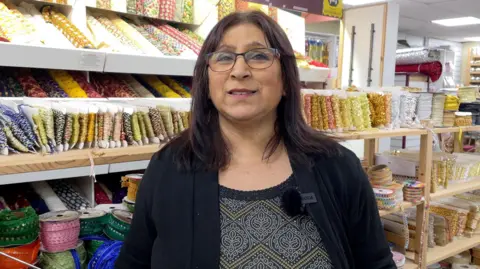
Zain also met Sabra Kader, whose family run Bombay Stores on Shearbridge Road - a Bradford institution.
He says: "You can't talk about Bradford's iconic textile and tailoring history without looking at Bombay Stores."
The department store began life in the 1950s from the family home, where Sabra's father would take orders for traditional outfits while her mother stitched the garments.
 Arzu Dutta/BBC
Now 62, Sabra was four years old when her parents opened their first shop on Great Horton Road.
"Originally it wasn't so big. When the goods arrived from abroad, whether it was India, Pakistan or Japan, me and my brother used to help open the boxes after school.
"It was such fun growing up in this business. To me, it holds a lot of emotional memories."
 Bradford District Museums and Galleries
Barket, Sabra and other Bradfordians like them are woven into the city's history and their memories are at the heart of the installation.
Visitors can immerse themselves in garments, fabrics and archive images as part of the event, which is supported by Bradford City of Culture 2025.
The installation runs at the Loading Bay from 1-23 November.
Listen to highlights from West Yorkshire on BBC Sounds, catch up with the latest episode of Look North.
