'Mum's social care made me panic during cancer treatment'

 BBC
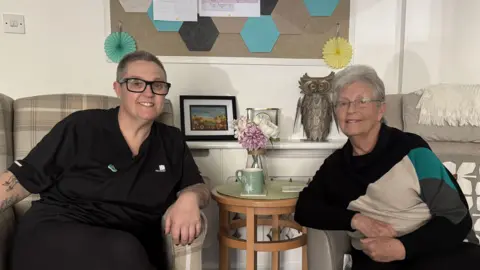
BBCA terminal cancer patient from Sussex who requested emergency care for her mother said she began to lose hope of ever receiving help.
Becks Vernum Holder cared for her mother, Sandy, who has dementia, for five years until in September, Becks was given 12 months to live. The family contacted the local authority for help.
But it would be six weeks before Sandy eventually moved into a care home, and now, Becks is among those calling for authorities to improve their provisions.
The BBC has spoken with candidates standing in May's local elections to hear how they propose to address the immense pressures faced by the adult social care system.
Becks said: "I was beginning to panic at that point. It was stressful, not knowing if it was ever going to happen."
West Sussex County Council said it "prioritised" Sandy's case and once it was assessed, residential care was found "as the appropriate outcome".
The charity Beehive, which runs Cornwell House care home, in Ferring, agreed to care for Sandy for roughly half of what it normally charges.
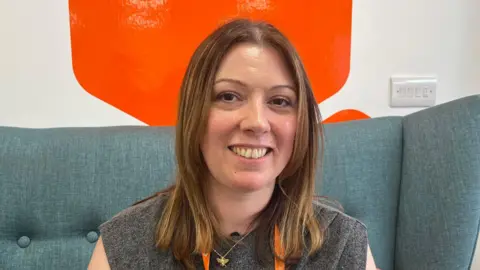
Speaking at one of its drop-in support centres, Lynsey Tran, head of dementia services at Beehive, said: "A lot of them haven't made that phone call, they haven't made that step because they're so scared they're going to be told 'no', they don't see the point."
In March last year, there were an estimated 372,000 people waiting for assessments, care, direct payments or reviews in England.
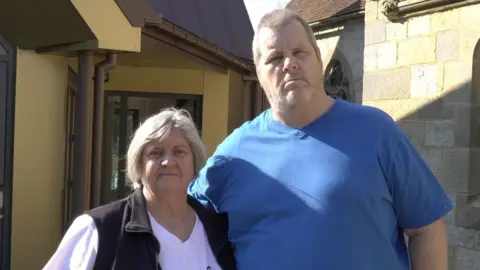
Raoul and Zena Maher, both 65, live in East Sussex. They began caring for Raoul's mother four years ago when she was diagnosed with dementia.
"Looking after someone with dementia is a full-time job, you're watching a person be stripped of their personality," Raoul said.
Zena says Raoul's mother believes she is living in a period of her life before Raoul was born, meaning she no longer recognises her son.
 LDRS
LDRSThe couple need help, but say they were told residential care would cost £2,000 each week.
Raoul said: "We're not in a position to afford that and we've spoken to various different agencies about help."
East Sussex County Council says it is "committed to supporting and protecting vulnerable people and delivering the best services possible", but faces increased costs and "rapidly rising demand".
Raoul and Zena visit the Sussex Support Centre in Uckfield, which works with people living with dementia and long-term degenerative diseases, giving their carers time to take a break.
 LDRS
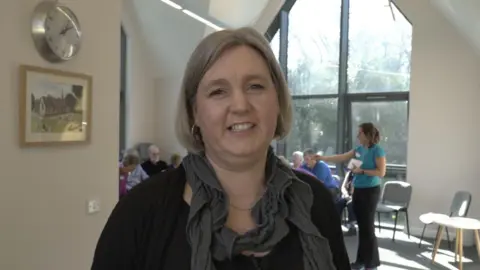
LDRSMargaret Dodé-Angel, founder and services manager at the Sussex Support Centre, said: "Previously, the NHS and social services worked together very closely and the preventative services were run by people in the social work teams."
She said preventative services were seen as "nice to have" and were cut, meaning groups and community settings were removed from funding and it was "pushed out into the charity sector, third sector and private sector".
"It's been a huge change," she said.
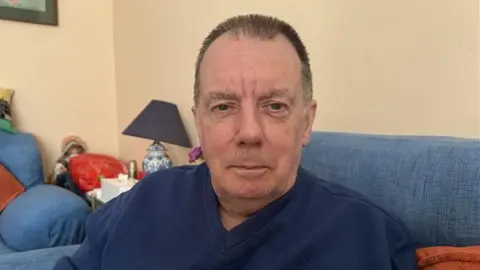
Stephen Goodger is from Surrey. He cares for his adult son, Tom, who has autism and lives in Woking.
"Carers in this country help to effectively keep the NHS from becoming overwhelmed with cases," Stephen said.
"A lot of carers are completely exhausted and run-down by the role that they try to perform."
In January, Tom's care changed meaning he has been without a social worker since, with no date confirmed for when a new one will be allocated.
"You have no clout, no power," Stephen said. "You're stuck in situation that you can't influence. It becomes incredibly frustrating."
Surrey County Council said: "Supporting people in a timely way is extremely important to us and we'll continue to work with Mr Goodger to make sure his son gets the care and support he needs."
A recent report by the King's Fund found in the year to March 2025, there were 890,000 people receiving long-term care in England - a new record.
Simon Bottery, a senior fellow at the King's Fund, told us: "What we're seeing at the moment is that local authorities are trying to meet the extra demand.
"The level of increases they can afford simply aren't matching the level of costs the providers are facing.
"Fundamental services that we all rely on are having to be squeezed to pay for adult social care. It's typically 40% of local authority expenditure.
"As a country, we need to accept we're going to need to spend more on this area."
In 2024-2025, the two county councils in Sussex spent more than £674m on adult social care. In the same period, Surrey County Council spent more than £551m.
What the parties say
Labour says it is spending more than £700m nationally to help people adapt their homes to live more safely and independently. It points to an increase to the Carer's Allowance and an upcoming report into adult social care.
The Greens say it is "clear that social care is in crisis across the country" due to under-funding. The party says it will continue fighting for a national care service.
The Lib Dems want more support for unpaid carers and a better wage for care workers. They say they are already investing in extra "step-down" packages to free up hospital beds and want to see a carer support service in every hospital.
Reform UK says it is developing its social care plan for England but would "drive maximum efficiency and value for money" and make careers in health and social care "more attractive".
The Conservatives did not say what they would do but pointed to what they say are failings from Labour.
The government says it is boosting adult social care funding by more than £4.6bn by 2028-2029.
It said it was building a national care service and would address "immediate priorities" raised in the upcoming independent report into adult social care by Baroness Casey.


Follow BBC Sussex on Facebook, on X, and on Instagram. Send your story ideas to southeasttoday@bbc.co.uk, or WhatsApp us on 08081 002250.
