Plan to divert harbour's orange water out to sea

 BBC
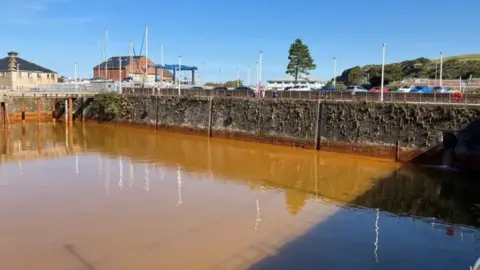
BBCA plan to divert orange water from a harbour out to sea has been approved.
Tests identified iron ochre getting into Whitehaven's Queens Dock in Cumbria through a culvert which was draining water from a railway tunnel, resulting in the discolouration.
Nearly three years on, the Whitehaven Harbour Taskforce has approved a solution to build a pipeline to divert the water from the culvert through the harbour wall, where it will be released on the foreshore north of the harbour.
Josh MacAlister, local Labour MP and chair of the taskforce, said he would try to secure the £4m needed to deliver the scheme.
But he said the project would also depend on local partners taking ownership of the new system and making governance arrangements.
"The development and approval of this plan is meaningful progress the people of Whitehaven have been waiting for," MacAlister said.
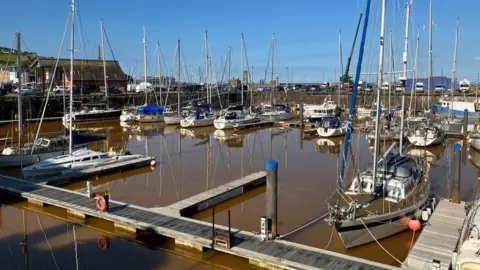
"For three years now our harbour has been tarnished by the orange discharge.
"While investigations continue to locate the source of the water, we may never know, and so we have to focus on diverting it safely."
In September, the harbour temporarily returned to its normal colour while Network Rail carried out work in Bransty railway tunnel.
Whitehaven Harbour Commissioners said it believed the change was "most likely" the result of a new filter being installed during the work.
The filtration equipment was funded under temporary permissions, but Network Rail previously said it would help to seek a long-term solution.
