This tiny Australian town is up for sale - but the locals don't want to leave

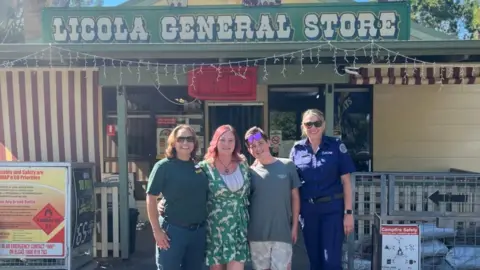 Leanne O'Donnell
Tucked away in the rugged Victorian bushland lies the tiny outpost of Licola, population: five.
Consisting of a couple of weatherboard buildings, a general store, a caravan park and a petrol station grouped around a modest main street, Licola is one of Australia's smallest towns.
And if you have a spare couple of million dollars, you can buy it. The entire village - a three-hour drive from the city of Melbourne - is now up for grabs, much to the shock and ire of tight-knit locals.
Privately owned by a local community club, Licola has long been a guaranteed pit stop for fuel, food and rest for travellers on their way to the Alpine National Park. It also has a 50-year legacy of hosting outreach programmes for young people.
But the local branch of the Lions Club says it can't afford to run the town anymore, and late last year quietly listed it for sale online.
The sale has raised alarm bells for Licola's few passionate residents, locals in surrounding areas and even other Lions Clubs state members, who say they weren't fairly consulted and now hold grave fears for the future of the town.
'A home away from home'
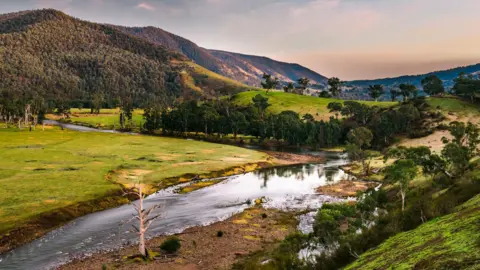
Nestled beside the banks of the mighty Macalister River in Victoria's high country, Licola was originally a timber mill, built in the 1950s with a few buildings for those working there.
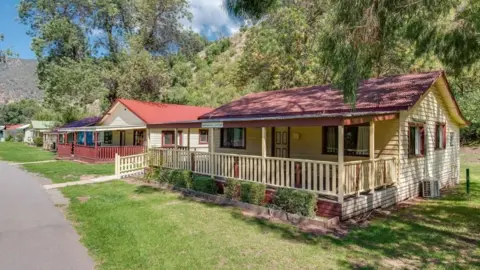
After it closed in 1968, the Lions Club acquired the whole site and turned it into a camp where disadvantaged young people and children, and groups with special needs, could stay during school holidays.
Just around the corner from the camp, they also snapped up land which now hosts Licola's General Store and Caravan Park.
Today, Leanne O'Donnell - who runs the General Store - and her family are the only full-time residents of the town. She lives there with one of her children, along with her best friend and her two kids.
"It's just an amazing place," O'Donnell tells the BBC. "When I first moved here, people would come into my store and say, 'You're not going to make a million dollars in Licola.' And I'd say, 'Who said I'm here to make a million dollars?'."
O'Donnell purchased the business in 2022 but doesn't own the buildings, signing a lease she says she was led to believe would be extended to a 15-year term.
 Getty Images
From day one, O'Donnell wanted Licola to be "a home away from home" for people. Nearly every person who visits, works or passes through Licola has O'Donnell's number – even truck drivers and the Country Fire Authority.
"I'm the main point of contact for them, regardless of whether it's three in the afternoon or two in the morning," she said.
O'Donnell is extremely passionate about the town and serving its surrounding community - but she now faces eviction.
"I absolutely love this town... if it gets into the hands of a developer and turns into something that it's not, it [will] just break my heart."
O'Donnell first learned Licola was headed for the market in January 2025, from the Lions Village Licola board, which is appointed to manage the town on behalf of the charity.
"They told me that their business had been running at a loss for the last five or six years and I asked them, 'so how can I help you?'," O'Donnell says.
"They turned around and said, unless you get a couple of million dollars, there's nothing much you can do."
But O'Donnell persisted, offering to run fundraisers for the village and telling the board that the broader community will want to help.
The board wouldn't budge, O'Donnell says. Eventually she said: "So you're going to buy my business?"
"And they said, no, we're just going to take your business because we own the land and we own the buildings," she says. "And you just need to pack up and leave. I couldn't get it in my head and understand it at the time."
After seeking legal advice, O'Donnell quickly realised that because she was signed to a lease, the board could do just that.
"In the real world, I could take my business and put it in another building... that's not a problem at all anywhere else except for Licola."
Here, there is nowhere else to go.
By December, O'Donnell found a real estate listing online for the sale of the town, with an asking price of between A$6m (£3m, $4.3m) and $10m.
Petitions and threats
The sale has been met with intense backlash online from locals in the surrounding areas. Many are upset over the way O'Donnell has been treated and are concerned the beloved town could die out or be commercialised.
One user's comment on the Licola Caravan Park & General Store official Facebook page says: "People rely on the store in town, and closing in the middle of peak season is stupidity at its best."
Another person says selling the town "impacts MANY Victorians that come to Licola and have camped [there] for years".
"There are some great past leaders of Lions and leaders of the Licola village and camp whom I know are turning in their graves," another comment says.
Other Victorian Lions members wrote to the Lions Village Licola Board, accusing it of acting without due process and consultation with the broader Lions Club members it is supposed to represent.
An online petition to save the store, "renew the lease and let Leanne stay", has more than 8,000 signatures.
 Licola Wilderness Village/Google Maps
As outrage grew, the Lions Village Licola board said its staff were receiving threats and it was considering withdrawing them from the town.
In a statement to the BBC, a spokesperson said the sale was prompted by a review into the town's operations, which was provided to all Lions in Victoria.
After the review, the board decided it was no longer sustainable for the Lions Club to own the village, listing rising costs and insurance prices, aging accommodation, and a decline in camp attendance as the main reasons.
"The decision to sell was not made lightly," the statement said.
Chairman Denis Carruthers has said the board has a responsibility to protect the mission of the Lions Village - supporting disadvantaged youth - not just the physical space.
"The Lions District Governors have been briefed and are supportive," he told the BBC.
The board also said in their statement that O'Donnell's lease "was not renewed in order to consolidate revenue during a period of financial stress". O'Donnell has been told she has to vacate the premises by 31 January this year.
All proceeds of the sale of the Licola properties and future business profits will be reinvested into a new foundation, which will continue to pay for children to attend camps run professionally across Victoria, it said.
Whether future camps will continue to run in Licola is unknown at this stage, Carruthers added, with a planned camp for January cancelled due to low numbers.
It remains unclear who the new owners will be – or what they will want to do with the town.
But, he said, there is "considerable interest in the property".
