Police roll out paralympian's 999 calling card

 Supplied
People who have difficulty communicating with police are to be helped by a telephone initiative designed by a paralympian.
Humberside Police has launched a new scheme called Pegasus, which is aimed at people who may be neurodivergent, disabled, anxious or have other conditions that affect the way they communicate.
Those who register will receive a card and unique pin, meaning that if they call the police and say "Pegasus", call-handlers will be able to access their information.
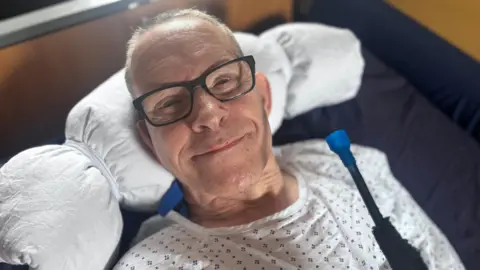
The scheme was originally launched in Nottinghamshire by paralympian Chris Channon, who has cerebral palsy, after a 999 call-handler thought he was a prank caller.
Chief Supt Tracy Bradley, force control room commander, said: "It's not just about improving communication it's also about making sure people feel safe and heard.
"This is a really important step forward in how we support people with communication needs."
The card can also be shown in person to police officers.
Mr Channon, who won a silver medal in the 10m air rifle at the 1984 Paralympics, previously told the BBC of his "frustrating and scary" experience when using 999.
He said: "The call handler put the phone down on me. Thankfully the call wasn't a life or death situation, but I kept thinking, what if it had?"
Hundreds of people now use the service across Nottinghamshire and Mr Channon has urged all police forces to adopt it.
Humberside Police said the scheme was free to join and open to anyone who lives or works in the force area, including Hull, East Yorkshire, North Lincolnshire and North East Lincolnshire.
Registration involves providing a few basic details, which are held securely and only accessed when needed, the force said.
Listen to highlights fromHull and East Yorkshire on BBC Sounds, watch the latest episode of Look Northor tell us about a story you think we should be coveringhere.
Download the BBC News app from the App Store for iPhone and iPad or Google Play for Android devices
