Inside Mars' £80m chocolate factory upgrade

 BBC
BBCMars is investing £80m into its factory in the home of its confectionery business in the UK.
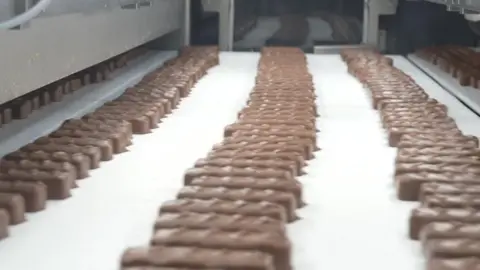
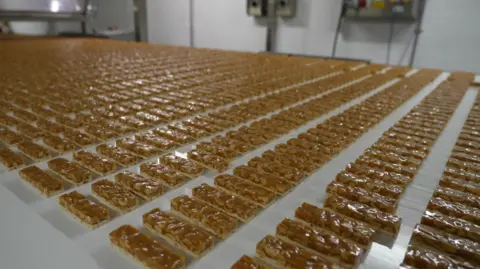
Up to five million chocolate bars a day can now be made in Slough, Berkshire, after a major upgrade in production lines and facilities – double what the business did in 2025.
Mars Wrigley UK & Ireland General Manager, Adam Grant, said: "That's enough to stretch all the way from Slough to Edinburgh."
The firm said it is the single biggest investment ever made at its site and is paying for new technology - including robots - to move large boxes of chocolate around the factory floor. It is the second largest Mars factory in Europe, behind Belgium.
 Mars Incorporated
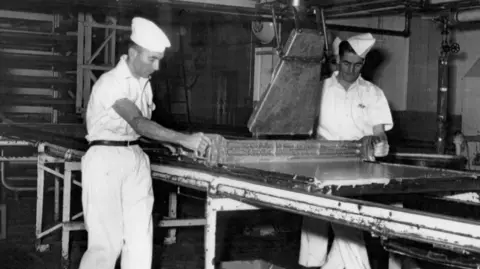
The first ever Mars bar was created in Slough in 1932 when Forrest Mars Sr set up a small kitchen on the Slough Trading Estate.
Before entering the production area, there are reminders of the history of the past 94 years with photos of memorable moments on the walls.
The multi-million pound investment at the factory will pay for advanced manufacturing processes, digital innovation and workforce development.
It includes major upgrades to production lines, infrastructure improvements and the introduction of new digital systems designed to improve efficiency, quality and sustainability.
The firm says it will help it to deliver the "perfect" Mars bar every time.
Alongside factory renovation, new training and development programmes are being introduced to upskill the workforce in automation, digital and AI-enabled roles.
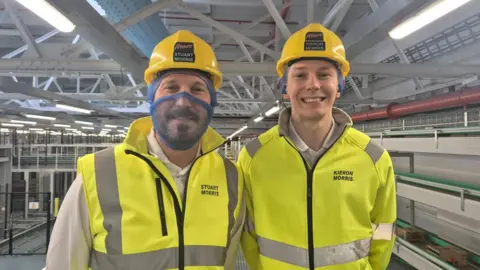
Senior production manager, Stuart Morris, said that while he does not live in Slough, everyone in the town knows somebody that works there: "It's a real community place to work.
"I always wanted to work in a chocolate factory. When the opportunity came to join, I jumped."
So did his son Kieron, who has just finished his apprenticeship with the firm.
He said: "You've seen it all today, it is appetising to look at but when you've been here for so long it does die down...but it makes you hungry for sure."
Stuart added: "You can never get bored of the smell of caramel and nougat, it's absolutely wonderful!"
But will we still be snacking as much on chocolate in the future - given changing eating habits and the rise of weight loss drugs?
"Today, when we look at the way people's habits are evolving, we're not seeing any change in consumption of chocolate," Grant said.
"And we've just had our Easter data in and we've seen record levels of sales.
"I think what's important for us is that we really see people are as much as ever buying and enjoying chocolate... our brands play a very important part in people's lives," he added.
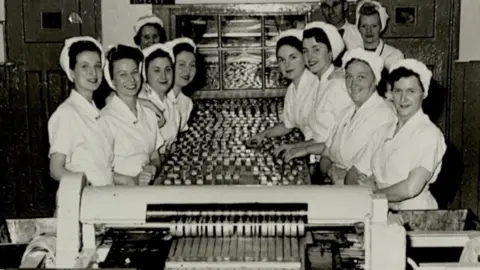 Mars Incorporated
Maltesers – they make two million of them an hour – will celebrate its 90th birthday this year.
But the confectionery boss also said the business needs to keep evolving, innovating and bringing new formats to the market.
One thing he did promise, was that the recipe for a Mars bar or a Snickers would never change.
And that remains a secret.
