'We are victims of our own success' – Irish-language advocate
 BBC
BBCThe lack of Irish-language post-primary schools in Northern Ireland has been described as "frustrating" by parents, teachers and campaigners.
It comes as new figures from the Department of Education (DE) show there has been a rise of almost 400% over the past 25 years in the number of pupils in Irish-language education.
But that means demand for places has also increased, and "we are the victims of our own success," according to one Irish language leader.
In 2001 there were 1,602 pupils in Irish-medium education, compared to 7,811 in 2025, but there are currently only two Irish-medium post-primary schools in Northern Ireland, in Belfast and Dungiven.
'We speak Irish at home every day'
 Nadia McVeigh
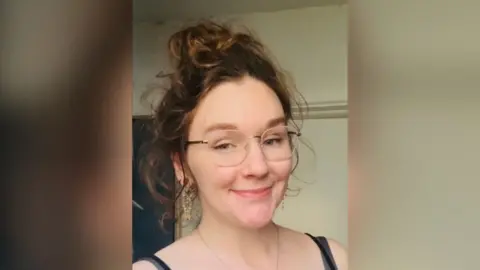
Although some other schools have Irish-medium streams or units, that means some parents, like Nadia McVeigh from Newry face their children having to leave Irish-medium education when they leave primary school.
Nadia's sons go to Bunscoil in Newry and Naíscoil - pre-school - including one with Special Educational Needs (SEN).
She said it was "frustrating" that there were no Irish-language post-primaries nearby for her 10-year-old son to go to.
"He really enjoys speaking Irish, we use it every day in the house.
"There's a lot of studies on bilingual children that they're able to think distinctively in two different languages, which is really impressive as well."
"There definitely should be more options for children to continue speaking Irish in Gaelscoil," she added.
'We've mushroomed'
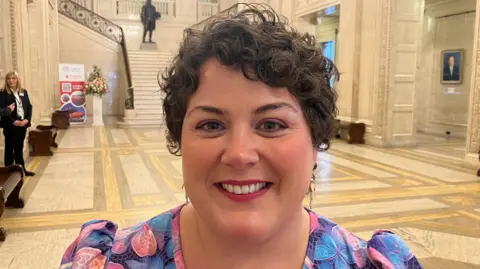
Maria Thomasson from the advocacy group Comhairle na Gaelscolaíochta, said the growth in Irish-language education was "testament to the work of the grass-roots movement" of those who had been "working tirelessly for many years".
But she said the increasing numbers of pupils showed a need for more post-primaries, especially in areas like Belfast, Fermanagh and Tyrone and south Down.
"No child should have to embark on such a fulfilling and enriching educational adventure in pre-school and then have to turn to English-medium as they leave primary, which is unfortunately the case for a lot of our pupils," she added.
"As a sector we have mushroomed and we are the victims of our own success," Thomasson said.
She said the department had "underestimated the growth and the demand for Irish medium education".
"There isn't the finance there to do what we need to do and that's really tragic."
The Department of Education is working on an Irish-medium education strategy, but it is not expected to be finished until 2027.
Sinn Féin MLA Pat Sheehan has also introduced a bill to the assembly which could compel the Department of Education to develop a workforce plan for the Irish-medium sector.
'We need more secondary schools'
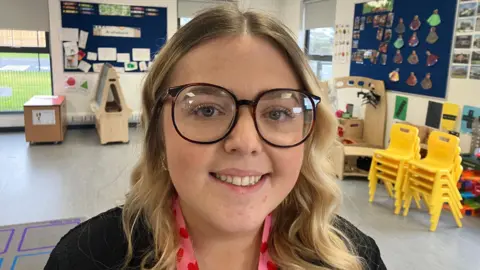
Áine Ní Eachaín is the leader of Naíscoil na Seolta, the first integrated Irish-medium pre-school in east Belfast.
"Research shows that children who speak a second language, there's more doors that open for them, better opportunities, better employment," she told BBC News NI.
"I'm proud to say that I am an Irish speaker and I'm part of it and I'm now helping the next generation to open more doors."
But she also said there was a need for more Irish post-primaries in Northern Ireland.
"It's something that we need so that parents have the choice rather than maybe getting their children to travel 40 minutes by bus.
"We need to see more secondary schools, and more people wanting to carry the education through right up."
'It all started here in a hut'
The first Irish-medium school, Bunscoil Phobal Feirste, was founded in west Belfast over 50 years ago.
It had only a few pupils in a single classroom when it was founded in 1971, but now has over 450 pupils.
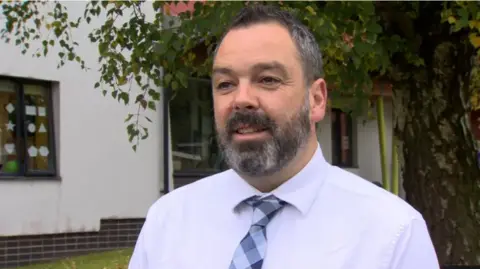
The school's current head, Séamus Ó Tuama, is also a former pupil.
"When you think that it started here in a hut with a handful of kids, for this now to be only one small part of the wider story even though it started here, it's very powerful," he said.
"Now to be sitting in the office of a lovely building with loads of kids in it, it's brilliant."
"But again we're probably approaching capacity ourselves.
"So it is a success story, but there does need to be that official recognition via a strategy and via increased resourcing."
Ó Tuama said there was still a need for more support for the growing Irish-medium sector.
"You look at things like Special Educational Needs (SEN) provision, for example," he said.
"We have Specialist Provision in Mainstream (SPIM) units here. Coláiste Feirste has SPIM units, but is there a need now for an Irish-medium specialist school?"
The Department's figures show that only 652 pupils attended Irish-medium primary schools in 2001, compared to 4,731 in 2025 - a rise of over 600%.
The growth at post-primary level is also significant, with 342 pupils in schools and units in 2001, compared to 2,071 in 2025.
But that rise in numbers has meant Irish language post-primary Coláiste Feirste in Belfast, for instance, has struggled for adequate space for its 1,000 pupils.
The Education Minister, Paul Givan, has introduced a bursary scheme to attract more teachers of maths, science or technology subjects to teach in Irish-medium schools.
The need for more Irish language teachers at secondary level has previously been highlighted by the Irish medium sector.
