Who was record-breaking aviator Sheila Scott?

 Stroud/Getty
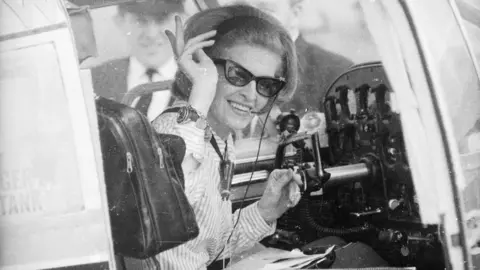
Sheila Scott's around the world flight in 1966 was the longest solo flight ever made up to that point, and the first time a British person had made such a journey.
That was just one of her many accomplishments in the air - but Scott's name remains largely unknown among the public.
Now, the organisers of a special event in her home city of Worcester hopes to bring her the recognition they feel she deserves.
"She broke over 100 aviation records in her lifetime, yet very little is known about her in Worcester," said Jasmine Kee, archive assistant at The Hive library. "We're on a mission to rectify that."
 Worcestershire Archive and Archaeology Service / Newsquest
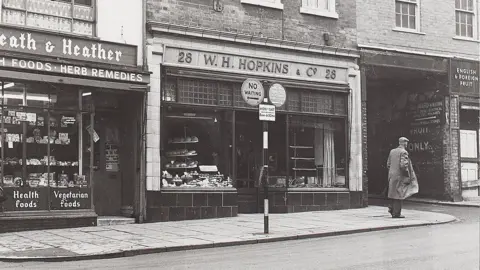
Born Sheila Hopkins in Worcester in 1922, Scott attended The Alice Ottley School, from which she was nearly expelled.
She had her first taste of flying on her sixth birthday, when her father took her to aviation pioneer Sir Alan Cobham's Flying Circus at Worcester Racecourse.
"She talks about it in her autobiography," explained Kee. "She is incredibly resistant to being strapped in, she doesn't like it. And she's scared by this moustachioed man glaring at her through the goggles, who is Sir Alan Cobham.
"She took to flying later, but there's almost this sense of, it was meant to be."
Cobham would later fund some of Scott's exploits and wrote the foreword to her autobiography.
 National Portrait Gallery / Godfrey Argent
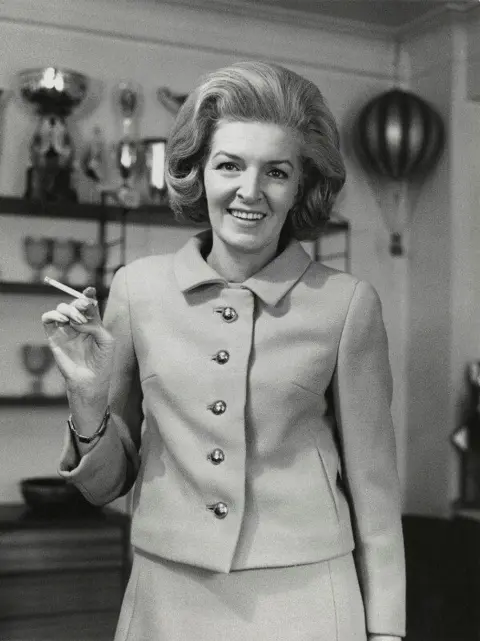
"Her path to flying is fairly unconventional," said Kee. "She worked as a nurse during World War Two, then she had a short-lived career as an actress, which is when she takes the name Sheila Scott.
"There's a thinking that maybe she took up flying in search of something to do, something to achieve. But that wasn't until the late 1950s.
"By 1966, she's become the first British person - not the first British woman, the first British person - to fly around the world, making the longest-ever solo flight. She's only the third woman to fly around the world.
"She also breaks records for flying over the North and South Atlantic solo, and she was the first person to fly over the North Pole, in 1971.
"She was an incredible woman."
 Gavin Kermack
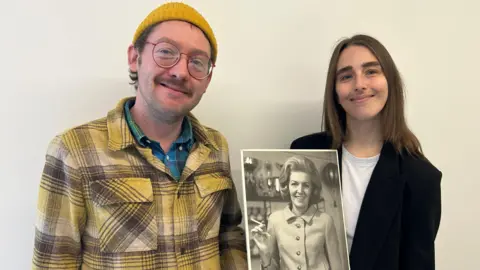
Kee is helping to put on a talk about Scott at The Hive on Tuesday evening, both to raise awareness of her achievements and to mark International Women's Day on Sunday.
Her co-organiser from the University of Worcester, Tom Mandall, first came across Scott by chance when doing some research at the Worcester City Art Gallery and Museum.
He was surprised to discover she was not a naturally-gifted pilot.
"She got a lot of flak in the press because it took her four goes to get her driver's licence, and she similarly took a little while learning to fly as well," he explained.
"She wasn't a natural, but she had this drive, this tenacity, and she went out and did all this incredible stuff. But she really had to put her mind to it.
"She decided she'd go and learn to fly, which is what she did. Then she'd find there were records that she thought, well, I can do better than that. And she'd go out and do them.
"There's one weekend where she was in the air for 48 hours and broke three records just because she thought, 'I can do that.'"
 Express / Getty
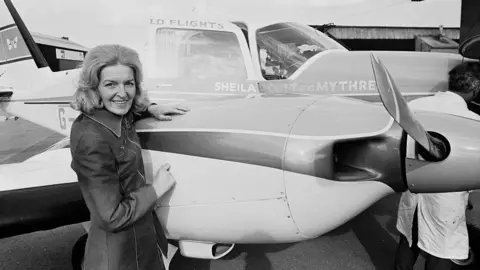
Despite Scott's current lack of fame, she was well-known in her flying heyday, appearing as the castaway in a 1967 edition of Desert Island Discs - choosing music by Gustav Holst and Tommy Dorsey, and tobacco seeds as her luxury.
She was made an OBE in 1968 and was the subject of a 1974 episode of This Is Your Life.
But Kee and Mandall acknowledge she was a victim of the prejudice of her time.
"A lot of the coverage, looking at it from 2026, is incredibly sexist. It's very keen to diminish her," said Mandall.
"She is both celebrated and incredibly patronised," agreed Kee. "That is fundamentally because she's a woman.
"They make a big deal about her driver's licence, they go on and on about the fact she wasn't a very good student.
"And you just wonder - did this happen to Alan Cobham?"
 Fox Photos / Getty
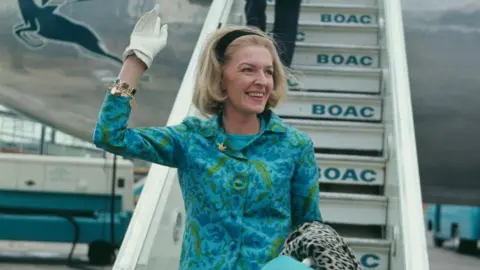
Scott, who died in 1988, was known for keeping make-up in her cockpit and making sure her hair was coiffed for the cameras before stepping onto the tarmac.
"There's a really interesting dynamic there," said Mandall. "Sheila is kind of navigating some of what we've talked about in terms of the coverage, but this isn't just something that's happening to her.
"She's really putting forward her own public image."
"We think that diminishes a woman's achievements, and it doesn't," added Kee. "There are complexities within her as a person, both inside and outwardly.
"I just think it makes her all the more fascinating, that she lived a gruelling life of a lone aviator above the skies, achieving all of these amazing things, and she came out of the cockpit with immaculately-styled blonde hair.
"She has so many achievements, and I think it's about acknowledging the problematic way that she was spoken about at the time, but also reclaiming her for a new audience.
"She could inspire generations of people."
The event, The Sensational Life of Sheila Scott: Worcester's Queen of the Skies, takes place at The Hive in Worcester on Tuesday 10 March at 18:30 GMT. Tickets are free and can be booked on Worcestershire County Council's website.
Follow BBC Hereford & Worcester on BBC Sounds, Facebook, X and Instagram.
