'Small schools are hearts of their communities'

 BBC
BBCA headteacher says rural primary schools remain at the "heart of the community" and must survive, amid concern about how declining birth rates will impact pupil numbers.
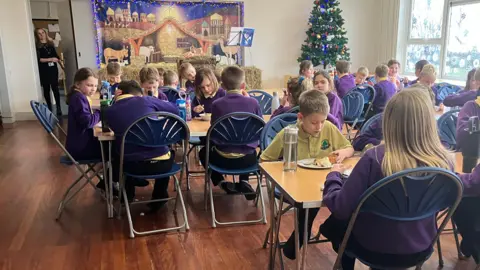
Both Ingleton and Gainford Church of England primary schools, in villages close to Darlington, County Durham, have fewer than 50 pupils.
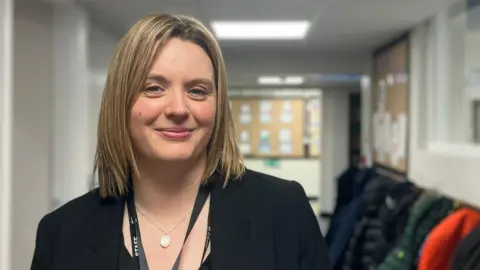
Joint executive headteacher Karen Whitaker said their small size meant "every member of staff knows every child in the school personally".
But while the Durham and Newcastle Diocesan (DND) Learning Trust, which runs the schools along with 19 others in north-east England, said it had no plans to close any of them, it said falling pupil numbers were putting schools under financial pressure.
Ingleton has just 46 pupils, while Gainford has only 40.
Mrs Whitaker said the schools had deployed strategies to secure their future, such as having a joint headteacher and teaching subjects in mixed year-group classes.
"It's more than a school and more than a place of learning - it's a place at the heart of the community," she said.
"And if you close schools like this, it strips away that community feeling."
The DND trust's chief executive Paul Rickeard said falling pupil numbers had put schools under financial pressure in urban as well as rural areas.
"In Sunderland, for example, we have a three-form entry primary school," he said.
"Their numbers have gradually started to slow down. So, it's about birth rates and not just about the number of children in the system."
The latest government figures suggested the number of primary school-age children in the North East will fall 7.3% between 2022-23 and 2027-28, which would be the steepest decline of any English region outside London.
North Tyneside Council recently announced plans to merge some of its schools due to declining pupil numbers.
The decision prompted protests from parents and the plans are currently under consultation.
