Charity fears service changes are putting deaf people at risk

 BBC
BBCA charity says deaf people in Edinburgh are being put at risk because of changes to specialist services.
Deaf Action supplies tailored support, including social workers and specialist equipment. It says the move is causing stress in the deaf community and wants the return of deaf-led support for British Sign Language (BSL) users.
Its funding has been withdrawn by the Edinburgh Health and Social Care Partnership (EHSCP), the body which handles community services for adults and older people.
The partnership says it is still providing services to deaf people, but in a different way.
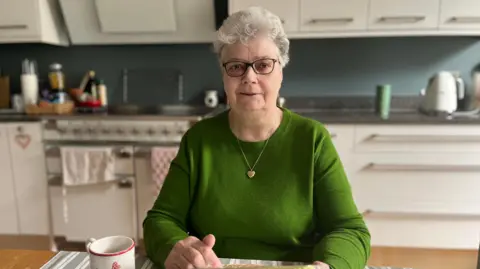
Retired administrator Jennifer Staples - who has been deaf all of her life - has been supported by the charity through people trained in deaf awareness and BSL.
She is a regular at the Golden Amber Over 50's lunch club at Deaf Action's Edinburgh offices, where people from the deaf community meet, have lunch, and play bingo.
Staples says EHSCP's decision to bring its services for deaf people in-house, providing support through its existing generic services, means she is now being helped by people who are not deaf specialists and do not understand her issues.
"In the past I was very confident with the social worker. They were a specialist social worker and a specialist support worker and interpreter, but now it's someone I don't know," she said.
"They don't know anything about deafness. I'm so used to going to Deaf Action. That's my comfort and that's what I'm used to and now I feel there's barriers wherever I turn."
Confusion over Edinburgh exclusion
Deaf Action says it will continue to support people from other council areas, including the three neighbouring Lothian councils.
But the charity's Matthew Fenlon said the decision to exclude Edinburgh is causing confusion and frustration.
"Now they come and they want support and we say we have to check where you're from. Are you from Edinburgh? Unfortunately, then we can't support that.
"So then they have to go to Edinburgh council but there's nothing set up at the moment for deaf people there so it's a real gap.
"They're doing more in-house deaf awareness training with social workers and staff to have the awareness training but that's a one-day course. It's not enough for people to be able to understand and appreciate deaf history, culture access and community," he added.
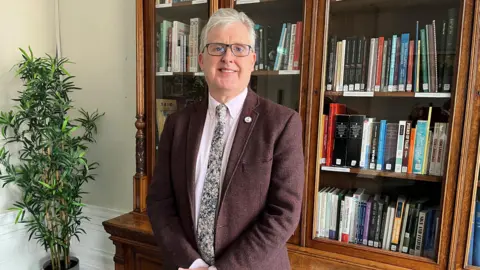
Deaf Action's chief executive, Philip Gerrard, says the cuts leave deaf people without BSL-using support workers, putting some people at increased risk.
"They can't talk directly to people. They can't talk to public organisations and public bodies because they don't have that BSL knowledge," he said.
"When you take away that language provision, you take away that accessibility. Then you rely on booking interpreters, waiting for another person to be there.
"I think they're all struggling and it does highlight a national issue. We do have a shortage of accessible services, services provided in BSL," he added.
The charity says it has seen numerous examples of deaf people facing serious problems, including one woman who had a "do not resuscitate" (DNR) order added to her medical records while in hospital after a stroke because staff thought she could not communicate.
In another case, a deaf man with special educational needs went without heating for four months over the winter because of communication problems.
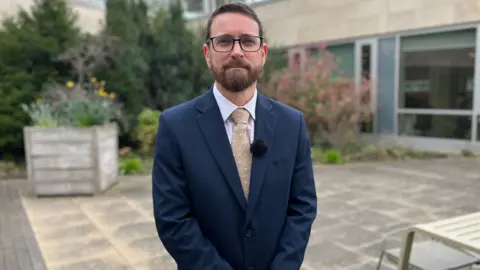
EHSCP's head of commissioning, Robert Smith, said the body is still meeting the needs of deaf users within the city.
"There is still a provision of social work services for the deaf BSL community and there is still a provision of equipment services for deaf and hard of hearing individuals," he said.
"We're following up with our colleagues in Deaf Action in terms of some of the feedback we've had about the change to services to try and learn and improve outcomes for people."
EHSCP said people with hearing loss can still access support from them and they are committed to ensuring clients receive the right level of care.
Both Deaf Action and EHSCP agree there is a lack of social workers who are trained in BSL.
