What will happen in Surrey after the elections?

 PA Media
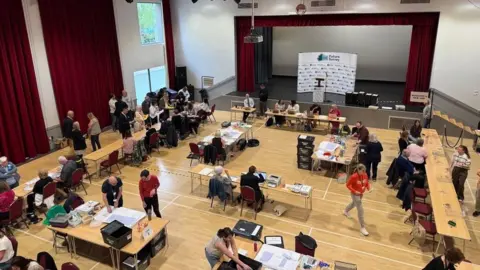
After the local elections, we have more of an idea who will be running Surrey's new unitary authorities.
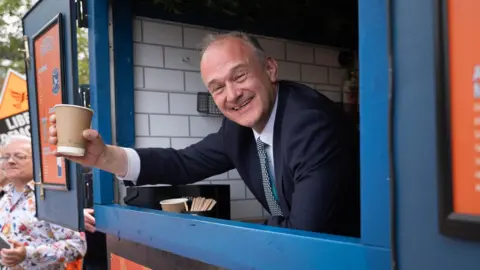
The Liberal Democrats have taken control of both new councils which will launch in the county, replacing the county, district and borough councils in 2027.
At the new West Surrey Council, the party took 56 seats, exceeding the 46 needed for a majority. At the new East Surrey Council, the Liberal Democrats took 40 seats, with 37 needed for a majority.
So what can we expect now all the votes have been cast and the results are in - and what will be the main challenges for the new councillors?
Despite the elections, neither of the new unitary authorities will start operating or formally take up the full range of their powers and responsibilities until 1 April 2027.
Until then Surrey County Council (SCC) and 11 borough and district councils will continue to provide services and deal with issues like social care, schools, bin collections, community recycling centres, and planning applications.
They are then due to be abolished on 31 March 2027.
At the start of this year, two committees made up of councillors from SCC and the boroughs and districts have been looking at how transition of powers should happen.
That work will now be taken up by the newly elected members of the unitary authorities and will be one of their main jobs until 31 March 2027.
At the moment, residents are charged different amounts of council tax, depending on which borough or district they live in.
So for example, someone in a typical Band D property in an unparished area of Reigate and Banstead will pay £2,555.86 in 2026-2027, compared with someone in Runnymede, who is paying £2,492.99.
In an area where a unitary authority is created, a single level of council tax will need to be set - a process known as harmonisation.
It is controversial because it can mean that in some areas, people will see an increase in their bills and there are also concerns about authorities potentially losing income.
One of the issues the new councillors will have to work out is whether tax levels should be equal on 1 April 2027, the day the unitary authorities officially start operating, or whether the process is done over a longer period of time.
That is ultimately a political decision, but one council report has described having the same charge starting on day one as "the desired position."
Several of the borough and district councils, including Woking and Spelthorne, have built up significant debts since 2010.
There are fears about what that will mean for other areas, particularly in West Surrey, when they are merged together and how financially sustainable they will be.
Although Woking, which effectively declared itself bankrupt in 2023 and has debts of more than £2bn, is being given £500m in "financial assistance" from the government, councillors want to see more action taken.
Last December SCC agreed a motion to seek agreement from ministers to provide further support in terms of money.
Councillors also want to make sure that West Surrey unitary authority will not be expected to sell off council-owned assets, outside of Woking and Spelthorne, to reduce the debts.
Impact on services
Ultimately this is about the way in which services like social care, road maintenance and housing are provided to residents.
Ministers, along with key political figures like SCC leader Tim Oliver, have argued that the reorganisation and streamlining of councils would help to make them simpler and more efficient, as well as more transparent and accountable.
But others have said they are worried about what the impact on services might be.
For example, concerns have been raised about what will happen with support for children with special educational needs and disabilities (SEND), which have already been criticised by parents, MPs and opposition councillors under the current system.
SCC have said previously they are investing in SEND and will continue to work to improve standards, but there are fears that services like this could get worse as part of rushed changes.
One of the main questions now is this: will this local government reorganisation make the provision of services more effective, or lead to problems in the future?
Follow BBC Surrey on Facebook, on X, and on Instagram. Send your story ideas to southeasttoday@bbc.co.uk or WhatsApp us on 08081 002250.
