Diabetic refused entry to venues with vital snacks

 BBC
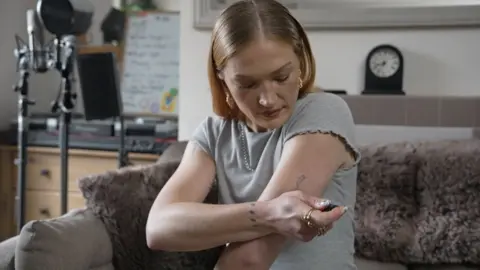
BBCA woman living with type 1 diabetes says she has been refused permission to bring vital snacks into festivals and other venues despite explaining her condition to security.
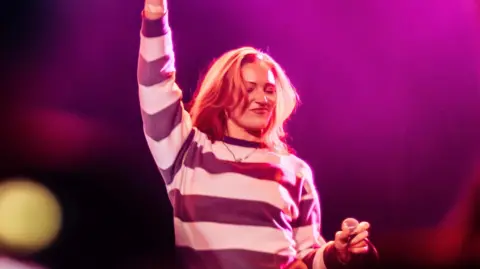
Musician Anna Price, from Bristol, said the lack of awareness for diabetic people makes having a night out difficult.
"Something so minor as food is actually my medication," she said. "Me taking in a banana isn't really going to harm anyone."
Jessica Unger, a co-founder of Type One Community, a social enterprise that hosts events for people with the condition, said there was still a lack of understanding in nightlife spaces.
"Ordering drinks at the bar, you can say Diet Coke as many times as you like but sometimes you will get the full sugar version," she said.
Type 1 diabetes is a chronic autoimmune condition where the body destroys the cells that make insulin in the pancreas.
According to the Royal College of Paediatrics and Child Health, more than 35,000 children and young people (under 25s) with diabetes were being managed by paediatric diabetes services in England, Wales and Jersey between 2024 and 2025.
It has experienced a 29% increase in its caseload in the past decade.
Monitoring sugar levels is a necessary lifestyle routine for diabetics.
 Anna Price
The charity Diabetes UK advises people with the condition to take food out with them if they are drinking alcohol.
"Remember that eating isn't cheating. Make sure you carry snacks with you just in case, and eat before you go to bed," its website says.
Unger said some people had reported to her organisation they had been refused entry to venues for carrying essential items such as insulin or snacks.
She added that it can be difficult entering clubs "when a security guard pats you down" and asks questions about why you are carrying certain items.
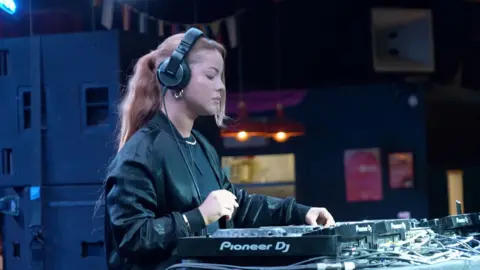
Price was told when she was 20 that she had type 1 diabetes after experiencing blurry vision, weight loss, extreme hunger and skin sensitivity.
The singer-songwriter and model also suffered from frequent panic attacks during that period as she found it difficult to process new information just before her diagnosis.
She said: "It took me quite a few months to come to terms with the fact that it changed my life."
She has now lived with the condition for several years and regularly injects herself with insulin to maintain her blood sugars, while keeping track of her levels using a continuous glucose monitor.
Price says it is important she is still able to go out with friends to nighttime events, but says venues often do not have suitable drinks.
"A lot of places don't have a lot of diet drinks. I've been at festivals and they only have one thing I can have or they don't have anything, and that can be really tricky."
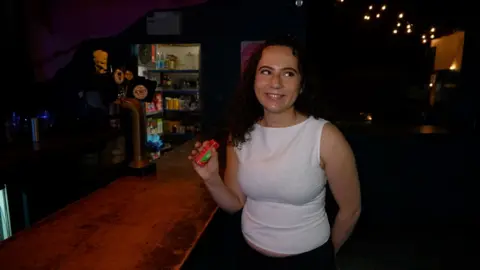
On 9 April, Type One Community hosted a drum and bass event at Lost Horizon in Bristol, headlined by Harriet Jaxxon, who herself has type 1 diabetes.
Measures put in place included briefing security staff about why customers may need to bring in snacks, teams being shown what an insulin pen looks like and free glucose shots at the bar to treat low blood sugar.
Kyle Parsley, also a co-founder of the social enterprise, said the environment of a nightclub can make managing the condition more stressful.
"We want people to have a good time," he said. "It's just about making sure they can do that safely."
Kate Marshall, programme manager at Lost Horizon, said the event was a valuable learning experience and that they were making changes to ensure people with certain medical conditions "are able to bring essential items into the venue without unnecessary barriers".
"It's prompted us to look at how we can continue evolving our approach to accessibility and wellbeing across all of our events," she added.
Follow BBC Bristol on Facebook, X and Instagram. Send your story ideas to us on email or via WhatsApp on 0800 313 4630.
