School of Coding and AI helping excluded students

 BBC
BBCThe School of Coding and AI in Wolverhampton is highlighting how excluded pupils from mainstream school can succeed through a different way of learning.
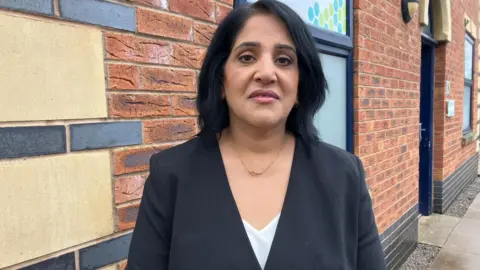
Nina Bhambra, the Alternative Education Provision Lead at the school, said children are referred to her from their local authority after exclusion. A meeting is then set up with the child and parent to go through the students needs, before a "bespoke timetable" is created.
The school , which is an accredited OCR Exam Centre for GCSE and A-Level exams, also offers more creative subjects.
"We also offer games design and a lot of our young students are avid gamers. So creating their own game is big, it's opening up their creativeness as well as offering their core subjects," Bhambra said.
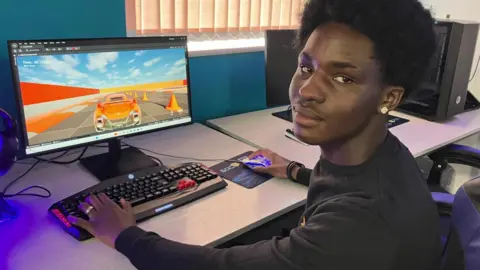
Wren, 15, has attended the school for the past year after being expelled from secondary school. He says he is now thriving because he can have more one-to-one teaching.
He is currently being taught how to build computer games and learn more about AI, alongside studying the core subjects.
Wren added that he feels because the school is a smaller institution than his old mainstream school, teachers can be more thorough and "focus much more on you".
The teenager said that coding is an avenue he may explore in the future and the school has even taken him around the University of Birmingham, to show him what he could potentially study.
Last resort
Last year it was announced that the number of school suspensions and exclusions in England reached its highest level since 2006, according to figures from the Department for Education.
The government said alternative provisions (AP) "provide education for children who can't go to a mainstream school" including behavioural issues, illness or mental health issues.
In the Department for Education's guidance, suspensions and permanent exclusions should be a last resort, if other behaviour management tools have been used.
Bhambra added: "I think it is putting them in charge of their learning, ultimately, what is it that you want to do? What is it that we can help you with?
"They are young people and the next generation, so helping and supporting them is what we are here for," she said.
Follow BBC Wolverhampton & Black Country on BBC Sounds, Facebook, X and Instagram.
