Could ferry travel ID checks reduce crime?

 BBC
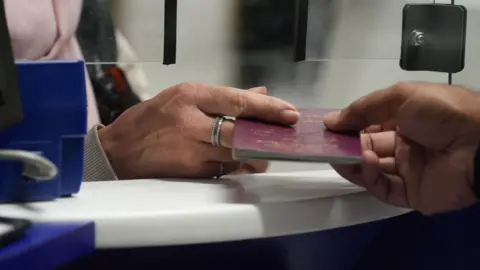
BBCPassengers travelling via ferry to and from the Isle of Man are not currently required to produce identification to travel, but that could change under new proposals.
It comes after a public consultation was launched by the Department of Home Affairs (DHA) to assess the public's views on the subject.
The DHA said it was part of the government's broader strategy to tackle organised crime and strengthen border security.
Home affairs minister Jane Poole-Wilson said they wanted to develop a "proportionate proposal that protects the public while keeping travel straightforward".
If introduced, the changes would mean all Isle of Man Steam Packet Company (IOMSPC) passengers, including both foot passengers and those travelling with vehicles, would need valid identification when checking in for sailings to and from the island.
But the checks would be carried out on a "proportionate" basis, meaning not every passenger would necessarily be asked to present ID.
Why are ID checks needed?
The DHA said the proposals formed part of the government's Securing Our Island Strategy.
Other technologies, such as facial and number plate recognition, have also been incorporated in recent years as part of efforts to protect the island from threats.
The consultation said that while steps like these "have increased the security and safety of our island", there were "certain vulnerabilities" remaining that could be exploited.
Poole-Wilson said carrying ID was among a number of "practical steps that strengthen our defences against organised crime, support effective policing, and align with the Securing Our Island Strategy, without introducing routine immigration controls within the Common Travel Area (CTA)".
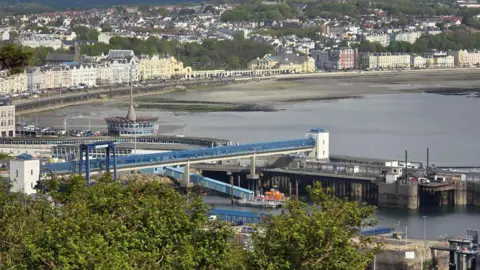
Annual reports from the Isle of Man constabulary have shown a year-on-year increase in organised crime, with about 40% of prisoners on island linked to such groups.
The public consultation said the DHA had been advised by police that there was "an increased threat from organised crime groups targeting the island".
"These groups use the island's sea routes to facilitate the movement of illicit drugs, cash, criminals and people".
It said more than £1m had been seized recently at ports, in "drugs and criminal assets".
Police have said "the ability to book IOMSPC travel using assumed identities presents a significant risk".
Is it similar to airport checks?
While airport passengers are accustomed to producing ID to travel, ferry services within the CTA have historically operated without the need for such checks.
But the DHA said introducing them would align ferry travel more closely with UK law enforcement expectations, as well as improve the accuracy of passenger information.
It added that exemptions or special arrangements could be considered for some groups, including children, emergency medical travel, and people without access to photo identification.
What does the consultation ask?
The questionnaire asks for views on what forms of ID should be accepted and how any changes might affect both passengers and ferry operations.
The DHA said the measures could help prevent anonymous travel, disrupt criminal activity and support intelligence-led policing.
But it also acknowledged concerns over privacy, data handling and the potential for longer processing times during busy travel periods.
The consultation is open until 8 June through the government's consultation hub.
Once complete, the DHA will publish a summary of the responses, which would "help shape the department's final policy recommendations", it said.
Read more stories from the Isle of Man on the BBC, watch BBC North West Tonight on BBC iPlayer and follow BBC Isle of Man on Facebook and X.
