'Afro hair care workshops are about more than styling, they're about belonging'

 Sian Edwards/Done Together
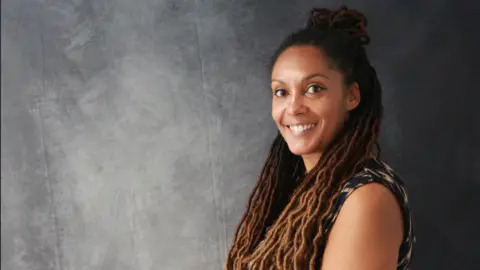
Growing up as a teenager of mixed heritage in Wrexham in the 1990s, Natalie Edwards remembers struggling to find services or understanding of how to care for her afro hair.
Even two decades later, and with two young children of her own, she said she was often stopped in the street by people seeking advice on their own children's hair.
Keenly aware that "hair is part of identity", Natalie has become a driving force behind a series of workshops in north-east Wales to address this knowledge and skills gap.
"These workshops are about more than styling, they're about belonging," she said.
The mother-of-two, from Coedpoeth, said she had been approached by a number of parents "fearing that they were doing the wrong thing".
"It's traumatic if you do it wrong because it hurts and it can be quite frustrating, so people do want that information," she said.
"When I've had my braids when I was younger, people would come up to me all the time and ask and I'd be writing the phone numbers down."
That scenario was happening outside of major cities "all across the UK really", she said.
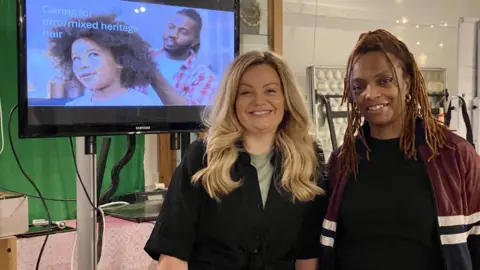
Natalie said while Wrexham has a small but growing mixed heritage population, access to afro hair care, specialist advice and culturally relevant spaces remained limited.
This lack of access could affect confidence, wellbeing and a sense of identity, she added.
"Growing up [and living] in Wrexham for 30-plus years, I know how hard it is to find products, to find knowledge, to find suppliers and I knew it was a gap," said Natalie.
While afro hair care is embedded in hairdressing course curriculums in the UK, it is one of three options from which students must choose two, she explained, adding: "Afro hair learning often becomes that third thing that you aren't taught."
The workshops come after a BBC investigation found some women were travelling across the UK to get their afro hair cared for.
The investigation also found only a third of colleges offering hairdressing courses were teaching students how to care for afro hair, four years after they were told they all should.
The Hair and Beauty Industry Authority updated their standards in 2021 and said all hairdressers should be trained to work with afro-textured hair, as its structure tends to make it naturally dry, delicate and prone to damage.
The BBC contacted 259 colleges across England to ask if they taught an inclusive curriculum which included afro hair care and, of the 237 who replied, only 82 said they did.
 Marnie Bee Photography
Natalie, who co-founded community interest company Done Together in 2025, said things had not moved on a great deal since she first moved to Wrexham and it was important for people to feel seen, supported and represented.
She set up the social enterprise with four other women from city, who all met while working at Wrexham University - Sian Edwards, Bev Jepson, Amber Percy and Jayne Rowe.
They decided to put on the workshops, working alongside local hairdressers Helen Gibson and Lucy Carvalho from the Dare to Dream salon, which offers afro hair care.
Done Together sourced funding from Adferiad, which administers the Welsh government's culture grants scheme for projects supporting diversity, equality and inclusion.
 Marnie Bee Photography
"Helen got in touch and said that she worked at a hair salon and I'd obviously referenced my hair at some point so she'd come up with the idea," said Natalie.
The series of five workshops were devised for families and professionals, including one held online, coordinated by Wrexham University's diversity, equality and inclusion project lead Yasmin Washbrook.
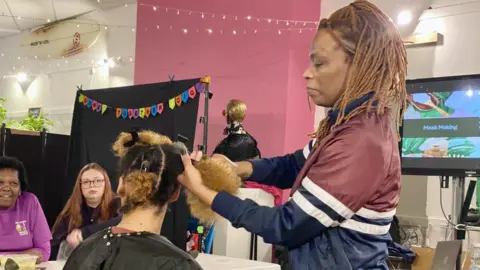
Natalie's mother Veronica Edwards, who has lived in Wrexham for more than 40 years and joined one of the workshops, said she was glad to see the initiative in the city because afro hair "is not as well catered for as it could be".
"When I came to college in Wrexham [in the 1970s], it meant going back to the West Midlands [to have my hair done]," said the 71-year-old retired teacher.
"It's been like that for quite a long time really so it's nice to see things being done.
"I still do sometimes go back to the West Midlands because there is a variety there."
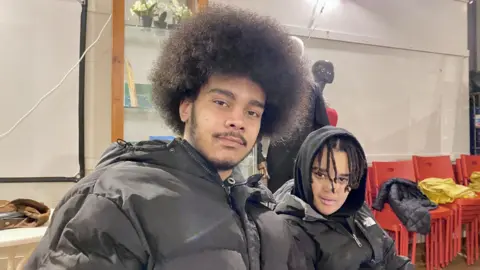
Harley Almeida, 21, and his brother Jonah, 11, from Wrexham, also went to one of the workshops.
Musician and DJ Harley said he usually travelled to Manchester once a month for hair care as there were "not a lot of places in Wrexham that do afro hair".
Attending a workshop on his doorstep made "a change", he said, adding that it was "good for [his brother] to learn".
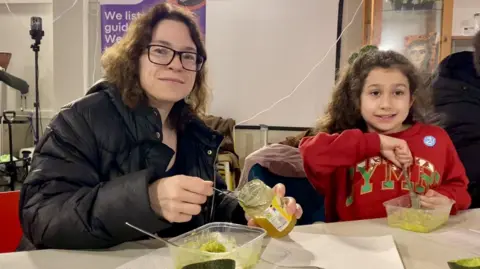
Anna, a blogger from Penymynydd, Flintshire, was at a workshop with her nine-year-old daughter Noora.
She said it was the first time she had seen such a workshop and "this information is very helpful for her hair because she does have a different hair type to me and it can get very tangled".
She said she had got "some useful information and practical tips to help take care of her hair".
"It's really nice to see things like this because we don't have that much diversity in the area," she said.
 Marnie Bee Photography
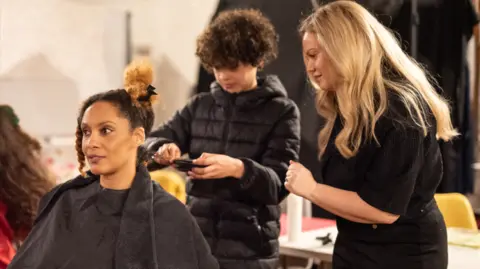
Natalie's daughter Murran, 15, said the workshops were "very factual and it's good to know because the majority of my family have got curly hair".
"I have got more Caucasian hair like my aunty. My natural hair is looser but I still have to use the same products," she said.
Coleg Cambria hair and media make-up student Ruth, 16, from Ruabon, said attending the workshop was "a good experience".
She said it was "useful to know how to style afro hair as well".
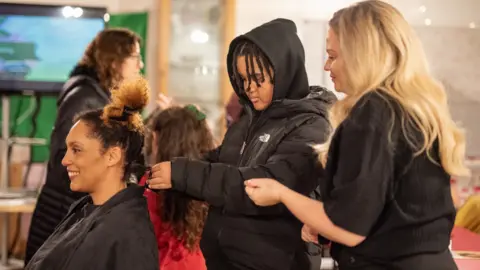
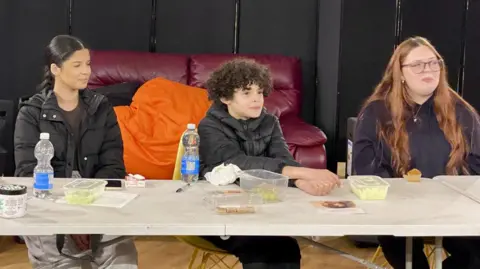
Willis, 11, said he also enjoyed the workshop, including getting the chance to learn afro hair care skills by practising on his mum Natalie, who was a model at the events.
Natalie said the response they had had to the workshops was "really lovely".
"It's wonderful to see that we've had friends, grandparents, children, grandchildren and brothers come in," she said.
"We've had a lady whose children are grown up, but she's thinking about her potential grandchildren. I thought that was lovely as well.
"Another lady came because her goddaughter has afro hair and she wants to know how [to care for it], and I just thought that's absolutely brilliant."
She said they had also opened up the workshops to people in a caring capacity, including foster carers, nursery workers and care home workers, who could be in that position of not knowing where to go to and feeling apprehensive about afro hair care.
Natalie said they also offered advice on buying hair care products on a budget as part of the workshops, knowing that they could be expensive.
"You're talking about families who can't generally share products either because all the hair is different, so being able to get everybody to share what they use and where they buy it from and any hacks and then hearing from the hairdressers about how to use those products properly, it's just game changing," she said.
'A real bonding experience'
Reflecting on the positive feedback, Helen said: "It's so much more than just hair, it's about identity and bonding with your child.
"We have had people message us and say to us on the day as well what a difference it has made and how helpful they have found it," she added.
She said one mother and daughter told her that since attending the workshop they now saw hair care as "a real bonding experience" for them.
Helen said some of their clients had previously been driving to Manchester every few weeks for hair care, and it had "become an inconvenience [for them], rather than something that's enjoyable".
"If I can help one person then I feel happy," said Lucy.
She said she and Helen were keen to make the workshops fun as, otherwise, afro hair care "becomes an inconvenience rather than something that's enjoyable".
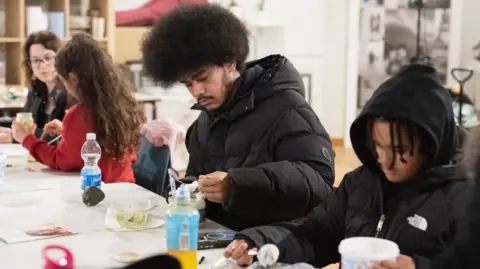
The workshop also included a quiz and a chance to make a hair care mask from natural products including avocados, yoghurt and honey.
"We try to mix education in with hands-on activities because it is something you can get kids involved with," said Helen.
She said they wanted people to feel "control over what happens to their hair".
Natalie said they hoped to be able to hold more sessions in future, subject to funding, and they would look at holding them later in the day to enable more professionals, including hairdressers, to attend.
She said some had attended the workshops but "we didn't have an awful lot of hairdressers, which is sad".
