'I cried with relief after ADHD diagnosis at 52'

 Isobel Lepist
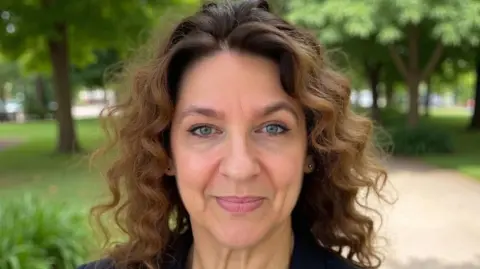
A woman with ADHD and autism said she "cried with relief" when she was finally diagnosed at the age of 52 as her "life finally made sense".
Isobel Lepist built up a successful international career as a therapist despite being told as a child that she was "thick because I couldn't do numbers or maths".
Reading an article about another woman with anxiety led her to seek help and her eventual diagnosis, which then prompted her to help other people with attention deficit hyperactivity disorder (ADHD).
She said many with the disorder are "burning out - not because of their neurodivergence, but because the workplace isn't designed for different brains".
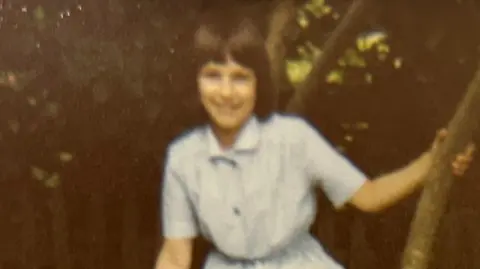
Now aged 55, the Stockport therapist was born to parents who were linguists and said she had "exceptional skills" in sports and arts but struggled with social engagements.
Even though she had been "drilled in manners", she found "knowing what to wear, what to say, how to behave" a challenge.
"I didn't have the factory settings that a lot of people come with - internal boundaries and behaviours," she told The Late Show on BBC local radio.
 Isobel Lepist
"One of the pitfalls of being neurodivergent is that you can be quite vulnerable because you can't always understand people's intentions or their agenda. You misinterpret communication signals because you just don't get it."
She said she "ended up in some harmful relationships" but was "very fortunate in that my peers and my friends at school were good friends".
"If perhaps I was an individual that had a peer group that wasn't like that, it could have been a very different outcome."
Her drive to "counter the view that I was thick and stupid and wouldn't amount to anything" led to professional success involving work across Europe but she still felt "weird".
"I just thought I was just really anxious and wasn't somebody that could cope well, or just coped and survived… as a woman, you have multiple roles," she said.
"I think often women expect to be frazzled. It's a standard that we've set ourselves and I certainly had that."
'Building strategies'
But reading an article about a woman with ADHD a few years ago proved to be a "cataclysmic moment where the hair stood up".
Recalling the moment when she was diagnosed with the same condition, she says: "I cried with relief and grief in equal measure. Relief because my life finally made sense. Grief because I'd spent so long thinking I was failing at things everyone else found easy."
She now uses her experience to help others in the workplace.
"Many of my clients arrive feeling broken or scattered. Once they understand their brain, everything changes. They stop blaming themselves. They start building strategies that work for who they actually are, not who they've been pretending to be."
The mother-of-one now advises employers on how to make workplaces "safe and attractive for applicants who are neurodivergent" and on how to "take care of the people who have already been there for years".
"I can't change what I went through but I can help make the path shorter and kinder for others."
Listen to the best of BBC Radio Manchester on Sounds and follow BBC Manchester on Facebook, X, and Instagram. You can also send story ideas via Whatsapp to 0808 100 2230.
