Cancer survivor inspired by banana-bark braids

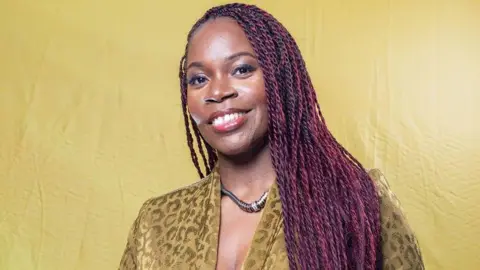 Jacqueline Shaw
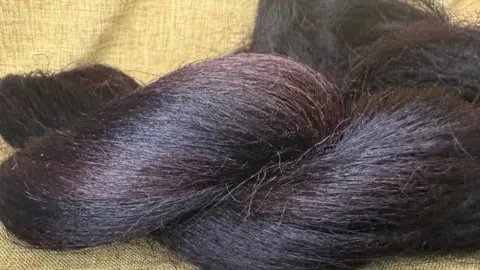
A breast cancer survivor who lost her hair during chemotherapy has created a business selling braided hair extensions using bark from banana trees.
Fashion and design consultant Jacqueline Shaw, 47, who lives near Braintree, Essex, supplies the product to hair salons, and also uses it herself.
The CEO of The Canerow Company said she wanted an alternative to the "toxic plastics" commonly found in braided hair extensions.
"Using the fibres from banana tree bark is a healthier option, and people are becoming a lot more interested in it as an alternative," she said.
 Jacqueline Shaw
Shaw, who was diagnosed in 2021, came up with the idea while sitting at home recovering from chemotherapy, and she set up the business in 2024.
She began importing most of her supplies from Uganda last year during Black History Month.
"I knew about this type of bark several years ago when I was in Africa but only recently decided to use it as part of my business," she said.
"I am getting a lot of interest from people who are concerned with the challenges of plastic in hair – people want something healthier and better."
Shaw said that banana farmers often had a high volume of production, and there was a lot of waste from that.
"They end up throwing the trees away so it is a great way for upcycling the bark," she said.
"The fibres have been extracted from the bark for years but only in this decade has it started to take off as a product for braiding hair.
"I will always use this on my own hair now because it is, for me, the healthier option."
 Jacqueline Shaw
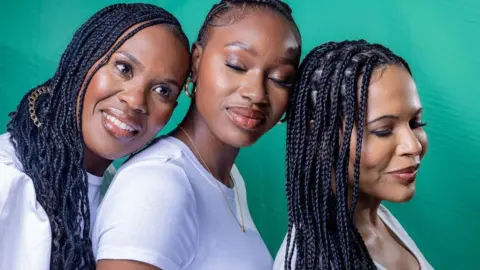
Braided hair is a technique that interlaces three or more strands of hair together.
It is commonly used among black women but has become more popular within other cultures in recent decades.
Shaw said using fibres from the bark was more expensive than using those containing plastic, but the benefits were worth it.
"It's reusable, you can wash it, and then re-braid it," she said.
"It is also biodegradable and compostable and a lot of women will pass down the product to their own children for health reasons, too.
"So although it is more expensive, the long-term benefits are worth it."
Shaw eventually wants to see plant-based hair "take over from plastic hair" and believes that, as people become more conscious of the environment, it is just a matter of time before that happens.
Follow Essex news on BBC Sounds, Facebook, Instagram and X.
