Seal colony welcomes 300 pups, with more expected

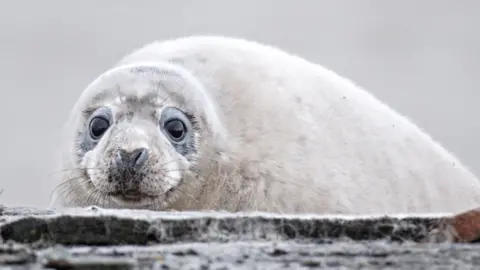 Hanne Siebers/National Trust Images
More than 300 seal pups have been born at a colony just a month into the breeding season, the National Trust has said.
Last year, 228 pups were born at Orford Ness in Suffolk, which is home to the county's first breeding colony of grey seals.
The breeding season began in November and already hundreds have been born with still about a month to go.
Matt Wilson, the trust's countryside manager, said the team believed the entire colony now consisted of more than 1,000 seals.
The team at Orford Ness began surveying for the first pups on 10 November and seven days later eight had appeared.
"We've probably got another month to go and we are over 300 pups already," Mr Wilson said.
"It's busy, it's taking a long time to count them this time round."
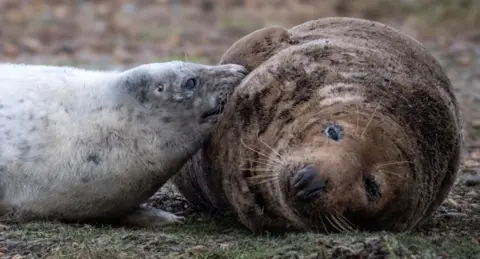 Hanne Siebers/National Trust Images
Orford Ness is a 10-mile long (16-km) spit joined to the mainland just south of Aldeburgh.
The seals first arrived in 2021 and have been returning each year.
"The first few years it almost doubled each year, last year slowed down a little bit and this year we thought we'll just see how it goes and if we get an increase we'll be happy," Mr Wilson added.
"We're sure we are now seeing some of the pups that were born on Orford Ness back in 2021 and 2022 coming back and now having their own pups."
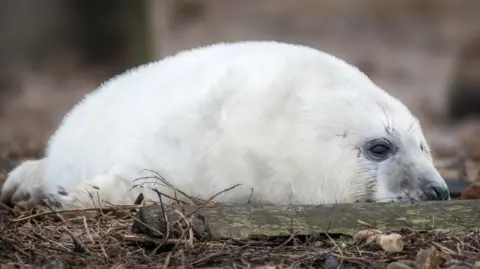 Hanne Siebers/National Trust Images
The site is closed to the public for the winter and Mr Wilson explained the colony had continued to enjoy the area for its lack of human disturbance as well as the shingle beach and landscape.
He urged people not to access the site or fly drones overhead, which would disturb the colony.
 Stuart Howells/BBC
Follow Suffolk news on BBC Sounds, Facebook, Instagram and X.
