What to expect at Holyrood and beyond as 2026 election race steps up

 Getty Images
Before the World Cup finals and the Commonwealth Games, 2026 brings an intense political contest in Scotland.
This is a Holyrood election year that will either end or extend the SNP's nearly two decades in charge of the Scottish government.
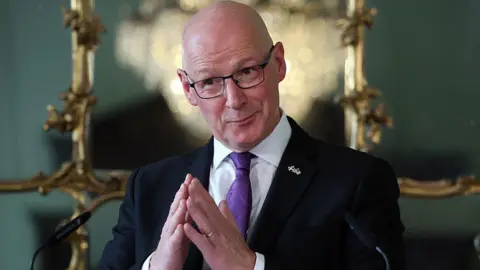
In recent months, the first minister John Swinney has seemed on course to secure a fifth term in power for his party.
That would mean retaining control of key services like the NHS, education and policing.
He has highlighted some progress in reducing both NHS waiting times and child poverty since taking over as first minister.
Swinney's rivals believe a change of government is more overdue than the new CalMac ferries ordered from the Ferguson shipyard on the Clyde.
The housing shortage, high drug deaths and the waiting problems that persist in the NHS are among their complaints.
The SNP is less popular than it was in 2021 but it has been the first-placed party in the most recent run of opinion polls.
Reform's effect on the Tories and Labour's new direction
 Getty Images
It may seem surprising that the SNP is in front given that Scottish Labour roundly defeated them at the 2024 Westminster election but Labour's ratings have fallen as the UK government's unpopularity has grown.
The Scottish party leader Anas Sarwar hopes he still has time to close the gap and challenge Swinney for power.
He is promising an as yet unspecified "new direction" for Scotland focused on solving entrenched problems in the public services.
 Getty Images
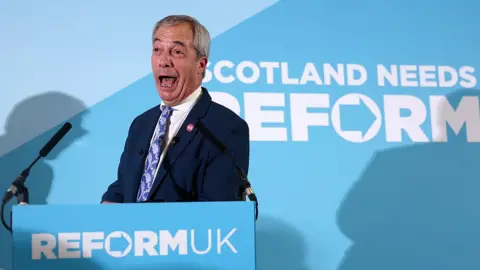
The apparent rise in support for Nigel Farage's Reform UK is holding back both Labour and the Scottish Conservatives, led by Russell Findlay.
One senior Tory described Reform as the "greatest gift ever for John Swinney" because it divides opposition to the SNP.
The Tories are feeling the squeeze but hope their offer of cuts to taxes, regulation and "wasteful" spending can make them distinctive and relevant.
Reform UK seems to be benefitting from public frustration with established parties.
They recognise that this "scunner factor" can only take them so far and that setting out their Holyrood policies will invite much closer scrutiny.
In a highly competitive race, the Scottish Greens and the Scottish Liberal Democrats also see potential for growth.
The SNP is threading independence through its campaign in an effort to corral the votes of those who favour Scottish statehood - a larger group than currently supports the party.
First up - the government's draft budget
 Getty Images
The biggest scheduled political event in Scotland before the election is the draft budget statement on Tuesday 13 January.
The key tax and social security decisions have already been taken and were sent for independent scrutiny before Christmas.
The UK decision to end the two-child cap on access to certain benefits has freed up a chunk of Scottish government cash to spend on additional anti-poverty measures.
Negotiations with opposition parties continue because as a minority government the SNP needs some help to get their budget approved.
Expect an uplift in funding for the college sector and an offer of further help with cost of living pressures.
Ministers have already said there will be no change to the rates and bands for income tax.
The earnings thresholds at which these apply may need adjusted to ensure more than half of taxpayers are charged less than they would be elsewhere in the UK.
A referendum on Starmer's premiership?
 AFP via Getty Images
Holyrood still has a few months of law-making before the election.
The most controversial and potentially impactful proposal is a backbench bill to allow some terminally ill people to seek medical help to end their lives.
This so-called "right to die" legislation has already been approved in principle by MSPs but some who voted for it to allow further debate still have concerns.
The Holyrood election on Thursday 7 May coincides with elections to the Welsh Parliament and to some local authorities in England.
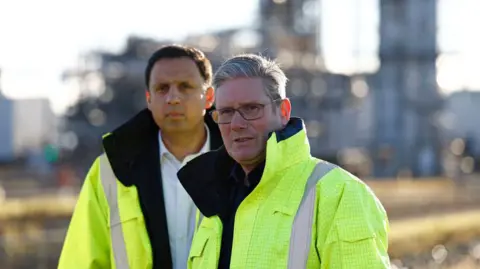
Together these contests are the biggest test of voter opinion in the UK since Labour's general election win and will partly be seen as a referendum on Sir Keir Starmer's first two years in power.
There is already much talk at Westminster about a potential challenge to his leadership unless Labour's fortunes improve.
The chancellor's recent intervention to protect jobs at the Grangemouth ethylene plant shows that Labour still has the power to shape the conversation.
Among the big decisions affecting Scotland that lie ahead for the UK government - whether or not the massive Rosebank oil and gas field is given the go-ahead.
Chinese plans to build wind turbines at Ardersier require approval from UK ministers and it is for them to choose a Scottish location for a new munitions factory.
Tensions over immigration are likely to remain an issue this year with recent polling suggesting it is among the three biggest public concerns, behind the economy and health.
Changing the face - and faces - of Holyrood
 Getty Images
Internationally, the search for peace between Russia and Ukraine continues - a conflict which is reshaping UK defence policy and has contributed to the sharp increase in energy bills.
A decade on from the Brexit vote, the UK is seeking closer ties with the European Union.
It also hopes to keep President Trump sweet and to conclude whisky tariff negotiations with the United States.
At Holyrood, SNP ministers have to decide whether or not to order a further inquiry into grooming gangs.
Justice Secretary Angela Constance's use of an expert's quote on this issue is under investigation by those who supervise the code of conduct for ministers.
Health Secretary Neil Gray is trying to see off planned strikes by resident doctors and open the first in a network of NHS walk-in treatment centres.
An updated energy strategy from the Scottish government is long overdue.
Away from the Holyrood and Westminster parliaments, developments are awaited in two unrelated prosecutions of political figures.
The former SNP chief executive Peter Murrell, who was married to the former first minister Nicola Sturgeon, has been charged with embezzlement.
The MSP Colin Smyth, who has been suspended from the Labour party, is accused of possessing indecent images of children and voyeurism.
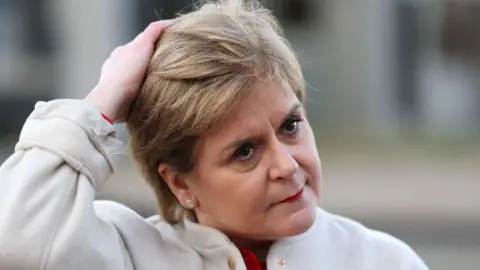
Sturgeon is the highest-profile MSP who has chosen to stand down in 2026. Almost a third of Holyrood's 129 members are doing the same.
This turnover makes it clear that the next Scottish Parliament will look very different, with voters to decide just how extensive that change will be.
