Local elections - what business wants from councils

 JOHN FAIRHALL/BBC
"Local councils are hugely important to businesses," according to the chairwoman of the Greater Essex Business Board.
Julia Gregory said: "Ensuring that we have the right infrastructure is absolutely key."
However, some businesses say they pay a lot in local taxes, but have little to do with the local authorities.
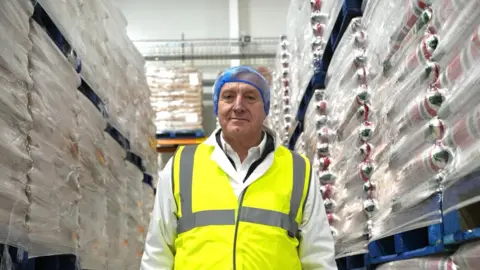
David Wright, managing director of Wright's, a large flour mill in Harlow, said: "We have very large business rates to pay. What do we get back for that? I would say not a lot. What do we want from them: not a lot."
The business board includes companies like DP World ports, and defence firm Leonardo in Basildon.
The BBC has spoken to a selection of businesses ahead of the council elections on Thursday, 7 May.
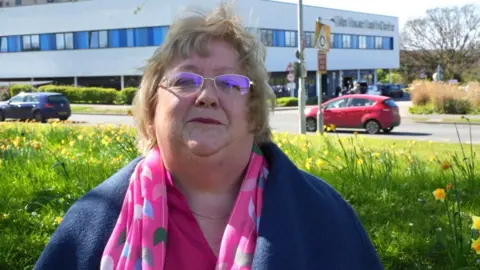
Gregory said councils must make sure "infrastructure is well-maintained so that the logistics framework that all businesses rely on can be supported".
She also said "skills development is a huge thing, and making sure we have a workforce prepared" for local business needs.
She pointed to infrastructure projects that Essex County Council had undertaken over the last decade including building the first new station on the Great Eastern Mainline in a century at Beaulieu Park, north of Chelmsford.
While the government has backed building the new Lower Thames Crossing with hundreds of millions of pounds, other infrastructure projects have hit the buffers.
The widening of the A12 from a two- to a three-lane dual carriageway between Chelmsford and Colchester was dropped after years of planning.
Gregory said her board would be lobbying for those improvements.
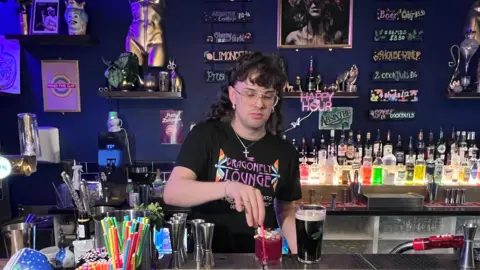
Jo Palmer-Tweed set up the Dragonfly Lounge in Colchester a year ago.
"People tend to underestimate the power that local councils do have. There are always issues around planning, licensing and rates," the co-owner said.
"My local councillors have listened and where they can they have spoken for us."
She said the support to help keep her bar and community space running in tight economic times had been cross-party.
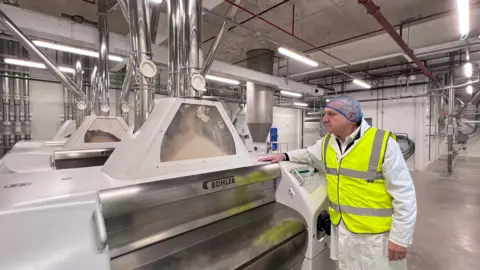
The company Wright's first started milling flour in Enfield, north London when Benjamin Disraeli was the Chancellor and soon to be Prime Minister.
The company recently opened a state-of-the art mill in Harlow, employing 150 people and producing 3,000 tonnes of flour a week.
Current managing director David Wright said his firm's close contact with councils was a thing of the past.
"All infrastructure projects are welcome - we could do with a few potholes being mended - but essentially we have much less interaction with the council than we used to have," he said.
Wright said that 30 years ago his company and other local businesses had worked with Enfield Council on projects like roads, lighting and security.
"A lot of it was match-funded. It was a very successful partnership. That really doesn't exist anymore, as far as I can see," he added.
He believed councils prioritised more costly concerns like social care, rather than engaged with companies like his.
What the parties say
Reform said they would help business by reversing "the rise in employers' National Insurance contribution" and halve VAT for the hospitality sector.
The Liberal Democrats pledge to cut VAT for the hospitality sector by 5%.
Labour said the government was investing £150m to "re-energise High Streets" and £1.5bn in training young people.
The Conservatives have pledged to cut carbon taxes to help the energy sector.
The Green party said it would provide details on its offer to local businesses later this week.
Follow Essex news on BBC Sounds, Facebook, Instagram and X.
