Rural homes 'too proud' for high energy costs fund

 BBC
BBCA fund to help those struggling with rising energy costs has come into effect, but some fear it will not reach those most in need because "most rural people are too proud to claim a benefit".
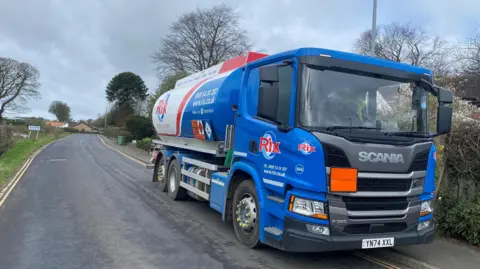
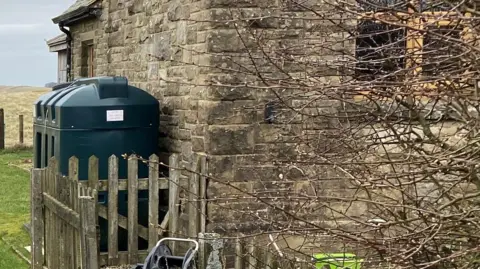
More than 20% of homes in Northumberland, Cumbria and County Durham do not have mains gas and use heating fuels such as LPG or oil, which has more than doubled in price in a month due to the US-Israel war with Iran.
While people struggling in England can now apply to the Crisis Resilience Fund, Lorrainne Smyth, chief executive of charity ACTion with Communities in Cumbria, has called for a more targeted approach.
The government said it had acted "quickly and decisively" to support households at risk.
The Crisis and Resilience Fund will provide £1bn annually for the next three years.
It is a replacement for the Household Support Fund and people will be able to apply for emergency funds through their local council.
The government has also announced an extra £53m of specific help for heating oil costs, with funding given to local authorities in proportion to the number of heating oil users.
Smyth said she believed many people who really need extra help will not get it.
"We did some research in the Eden area a couple of years ago, and most of the people we spoke to who were entitled to benefits were just not applying for them," she said.
"It's just how it is in rural areas, people are too proud, and they don't want to fill in a bunch of forms."
She is also concerned about the lack of good broadband in many rural areas.
"A lot of older people might not have the time or the skills to make an online application," she said.
Smyth thinks many people "in London" design policies which "do not work in rural areas".
"I'm really worried, it's lambing time too with all those extra energy costs," she said.
"It's a real crisis out there, it's really, really difficult for people."

Farm worker Richard Smith from Bellingham in Northumberland has just paid to fill his ex-wife's heating oil tank.
He has spread the payment over three months but it is still twice what he would have paid in February.
But he says most people think they have no alternative but to "pay the price".
"Diesel, heating oil, price of shopping, it's all going up, but what can you do?" he said.
It is that stoicism that makes Smyth think a better approach would be to give everyone who uses alternative fuels a one-off payment, which is what happened during the Covid pandemic.
"If you have to apply for something, most people won't do it," she said.
A Treasury spokesperson said: "The government has acted quickly and decisively to support households at risk of losing access to heating and hot water.
"Local authorities will design and implement schemes that reach those households."

The BBC asked councils in affected areas for their advice to residents.
Cumberland Council said its Heating Oil Support Fund was open from 1 April for applications from eligible low income households who used heating oil as their primary source of heating. Cumberland's share of the national support package is £370,000.
Durham County Council also said people could apply from 1 April but as the website would be undergoing maintenance they need to do so by telephone on 03000 267900.
Westmorland and Furness Council said people could apply in the coming weeks and more information would be shared on its website when the fund is open for applications.
Northumberland County Council has yet to give us details, which will be added when they are made available.
