Microplastics more prevalent in rural areas - study

 BBC
BBCMicroplastics in the air can be more prevalent in rural areas than in cities, a University of Leeds study suggests.
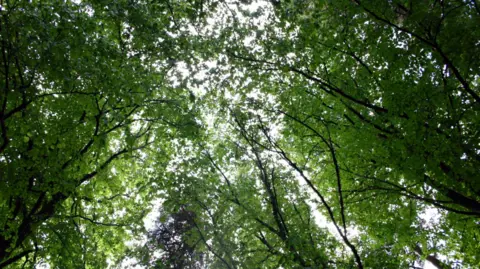
Particles of plastic, which are so small they are invisible to the naked eye, are carried on the wind before being captured by trees and other vegetation, researchers said.
The study detected up to 500 microscopic particles of plastic per square metre per day in an area of woodland during the three-month study – almost twice as much as in a sample collected in a nearby city centre.
Dr Gbotemi Adediran, who led the research, said his team were "not expecting" the "quite surprising" results.
While the full extent of the health impacts of microplastics on the body is still being determined, global studies suggest they can lead to cell damage in humans, can affect the structure of soil and be toxic to animals.
The team selected three locations in Oxfordshire for the study, with samples taken every couple of days in each area - rural Wytham Woods, suburban Summertown and Oxford city centre.
"In woodland, where you are supposed to have a fresher, cleaner atmosphere, there is higher microplastic pollution compared to the city," Adediran, a lecturer in earth surface geochemistry, said.
"This is why the problem of environmental pollution is very challenging - it is what you cannot see with your naked eye, what is atmospheric, what is airborne."
In Wytham Woods, most of the particles found were polyethylene terephthalate (PET), used in clothing and food containers.
In Summertown, polyethylene, used to make plastic bags, was most commonly found.
Most particles in the city centre were ethylene vinyl alcohol, a polymer used in food packaging, automotive fuel system components and industrial films.
 Elizabeth Baines/BBC
"When trees are swaying they are kind of sweeping microplastic from the atmosphere," Adediran continued.
Microplastics are broken down from items including food packaging, car manufacturing and toys.
More than 400 million tonnes of plastic is estimated to be produced globally each year.
While it may be popular to "escape to the country", Adediran said it was not possible to "escape" pollution.
"You could move to the countryside but you could still be meeting pollutants," he said.
"Instead of saying, 'this city is polluted, I need to move out to the countryside,' we need to come together to find a solution."
Listen to highlights from West Yorkshire on BBC Sounds, catch up with the latest episode of Look North.
