Malkinson trial witness 'had no ID parade doubts'

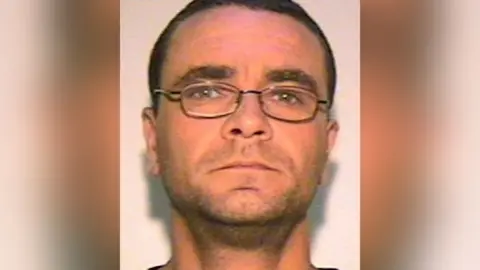 Police handout
A witness in a rape trial told jurors he had "no doubt" about the man he picked in an identity parade who went on to serve 17 years in jail after being wrongfully convicted.
The late Michael Seward had given evidence in the trial of Andrew Malkinson, an innocent man accused of a brutal rape in Little Hulton, Salford, in 2003.
The victim, as well as Seward and his then partner, Beverley Craig, all picked out Malkinson as the attacker. Manchester Crown Court was told, however, that Malkinson had been the victim of a miscarriage of justice.
Seward's evidence at Malkinson's 2004 trial was read to the jury at the ongoing trial of Paul Quinn, who was later linked to the rape by new DNA evidence.
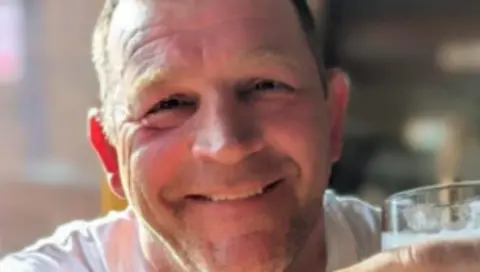
Seward had told the 2004 trial jury he had twice driven past a man who appeared to be stalking the victim in the vicinity of Cleggs Lane in Salford, shortly before the attack on 19 July 2003.
He said he attended a digital ID parade and picked out Malkinson.
Seward told the jury he had "no doubt" Malkinson was the man he had seen, adding: "I picked the person I saw that night", and that he was "absolutely not mistaken".
Earlier, prosecutor John Price KC told jurors in the current trial that it was Quinn, not Malkinson, who had actually carried out the rape, even though it was "difficult to believe" three people could all have identified the wrong man.
On Monday, the rape victim told the court she had doubts about her identification of the rapist at Malkinson's trial, but that police had told her it was normal to have second thoughts and put it down to "trial nerves".
Quinn, aged 29 at the time of the attack and who lived locally before moving to Exeter in Devon, was only linked to the crime years later, after scientific advances matched his DNA profile from samples left on the victim.
The DNA findings estimate it would be at least one billion times more likely if Quinn, 51, was a contributor to the sample found at the crime scene than if he was not.
Quinn has pleaded not guilty to two counts of rape, grievous bodily harm and attempting to choke or strangle his victim to render her unconscious while he carried out the attack.
The trial continues.
Listen to the best of BBC Radio Manchester on Sounds and follow BBC Manchester on Facebook, X, and Instagram. You can also send story ideas via Whatsapp to 0808 100 2230.
